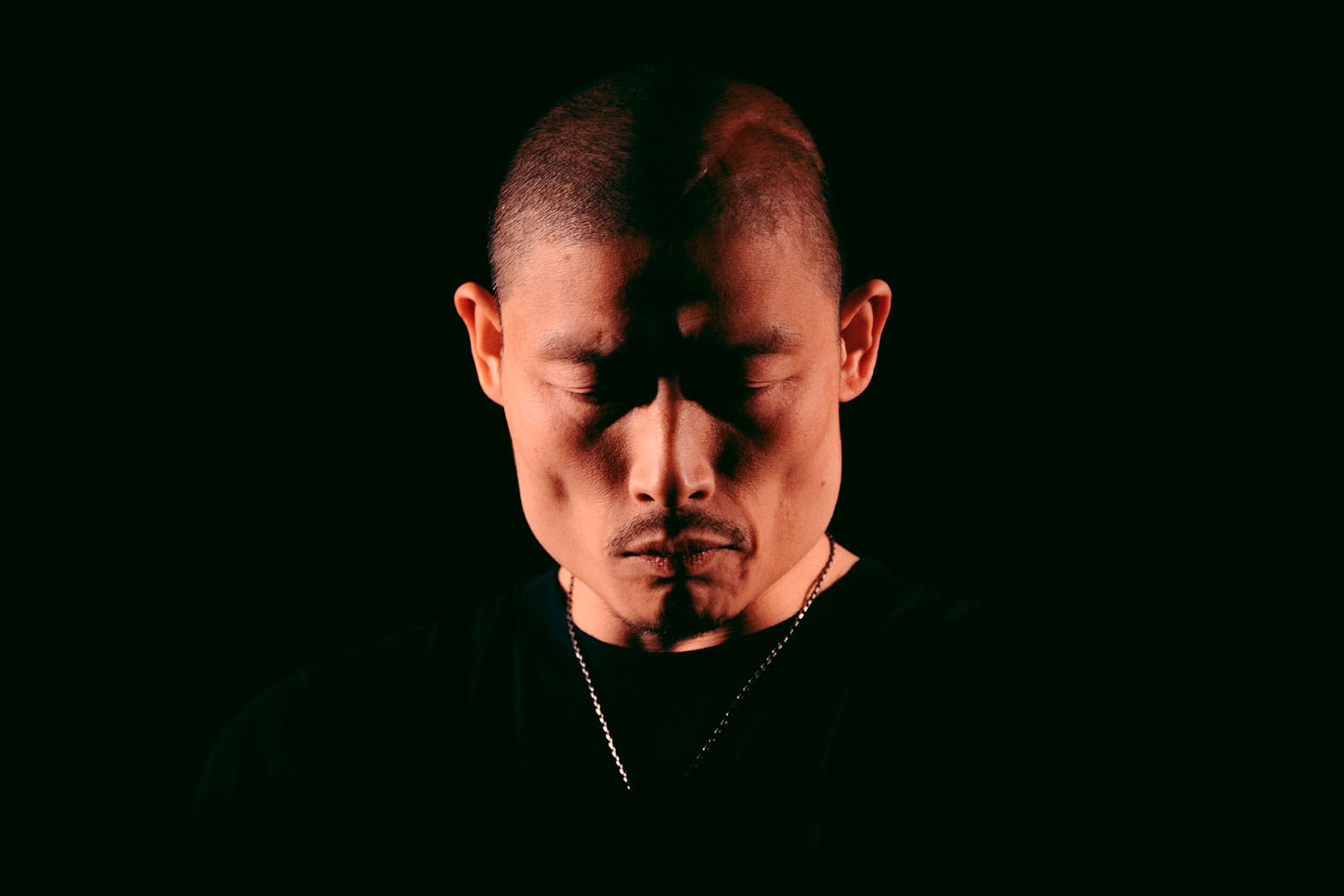
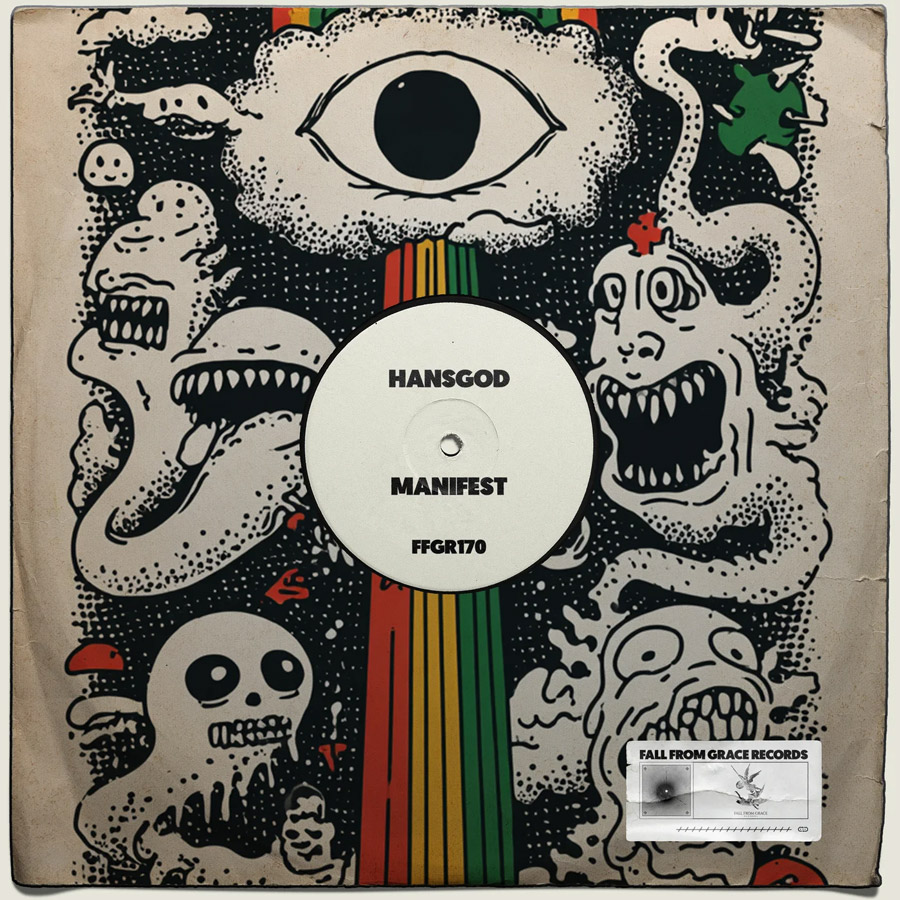
For Hansgod, club music is not built on force alone. It lives in tension, patience, and the slow pull of a groove that reveals itself over time. That balance sits at the heart of Manifest, his new full-length release on Fall From Grace Records, a record that leans into hypnosis, melody, and emotional weight without ever losing its sense of control.
Photo credit: YaPasPhoto
Built with restraint and guided by instinct, the album moves through progressive house, minimal pressure, and a hazy sense of motion that favors storytelling over blunt impact. There is depth in its design, but also clarity in its purpose. Nothing feels rushed. Nothing is there by accident.
In conversation with us, Hansgod reflects on the listening moments that first changed him, the shaping hand Glenn Morrison had on the final album, the value of mood over method, and why the strongest music still comes down to one simple truth: feeling.
Get your copy of Hansgod’s ‘Manifest’, out now via Fall From Grace Records, here.
EG: Hi Hansgod, welcome to Electronic Groove. Manifest feels very unified, almost like one long emotional passage instead of a set of separate tracks. When did you realize you were making an album rather than just finishing music?
Hansgod: To be honest, I really understood that feeling once I heard the masters Glenn did at Alpine Mastering. But even more than that, it was the order he chose for the tracks. He caught a very specific spark through the sequence and treated the music with so much care. That was the moment it became clear to me that this was more than a collection of tracks.
EG: You keep coming back to hypnosis, calm, groove, and emotional pressure. What is it about that space that keeps pulling you in?
Hansgod: Hypnosis is a keyword for me. I feel happy and calm when I build melodies and search for harmonies, but I never want to lose my love for groove and minimalism. I think deep hypnotic sound is a strong way to express emotion through movement and dynamic. Recently, I also connected a lot with Aril Brikha’s idea of “trance for adults.” That really speaks to me.
EG: Let’s go back a little. Before the clubs, before the studio, before all of this became your life, what first pulled you toward electronic music?
Hansgod: I was always searching for it through groove or synthetic sounds. Tina Turner, Cher, old school hip hop, those were part of my early world. But there was one night as a kid, in a hotel, when I got lost on a radio channel and heard an electronic track. That was a turning point. Later, clubs became my churches, and the Ibiza Azuli compilations were important too, but hearing a Renaissance Master Series mix was the real point of no return.
EG: That image stayed with me, clubs as churches. When you were building Manifest, were you trying to get back to that same feeling of surrender you had as a listener?
Hansgod: Yes, in a way. I think something shifted in me with this album because I managed to express exactly what I wanted, which is quite rare. That gave me peace. Glenn also helped a lot, not only with the sound treatment, but by finding the exact words I could not put on the album myself. That made me feel the message had really landed.
EG: One thing that stands out is how little interest you seem to have in rigid genre borders. Do you still think in categories when you make music, or has that become less important to you?
Hansgod: Not really in a strict way. I think the tracks are cross-genre and can fit into a nice range of sets. If the emotional and narrative side is really felt, that can win over the usual standards of a specific DJ genre. For me, that matters more than trying to land inside one category.
“What I discovered recently is that the very skilled people in music almost never talk about technical aspects like whether something was made digitally or in analog.”
EG: Was there a moment on the album where you heard something in yourself that even surprised you?
Hansgod: Yes. I think one track reveals more than the others, a strange side of me, a side that grew up musically with German minimal techno. That influence is still in me, and maybe it came out more clearly there than I expected.
EG: You said something very striking, that Manifest reaches for deep space using what you called surface tools. Native plugins, self-programmed sounds, everything happening inside the DAW. Do you enjoy that kind of direct process?
Hansgod: Yes, very much. ‘Manifest’ is about a deep space, but made with surface tools. By that, I mean it was created with native plugins and self-programmed sounds from my DAW. There is a technical and material story to it, but I think the force of the music comes through that. I tend to go more and more in that direction.
EG: If we were sitting together and the conversation turned to analog versus digital, all the usual producer debates, where do you stand on that now?
Hansgod: I would probably say that the best people rarely focus on that first. What I discovered recently is that the very skilled people in music rarely talk about technical aspects like whether something was made digitally or in analog. The music, the vibe, that seems to matter most. That is how Glenn feels to me, and people like Jerry at Hooj, too. They trust what grabs you emotionally.
EG: You learned that lesson pretty early, too. Richie Hawtin and John Digweed were supporting your music before there was any big machine around it. What did those moments do for your belief in yourself?
Hansgod: It meant a lot. In my early production period, Richie Hawtin playlisted me twice at Space Ibiza, once with my first-ever remix and once with an original track, both from a modest label with modest mastering. John Digweed did something similar at Ministry of Sound with a deep house and chilled trance track of mine. Very early on, the lesson was there, and it brought peace of mind. It is all about the music. Those supports were major boosts.
EG: When the scene gets noisy, trends, numbers, image, pressure, what keeps you steady?
Hansgod: Probably the quietness of composing. I would miss that deeply if music disappeared from my life, the calm and silence of building something, catching the right groove with the right harmonic or melodic hook. That is really the core for me.
EG: Your music carries a lot of tension, but it never feels forced. It stays measured. Is that balance difficult to hold onto?
Hansgod: Yes, but it is a balance I care about a lot. I hope listeners feel pulled into a journey that moves from darkness to light and back again, but with a sense of comfort. I do not think music has to be extreme to feel strong or solid.
“That lifestyle advice stayed with me. I think there is something very healthy in respecting a reasonable circadian circle. It may sound simple, but it matters.”
EG: There is also a contrast in the way you describe your life. You like the countryside, quiet, a healthy daily rhythm, but you are also drawn to sophistication and club culture. Do those two sides of you feed the music?
Hansgod: Definitely. I like electronic music in a broad sense, which means I can enjoy mainstream club tracks too, as long as they are good. I like my countryside lifestyle, but I also like sophisticated things. Those are both part of me. Even funnily enough, I was a big lover of old school hard house, and I think I was the first to play it in my region, at least in a club. So there are contrasts in me, and I think they do show up in the music.
EG: You mentioned Patrice Bäumel’s advice about respecting a reasonable circadian circle. Did that change the way you live, or the way you work, in a real sense?
Hansgod: Yes, it left a mark on me. That lifestyle advice stayed with me. I think there is something very healthy in respecting a reasonable circadian circle. It may sound simple, but it matters. It keeps things grounded.
EG: You were also very direct about the current speed and goth revival, and about music turning into imitation and image. What do you think is getting lost in that cycle?
Hansgod: What bothers me is when it stops being about the journey. The revival of hard and speed or goth, it does not sound serious to me, even if there is a lot of money involved. As Hernán once said, everybody wants to copy, which is never the right thing. I think the time will come when people see an artist as a path, not as a catalog of poses. The real ones will not get lost. They have something inside them. Right now, numbers seem to rule, but I think that wave is meant to fall at some point.
EG: It sounds like you still believe people can tell when there is a real inner thread behind an artist.
Hansgod: Yes, I do. The real ones will not be lost. They have a sparkle inside them. Trends can be loud, but that does not mean they last.
EG: When you look at where you are now, Bandcamp experiments becoming clearer, peers around you, labels that really understand you, does this feel like a moment of consolidation?
Hansgod: Yes, things are getting clearer. My experiments on Bandcamp, which I see as my artist studio, are becoming more solid. I have been fortunate to connect directly or indirectly with peers, Pole Folder being a great example of that. I also have lovely labels around me, Hooj, Brique Rouge, Fall From Grace, Ray of Light, and Manual Music. What I like is that it goes beyond label communication. That human side of music is really beautiful.
EG: Last one, and maybe the simplest. When someone spends time with Manifest, late at night, alone, or in a room full of people, what do you hope stays with them?
Hansgod: I hope they feel carried through a journey, somewhere between darkness and light, but always with a certain comfort. I hope they feel that the music has strength without needing to force anything. If that stays with them, then I think the album has done what it was meant to do.
EG: Thanks for the time and all the best.
Hansgod: Likewise. It was a pleasure.
Get your copy of Hansgod’s ‘Manifest’, out now via Fall From Grace Records, here.
Follow Hansgod: Soundcloud | Instagram | Facebook | Spotify