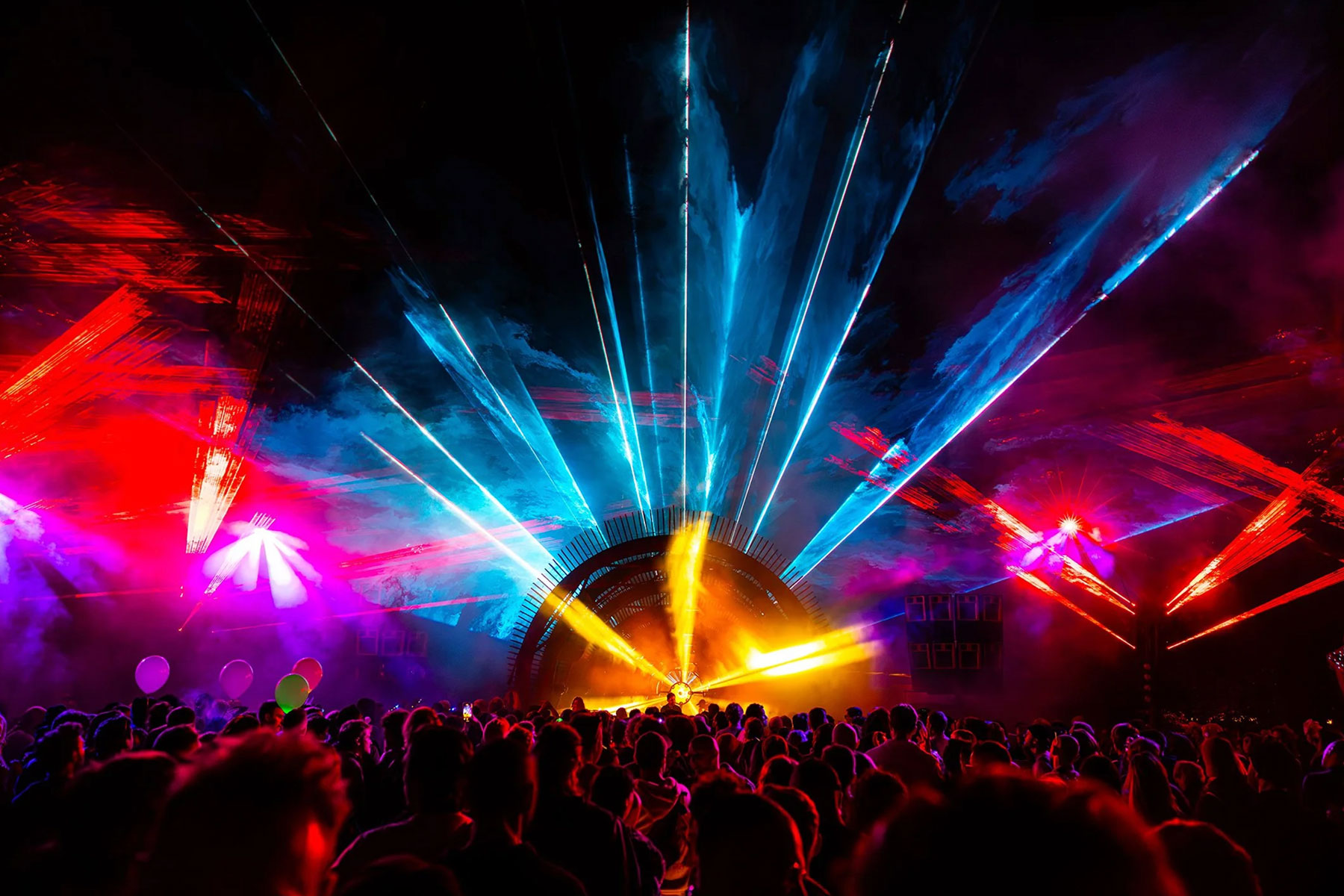
Founded in 2013 through a partnership between Berlin’s Holzmarkt25 and the Bachstelzen collective, Garbicz Festival emerged from the city’s underground electronic music community.
Photo credit: Garbicz Festival – Website
Built around collaboration rather than commercial ambition, the festival has developed into an evolving gathering shaped by its artists, performers, organizers, and guests.
More than a music festival, Garbicz is rooted in the belief that collective experience, creativity, and participation should come before profit. Its forest and lakeside setting in western Poland has become central to that philosophy, with the event designed around the natural environment rather than imposed upon it.
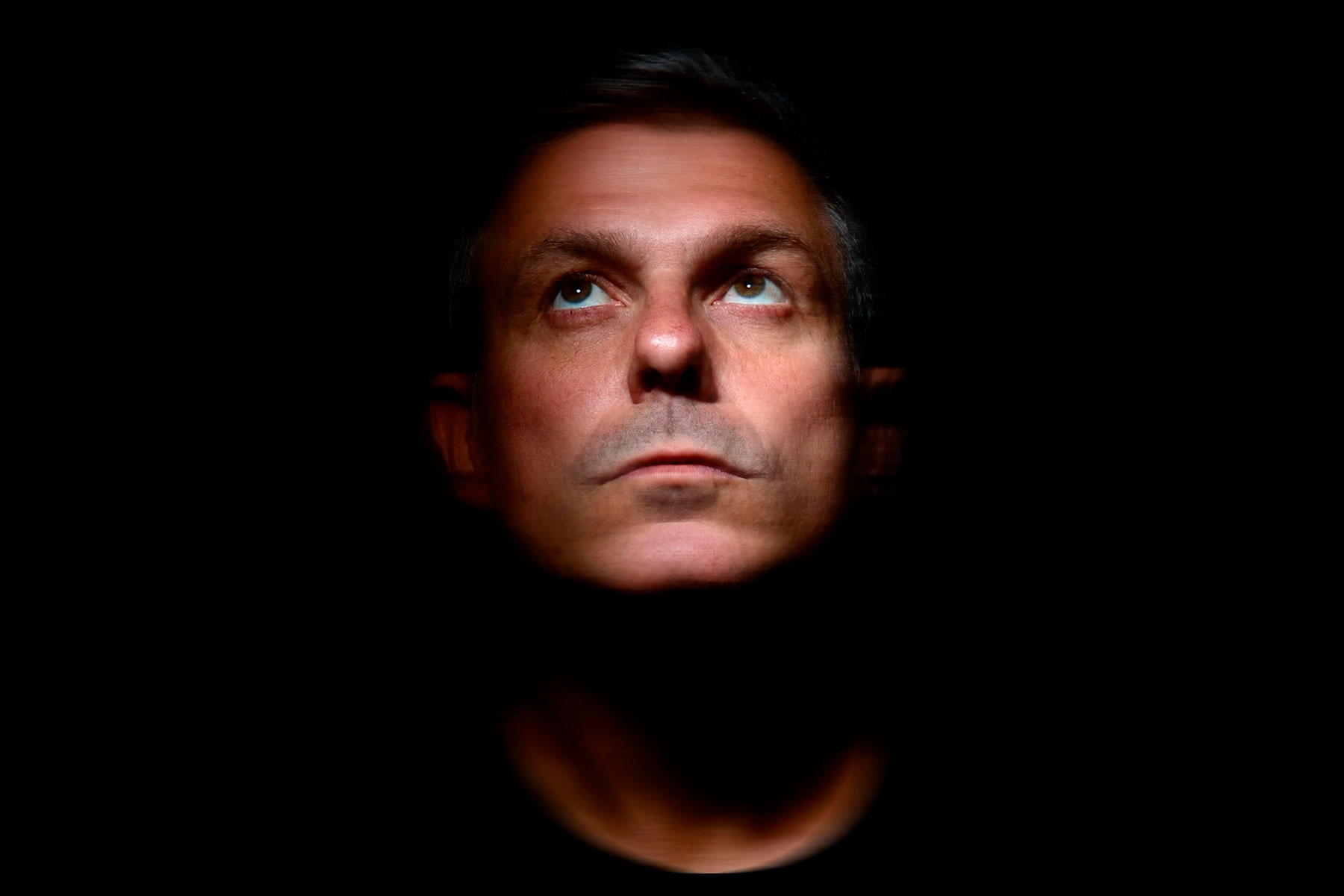
This year’s edition takes place from July 30th to August 3rd, 2026, less than two hours from Berlin. Ahead of the festival, we spoke with Garbicz founder Juval Dieziger about its origins, approach to community-building, and what visitors can expect from this year’s edition.
EG: Hi Juval, welcome to EG. To start, could you give us a brief rundown of how you came to run Garbicz Festival?
Juval Dieziger: Thanks for the invite. It’s a bit of a long story. Around twenty-five years ago, we created Bar25 because we loved nightlife, but we also loved being outdoors. We wanted to build a club that felt connected to nature. One of our principles was simple: never cut down a tree. We literally built around them, to the point where there was a tree growing through the dance floor.
After Bar25 closed, we were focused on building Holzmarkt in Berlin. Then someone showed me this incredible piece of land in western Poland, only about ninety minutes from Berlin. I visited with my family, and I completely fell in love with it. The forest has oak and beech trees that are between 400 and 700 years old. Around Berlin, many old forests disappeared after the Second World War because people cut trees down for firewood. But these trees survived because of the region’s history near the border.
The lake was equally extraordinary: deep, connected to a spring, and incredibly clear. I remember standing there and thinking, we have to do something here.
At first, my partners said, “No more projects.” But eventually, friends from Fusion Festival became involved, the landowners wanted to participate, and together we created the festival. The first edition had around 900 people. Today, we welcome around 11,000 guests, alongside approximately 3,500 artists and crew.
EG: So, from the beginning, you’ve always had a strong emphasis on artistry and community?
Juval Dieziger: Absolutely. For us, parties have always been more than a business. They’re about community. I often say that our club is our church. The most beautiful moment on a dance floor is when the DJ creates a feeling where everyone suddenly becomes one. You’re no longer thinking about yourself; you feel part of something larger. Everyone is connected for a moment.
Everything we’ve built over the years has been about creating spaces where people can experience that feeling together.
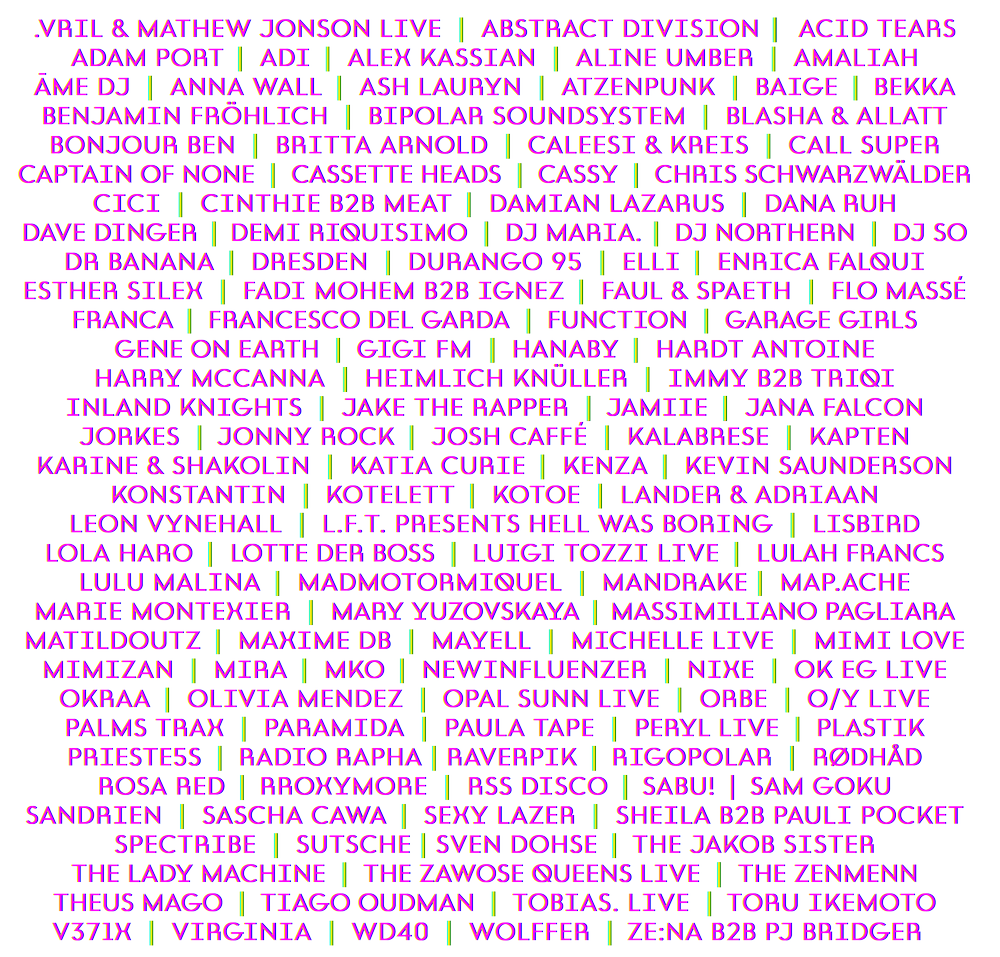
EG: You have a notable lineup this year. Did you have a specific focus or direction when programming the artists this time around, and off the top of your head, who are some acts you are personally most excited to see?
Juval Dieziger: Our primary focus is on curating a selection of high-quality music and artists. In doing so, we strive to provide a platform for young, unknown artists just as much as for established, well-known musicians.
At the same time, the festival thrives on a long-standing network of artists who have been part of it for many years and have made it what it is today. In addition to the main stages curated by the Garbicz team, the festival is a mix of various collectives and individuals who work together to create a diverse program.
Every stage has its highlights: off the top of my head, I can think of Gigi FM, Blasha & Allatt, Kevin Saunderson, OK EG, Josh Caffé, DRESDEN, Opal Sunn, Shoki, and many more!
EG: The festival’s setting is striking. What is the story behind how this specific location was originally chosen?
Juval Dieziger: It was the ancient trees that called to us. It’s difficult to explain, but when you stand in front of something that’s hundreds of years old, you immediately understand your own place in time.
You want to touch the trees. Sit beside them. Just look at them. You realize that nature has existed long before us and will continue long after us. There’s a kind of power there that’s bigger than humanity. That feeling stayed with me.
Today, we also know much more about forests—the way trees communicate through their roots and fungal networks, sharing nutrients and protecting younger trees. That changes the way you look at a forest. It’s not just individual trees. It’s a community.
“Parties have always been more than a business. They’re about community”
EG: How does being surrounded by nature change the experience of music?
Juval Dieziger: It changes everything. We built the festival around the forest instead of changing the forest for the festival. We never cut healthy trees. Instead, we’ve planted thousands more and designed everything around them.
EG: Is there any part of the festival that you feel is particularly special?
Juval Dieziger: One entire area is called Nerd Forest. It’s filled with interactive artworks, performances, and installations. One artist created an instrument that allowed visitors to “play” the surrounding trees. Metal strings connected the trees to speakers, and each tree produced its own sound.
Another installation let people create music simply by jumping between circles of light projected onto the forest floor. People come to dance, but they also wander through the woods, discover hidden theaters, sit quietly beneath the trees, and spend hours exploring. The forest becomes part of the experience, and people are able to make their own music with the forest.
EG: Garbicz brings together several different subcultures and communities. What are the main influences behind the festival’s aesthetic and atmosphere?
Juval Dieziger: Punk culture, Berlin’s electronic music scene, and the international festival movement all shaped us. Organic, subcultural, hippie-esque aesthetics that have grown naturally.
Fusion Festival has been one of our biggest inspirations, although we’re much smaller. But we’ve always wanted the festival to remain independent. We’re organized as a company, but profit has never been our main motivation. The goal is to build something meaningful.
EG: Your audience is incredibly international. How has that shaped the festival?
Juval Dieziger: Last year, we had visitors from almost ninety different countries. That diversity is one of the festival’s greatest strengths.
Now we collaborate with artists and collectives from all over the world. At a time when politics is becoming increasingly nationalistic, I think it’s important to create places where people experience something different. We’re for people, not borders. When strangers from different countries dance together, eat together, and spend time together, they stop being strangers.
EG: Can you share a specific past moment when you looked around and thought, “Yes, I’ve achieved my vision”?
Juval Dieziger: There have been many moments. What makes me happiest is seeing people contribute. We always encourage guests to bring something, not just consume the festival.
It could be a costume. It could be setting up a tiny bar for an hour. It could be creating a small artwork or surprising strangers with something kind. If everybody gives a little instead of only taking, you create a completely different atmosphere.
EG: Music is obviously at the heart of the experience. If you had to choose one legendary DJ set from Garbicz’s history that perfectly captures the essence of the festival, what would it be and why?
Juval Dieziger: Kenny Larkin’s set last year was extraordinary. Everything came together: the music, the sound system, the crowd, the mood. Afterwards, he told us it was one of the best performances of his career.
Those moments are impossible to manufacture. A great DJ somehow takes thousands of people and makes them feel like one community. For me, that’s even more powerful than a religious experience.
EG: Garbicz is known for being a community-driven, beautifully chaotic celebration. What are the most important things you consider from a production standpoint to help amplify that sense of togetherness?
Juval Dieziger: Freedom only works when people feel safe. We have awareness teams, internal rangers, medical staff, psychologists, and doctors. They walk through the festival looking for anyone who might need help.
If someone isn’t well, if they’re overwhelmed, or simply need support, someone is there. Things can happen at any festival. You have to prepare for difficult situations instead of pretending they won’t occur. Looking after people is part of creating community.
“When strangers from different countries dance together, eat together and spend time together, they stop being strangers”
EG: We know that sustainability is a core pillar of the Garbicz ethos. What practical and creative measures do you take to protect and preserve this land while hosting a festival on it?
Juval Dieziger: Yes, we try. No festival is perfect. People create rubbish wherever they gather, but we work hard to minimize our impact. We use paper plates and wooden cutlery wherever possible. We sort every rubbish bag by hand. We encourage reusable water bottles, provide drinking water throughout the site, and keep searching for better waste solutions.
Sometimes regulations stop us from implementing ideas we’d like to try, such as composting systems or organic toilets. But the important thing is to keep improving. I think joy and responsibility belong together.
One of the biggest ways we have been able to regenerate the land has been removing agricultural fertilizers. The site used to be farmland, so the ecology has actually improved since we took over. Every year, we test the lake water, and it’s actually cleaner now than it was before the festival existed because fertilizer causes much greater damage than people imagine.
Many people assume thousands of festival-goers must harm the environment. But if you manage the site properly, that’s not necessarily true. We’ve also monitored local wildlife. The birds leave temporarily during the festival because of the noise, but they return afterwards. We’re next to a protected bird area, so that’s something we take seriously.
EG: If someone were coming for the first time, what would you tell them?
Juval Dieziger: Dance, but also eat. We’re very proud of our food. We have really nice food and wine. Visit the art. Spend time in the forest. Talk to strangers.
Most importantly, bring something of yourself. Like I said before, think about what you want to give to the community, not just what you hope to receive.
EG: That’s really nice. To wrap up, how do you hope people leave the festival feeling?
Juval Dieziger: Firstly, happy, inspired, loved. And perhaps with a new understanding that borders are something we’ve invented. We all look different, we speak different languages, and we have different cultures.
But on a dance floor, you can actually feel that we’re all part of the same community. Garbicz presents an amazing opportunity for visitors not only to understand that idea intellectually, but to actually experience it.
Garbicz Festival takes place from July 30th to August 3rd, 2026. Find more information and tickets here.