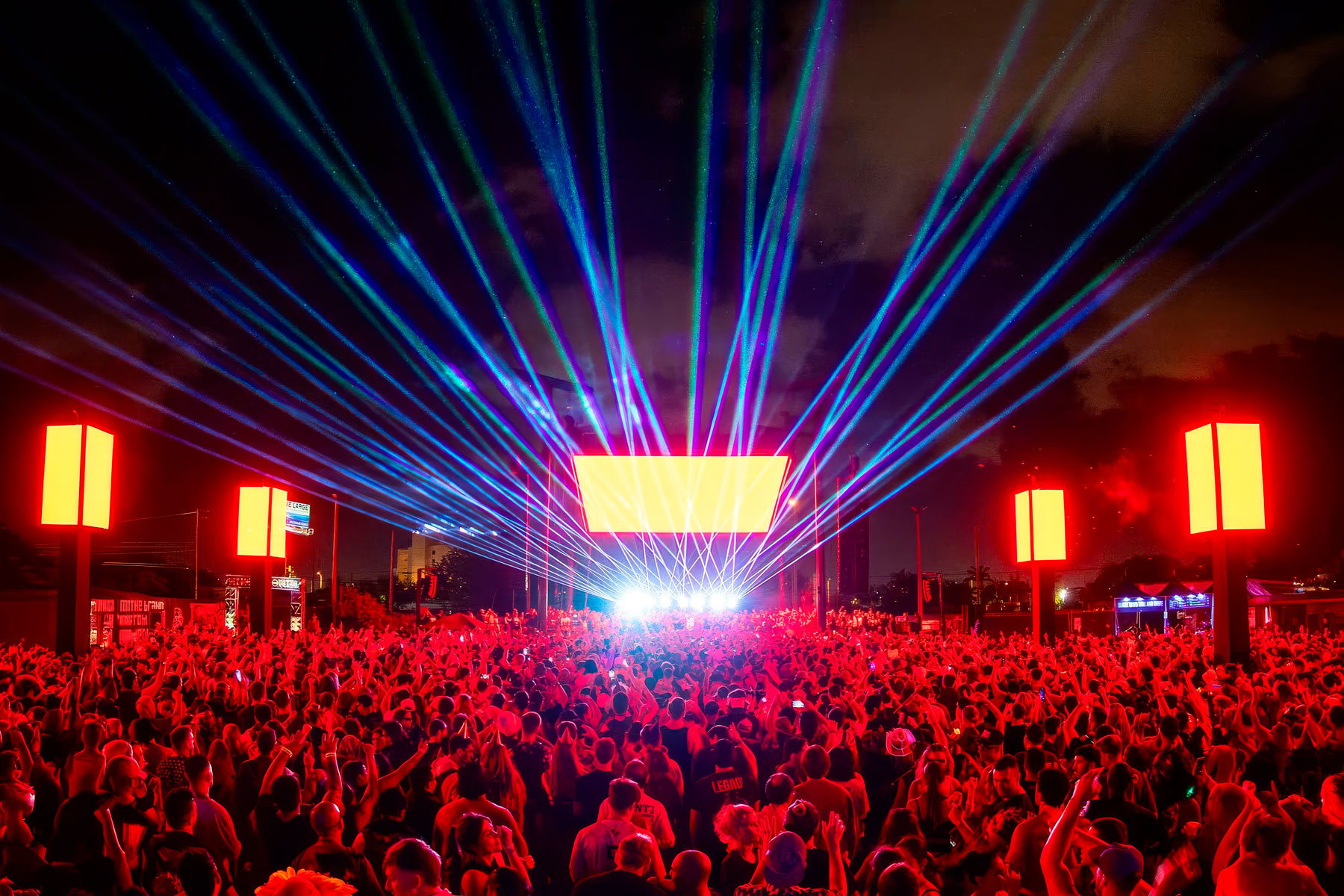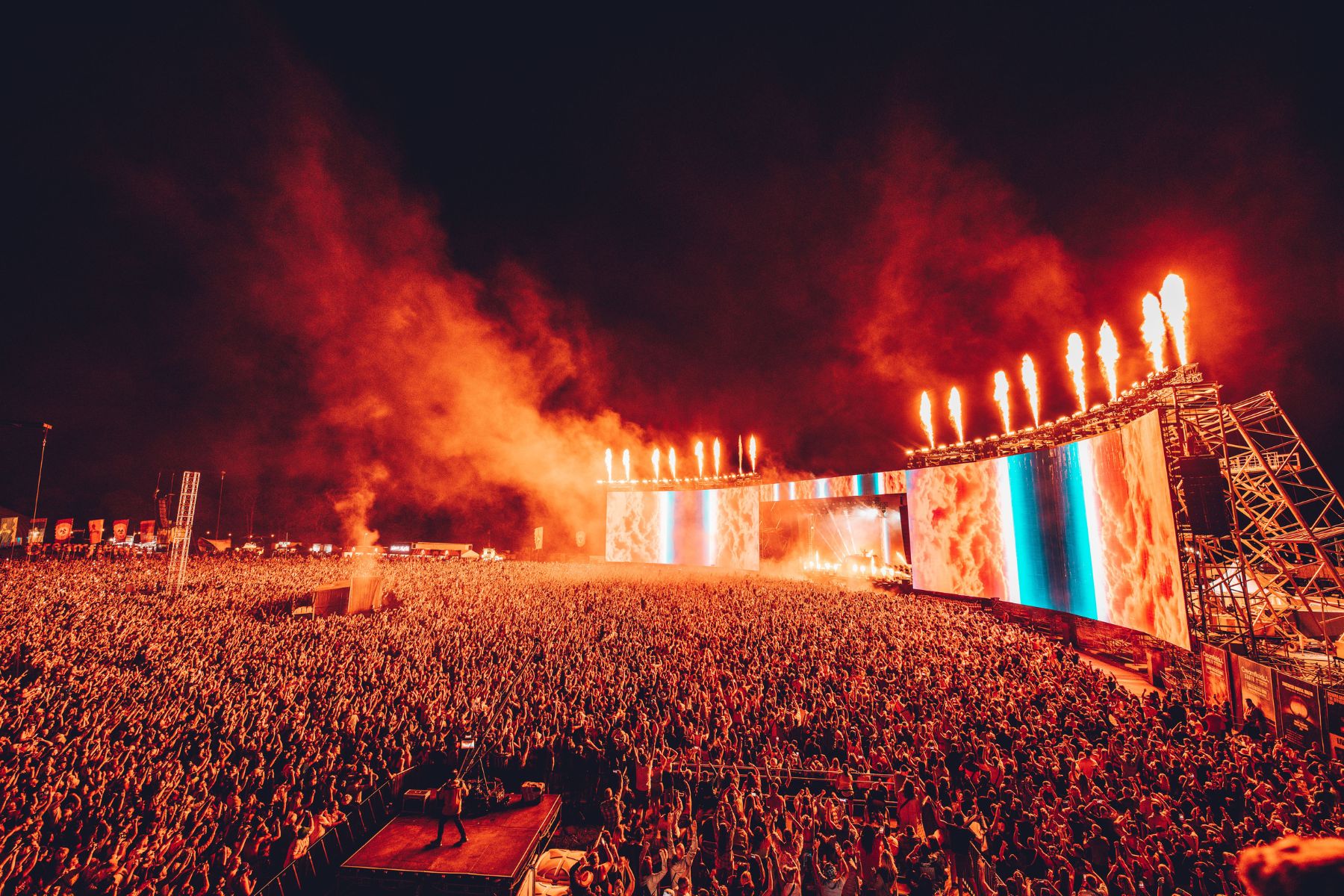
Celebrating its sixth anniversary, Body Movements has become one of the standout additions to the summer festival calendar. Built on a commitment to championing diverse queer and trans talent, the festival boasts a carefully curated lineup that fosters inclusivity, community, and joyful self-expression.
Photo credit: Jimi Herrtage
Having grown out of London’s vibrant Hackney Wick party scene, Body Movements has evolved into a celebration of the city’s rich and ever-expanding queer nightlife culture.
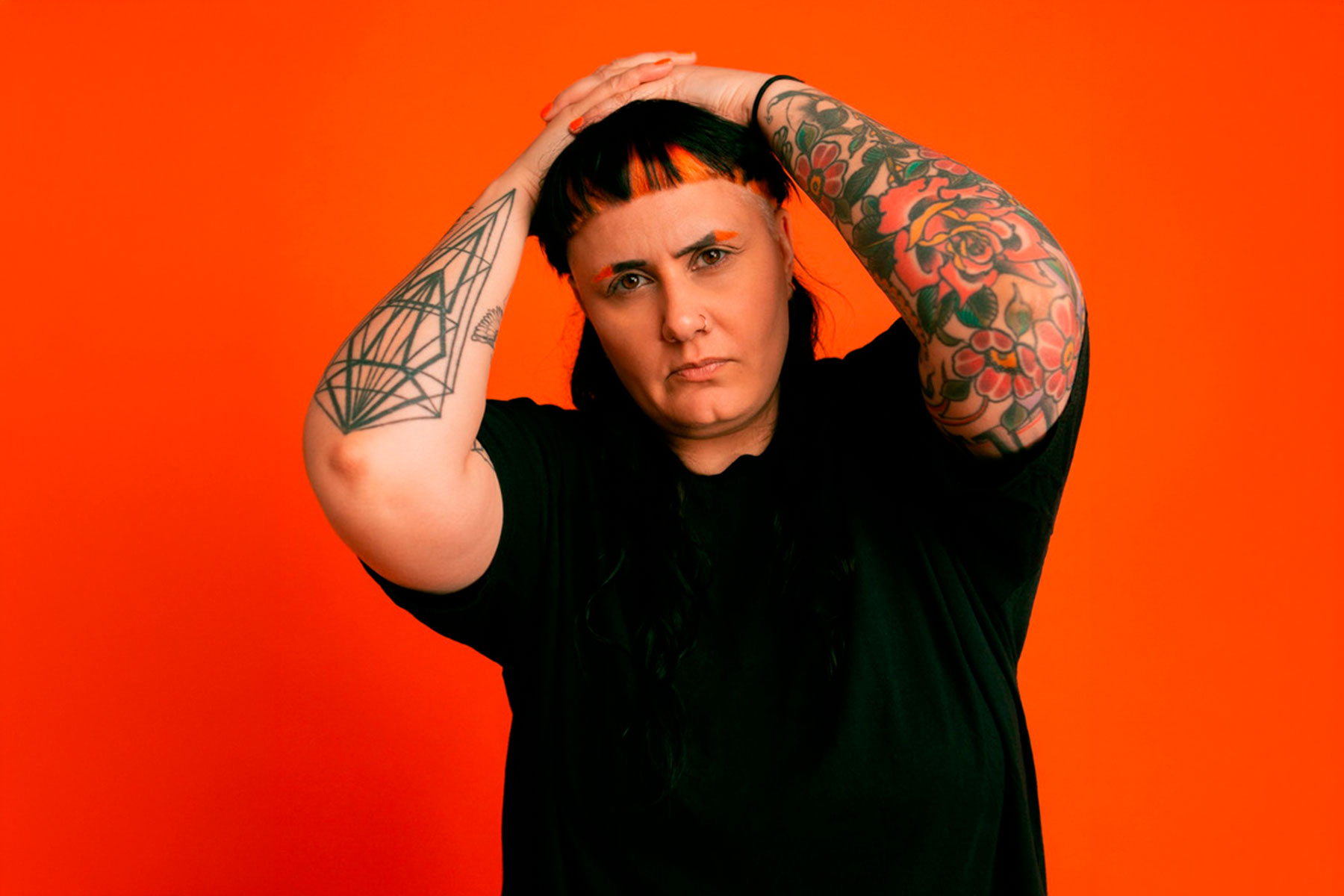
Body Movements 2026 will take place on Sunday, August 30th at Southwark Park, London. Ahead of this year’s festival, we caught up with Michelle Manetti, who appeared on the very first Body Movements lineup and has performed at the festival almost every year since.
As the founder of Fèmmme Fraîche and a dedicated force in London’s FLINTA nightlife community, Michelle shared her insights on the evolution of Body Movements, the importance of genuinely intersectional queer spaces, and how to create safer, more inclusive dancefloors.
EG: Hi Michelle, welcome to EG. What have you been listening to recently that has been making its way into your sets?
Michelle Manetti: Thanks for the invite. Right now, my head and heart are full of very tribally, percussive sounds; lots of circuit tribal, but with a distinct queer edge. I’ve been loving newer artists like Julie Desire. At the same time, I’ve been digging back into old-school New York classic artists like Size Queen aka Peter Rauhofer, Junior Vasquez, Alan T, Danny Tenaglia, Ralph Falcon, Hex Hector, and Robbie Rivera.
EG: A notable list. Were those old-school New York artists early inspirations at the start of your career?
Michelle Manetti: It’s actually a newer exploration. When I started listening to house, it was much lighter and vocal-focused. Rediscovering this percussive, tribal sound is a nod to the original New York queer scene. It’s about digging into the roots and tapping into the raw essence of what made those dancefloors special.
EG: Having been in the electronic music world for years, what do you miss about the early 2000s scene, and, conversely, what do you love about today’s modern club scene?
Michelle Manetti: What I miss most about the early scene is that people didn’t have phones on the dancefloor. People were completely locked in, present, and willing to lose themselves. Today, the constant awareness of cameras makes people more reserved. Seeing phones on a dancefloor is jarring. Back then, it was raw; you showed up, you were you in your essence, and just deep in it and having a great time.
What is vastly better today, however, is the diversity. The scene used to be much more segregated. Today, there’s a rich melting pot of people from all demographics, ages, and backgrounds coming together in one space.
“The idea we adopt behind safe or safer spaces is that if you create something with the most marginalised person in mind, everybody will benefit”
EG: Historically, cis gay men have dominated many queer nightlife spaces. Why is intentional FLINTA representation so essential?
Michelle Manetti: Cis gay men have tended to have the most dedicated club nights and representation at queer parties because of, well, patriarchy. But the dykes, dolls, T-Boys, and non-binary folks are the most fabulous fairies in the community, and they deserve to have their moment to shine, be platformed, and take up space. I do feel like there is a movement towards that change, but it’s not enough.
Isn’t it so much more beautiful to be on a diverse dancefloor? And isn’t it amazing that we can meet with people in a club who have a different experience and background from us, and yet we learn from and show up for each other? When spaces are heavily male-dominated, FLINTA people often feel uncomfortable and stop showing up. When you build a space centered around FLINTA individuals, allies and cis men will still attend, but they aren’t the monopoly.
The idea we adopt behind safe or safer spaces is that if you create something with the most marginalized person in mind, everybody will benefit. It’s like accessibility; making a space comfortable for those with the greatest needs makes it better for everybody.
EG: How do events like Body Movements or your own party, Fèmmme Fraîche, successfully foster that intersectionality?
Michelle Manetti: As far as Body Movements is concerned, it’s a space where marginalised groups can get their flowers, and they have that space. There, people do check their privilege at the door and are much more aware of taking up the space and allowing space for other people. They also have a really diverse range of artists, and representation really matters, from lineups to marketing. When people see trans, non-binary, and POC artists being genuinely supported on lineups and posters, it signals that the space is truly for them, and for everybody.
Though Fèmmme Fraîche has always been a FLINTA-focused club night, we curate every lineup with intersectionality in mind. There’s always trans representation, there’s always NB representation, there’s always POC representation. Allies are welcome, but the expectation is that they recognise the space wasn’t created for them, and to let the people the space is meant for take center stage.
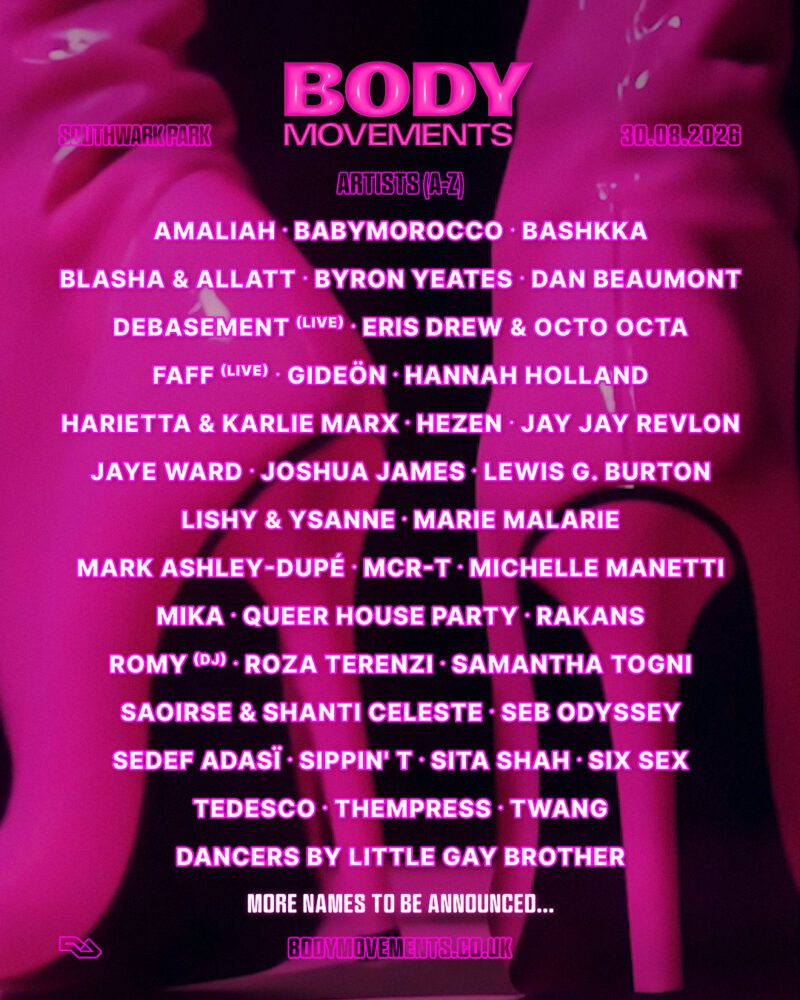
EG: The Body Movements lineup this year is stacked with incredible queer talent. Who are you most excited to see off the top of your head?
Michelle Manetti: Body Movements delivers every single year. They’re brilliant at booking massive headliners while keeping the core soul and heart of the scene represented. It’s so rewarding to see artists who give so much to the queer community get their flowers on a larger stage.
Hands down, Eris Drew and Octo Octa are two of my absolute favorite DJs in the world. Technically, musically, and spiritually, what they bring is untouchable. Together, their synchronicity and love for each other on stage is pure magic.
Beyond them, my girls BASHKKA and Sedef Adasi never fail to deliver, as well as Byron Yates. Plus, you have to support our local homebrewed East London treasures like Marie Malarie, Seb Odyssey, and Hannah Holland. Honestly, wherever you wander on that lineup, you’re in for a fabulous time.
EG: You’ve been with Body Movements since its foundation, playing almost every edition. For first-timers, what are the absolute must-sees or must-dos across the festival layout?
Michelle Manetti: Aside from catching my set, my personal favorite stage is The Steel Yard; I played on it last year, and the energy was unbelievable.
My best advice is just to wander: explore the little nooks and crannies, find the smaller hidden stages alongside the big ones. Also, make sure to visit Mooch Village, the market stalls featuring local queer businesses. Who doesn’t love a little leather or latex accessory? Support your local queers!
EG: Through your work with Fèmmme Fraîche, you’ve run DJ competitions and workshops to help FLINTA artists get their first big break. What advice do you have for young or emerging FLINTA DJs trying to navigate the industry?
Michelle Manetti: It is a tough scene to crack, and as FLINTA artists, you will inevitably face misogyny and hurdles. My biggest piece of advice is to show up as your authentic self and stay true to your sound. Networking might feel like a dirty word, but visibility and connections are everything. You have to be in the thick of it: show up to the club nights you love, support other artists, and introduce yourself. If your presence is mostly online, you miss out on real-world energy.
Above all, don’t be afraid to ask for opportunities. The hustle is real; if you don’t ask, someone else will. Be consistent, be a good person, put yourself in the right place at the right time, and don’t give up.
“My biggest piece of advice is to show up as your authentic self and stay true to your sound”
EG: Are there any fresh FLINTA artists currently breaking into the scene that you have your eye on?
Michelle Manetti: So many! Julie Desire is blowing up now, but I’ve watched her for a long time; she’s a dedicated producer with her finger right on the pulse. Holy C, who won the Body Movements Emerging Artist competition a few years back, is doing big things running SISU, a fantastic FLINTA platform.
Then there’s Hamilton (Materia Hache), who ran House of Others in Madrid, has now moved to Berlin, and is throwing great parties there. And Ivy F, an Italian DJ living in Berlin who recently moved to London; she’s been delivering gorgeous warm-up sets that are making us all proud. Keep an eye on all of them.
EG: Looking back across your career, is there a particularly special moment that stands out?
Michelle Manetti: My set at Body Movements last year on The Steelyard stage was easily one of the best sets I’ve ever played; there was just something magical in the air with my friends around me fanning me.
Another highlight was hosting a boat party at Love International with Fèmmme Fraîche, playing alongside Taneel Hai and Ava Alpha. Having three powerful queer artists bringing that much energy to a boat was unforgettable.
Finally, playing Panorama Bar on my actual birthday for Cormac’s party, Polari, was surreal. My set ended right at midnight on Saturday, and as my final track faded out, the entire club sang “Happy Birthday” to me. Cormac said he’d never seen a moment like that at Panorama Bar. It’s something that can never be rewritten.
EG: What are some of your favorite clubs and parties in London currently?
Michelle Manetti: Adonis is an iconic mainstay for queer culture. I also love Smart; it captures the raw, present essence of early ’90s raves with a no-phones policy, high-energy curation, and incredible music.
Wormhole, run by Ali, Marie Malorie, and Perrin, is a quirky Sunday party in a warehouse flat that’s silly and fun without taking itself too seriously. For the dyke scene, U-Haul Dyke Rescue is iconic, and PLASTYK, run by Carly Marks, is a solid, powerful space built by and for trans dykes.
EG: How does London’s nightlife compare to cities like Berlin or Amsterdam?
Michelle Manetti: London also has an insanely diverse, niche queer scene. You can find hyper-specific nights: POC-led, transmasc-led, Latinx, or techno diaspora parties. Even as we lose venues, the scene powers through because the need for safe, expressive community spaces is stronger than ever.
EG: To wrap up, what’s in your festival survival kit?
Michelle Manetti: Firstly, eat at least one good meal a day (and pack protein bars and bananas). Put electrolytes in your water. Get at least four hours of sleep; you’re not missing anything, I promise. Wear sunscreen and, lastly, look out for one another.
Body Movements 2026 takes place on August 30th at Southwark Park, London. More information and tickets are available here.
Follow Michelle Manetti: SoundCloud | Instagram