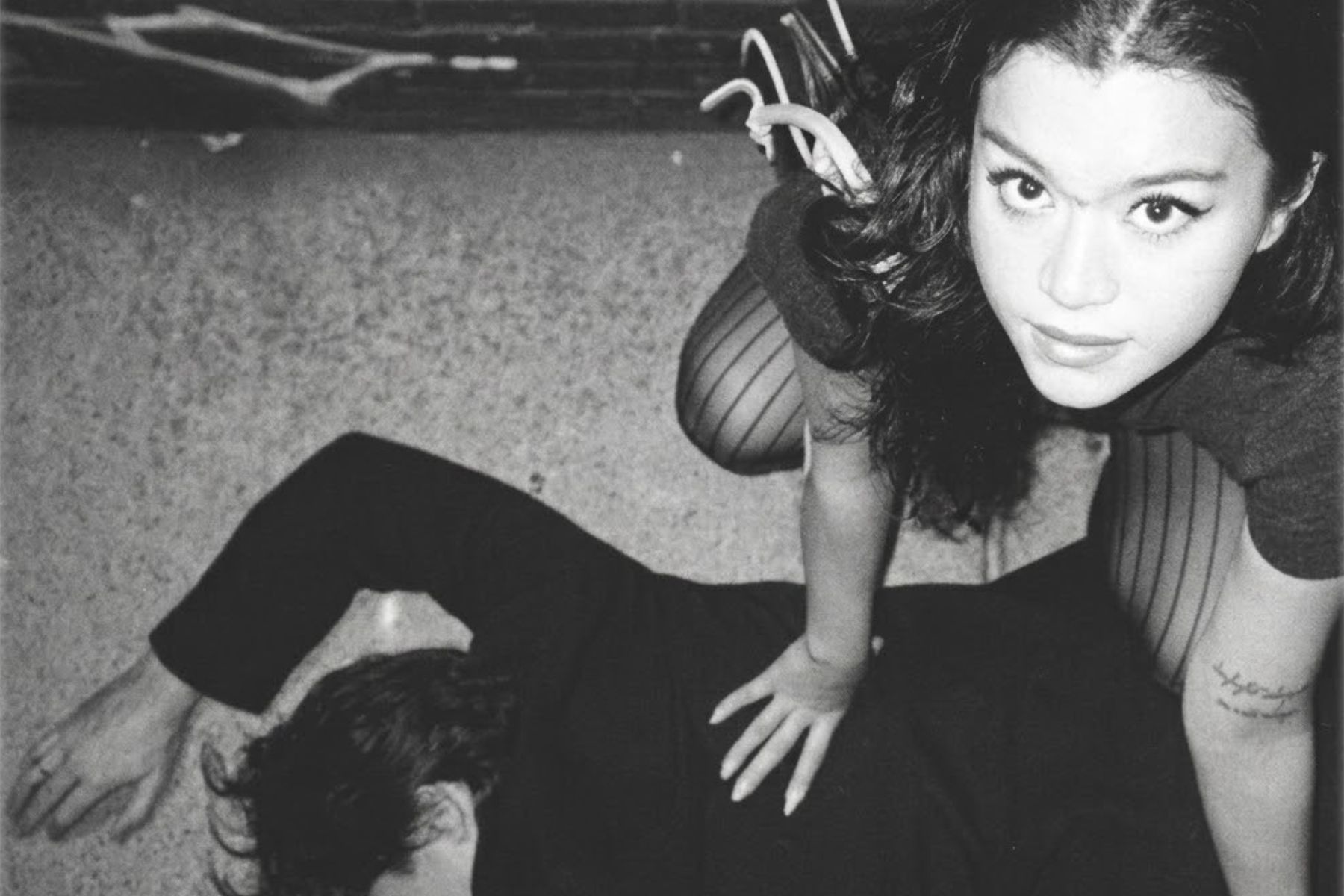
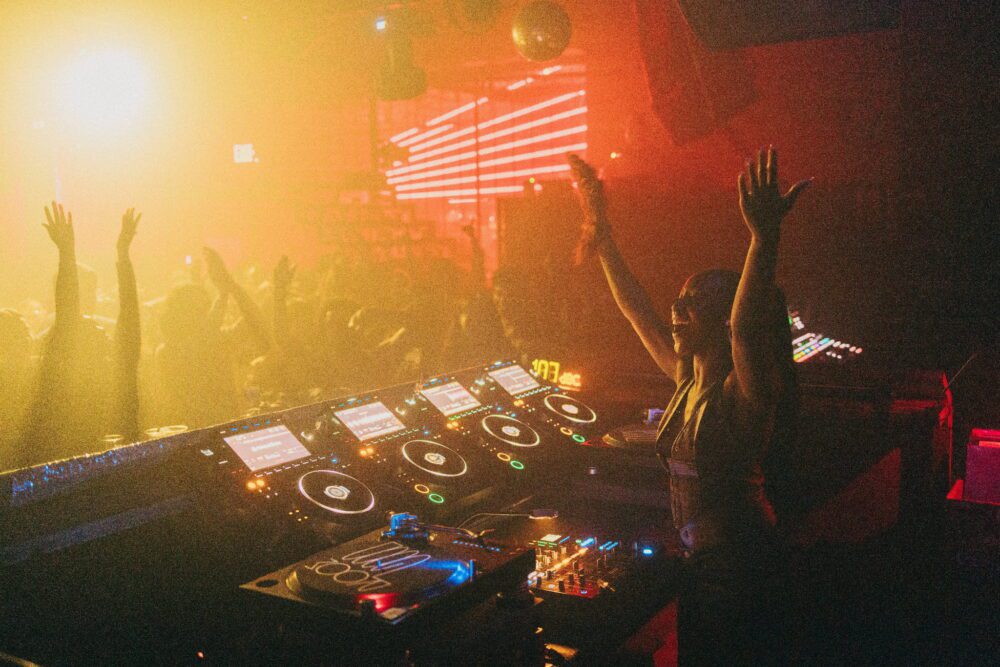
Brooklyn-based DJ Bridge has emerged as a growing presence in New York’s underground house scene. Her sets weave together classic and gospel house, disco, and ballroom influences, shaping vocally driven sessions rooted in energy and connection on the dance floor.
Photo credit: Jessica Licata
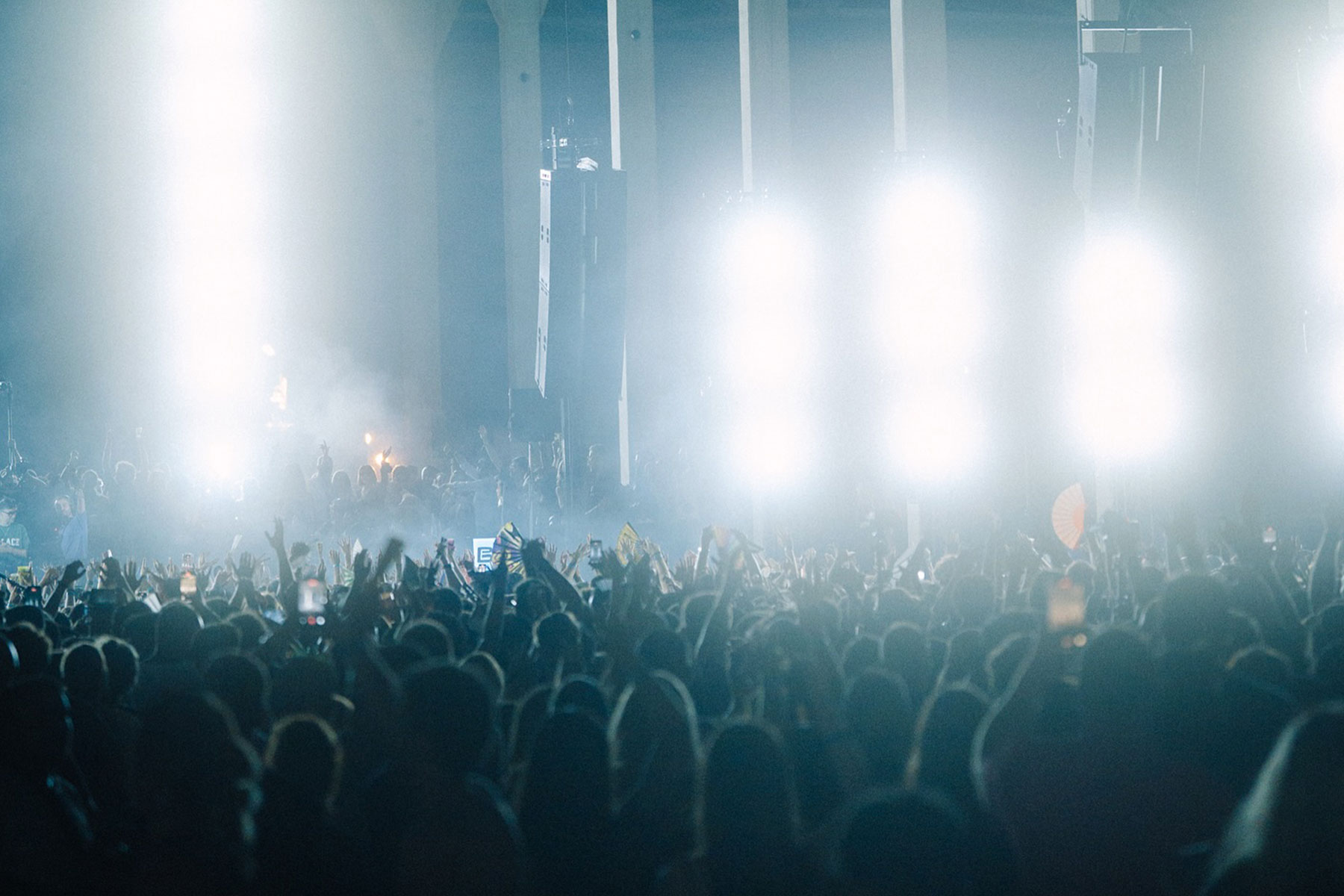
Last September, I attended my first Soul Summit of the year, the iconic New York summer gathering organized by the Black community collective of the same name, long rooted in Fort Greene Park. Since 2024, some editions have taken place at The Ruins at Knockdown Center. It was at one of those that I first saw DJ Bridge, making her debut.
Living in Astoria, and with a summer calendar constantly overflowing with parties, the trip to Fort Greene Park often felt like a stretch for me. When Soul Summit announced its first edition at The Ruins, I finally understood the scale of what I had been missing: a gathering grounded not in spectacle, but in community. In a moment when electronic music culture often bends toward visibility and the performance of belonging online, this event insists on something grounded and more collective.
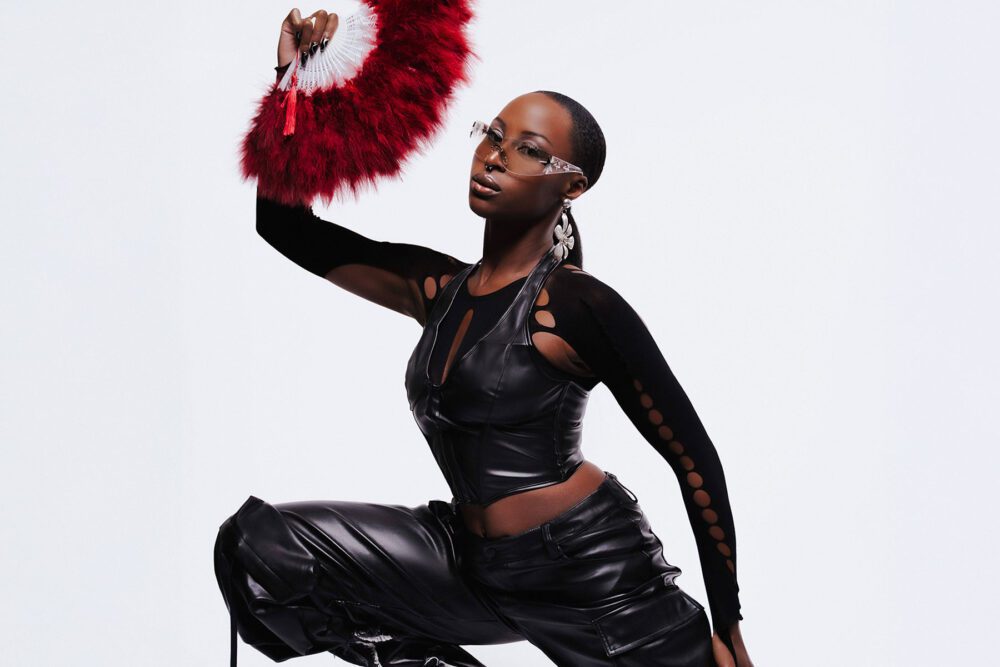
In 2025, I marked September 1st on my calendar. I arrived early and caught the opening set. Bridge was giving it everything. A Black woman fully in command of herself, wearing a red leather top, black cargo jeans, bold glasses, and holding a feather fan that echoed her outfit. Her movements followed every beat, sending energy through the crowd. No one stood still. She knew exactly who she was and what she represented in that moment.
I discovered that she doesn’t merely promote herself as a DJ nor use her platforms as a professional archive. She has embraced a sense of responsibility: to educate, to contextualize, and to honor those who came before her, the pioneers of house and techno.
Born in Italy, Bridge brings a global perspective to a sound deeply connected to house music’s foundations. Her selections often pay homage to her predecessors while introducing those traditions to new audiences. This approach has drawn the attention of artists such as Natasha Diggs, musclecars, Stacey Hotwaxxhale, and Barbara Tucker.
In this conversation, Bridge reflects on discovering house music, teaching herself to DJ, the responsibility of preserving the genre’s origins, and the challenges of building community in today’s scene.
EG: Hi Bridge, welcome to EG. I first saw you last summer at Soul Summit in New York. Your set felt incredibly mature, and I later learned it was your debut there and still early in your DJ journey. Who was Bridge before DJing, and who is she now? Who is the woman behind the decks?
Bridge: Thanks for the invite! My name is Bridget Kyeremateng. ‘Bridge’ is really like an alter ego of mine, and when I started DJing, I thought about what name I would use for myself. I wanted it to be an homage to my name, but it also represents “bridging” generations of house music, connecting the predecessors with Gen Z and Gen Alpha. I’ve always been a music lover. From disco, R&B, jazz, soul, music has always been part of who I am.
EG: How did you find house music?
Bridge: I first heard house in 2006 when ‘Change For Me’ by Erro, remixed by Joey Negro (now Dave Lee), came on. It changed my life. I didn’t know what it was, but it felt melodic and emotional, and that four-on-the-floor rhythm was unlike anything I had heard before.
When I moved to New York City in 2017, I went to Soul Summit for the first time on July 8, 2018, in Fort Greene. I was 22. I heard the thumping bass from the street and thought, ‘What is this?’ It was classic house. Most of the crowd were in their late 40s, 50s, and 60s. Black and brown people dancing to house music. I remember thinking, what? That was the first time I realized people like us enjoy house music. And they weren’t just dancing. They were spiritually connected.
EG: What did music sound like in your life growing up? Who and what shaped your taste?
Bridge: In the early years, it was my dad. He had records and CDs; it was insane the amount he would have, for home and the car. The music that I grew up on as a kid was a lot of Michael Jackson, The Whispers, Earth, Wind & Fire, Janet Jackson, and Barry White. It was disco, funk, and soul music.
My mother was really into Ghanaian gospel music, High Life. It’s literally just Ghanaian folk music that eventually was turned into gospel music.
EG: When I hear those songs remixed into house, it feels like rediscovering them through a new lens. It brings nostalgia and even makes me appreciate music I once dismissed.
Bridge: Exactly. It just shows that music is transcendental. It moves through generations and sounds. That’s why a lot of my sets include gospel house, because of the gospel background from my mom, and the disco, R&B, and soul from my dad. Music was always playing in my house. I grew up learning about music and dancing to it. I rarely ever stand still whenever I hear music.
EG: How did you learn to DJ?
Bridge: I’m self-taught. For a long time, I would go to parties and stand behind the DJs just watching them. They’d ask when I was going to start DJing, and I’d just say I couldn’t. I was fascinated by how they could move a crowd, so I kept showing up, sometimes every week, dancing and then studying what they were doing.
About five years ago, my husband bought me a DDJ-400. That was the push I needed. I taught myself, with a few friends showing me the basics since I’m a visual learner. After that, I just practiced constantly. A friend eventually pushed me to play live for the first time. I didn’t feel ready, but that’s when it clicked. DJing is technical, but it’s also a performance.
EG: You’re not only playing music but also educating people about where this culture comes from. House and techno were created by Black, Queer, and Latin communities, yet that history often gets erased. Why is it important for you to keep that story alive?
Bridge: It’s my responsibility. I don’t see it anywhere else. I believe I’m here and have the privilege to play house music because of the Black forefathers. Their experiences shaped the sound that we love, and we have a responsibility to keep their stories alive.
We see throughout history that a lot of Black, Queer, and Latin art gets colonized, repurposed, and repackaged as something “new.” The Black community and the working class didn’t have the resources to market it globally.
Here we are, 40 or 50 years later, and everything is accessible. We all have phones, the Internet is free, easy. What I talk about is not new.
“Raving is political. It’s about community and recognizing that people from different backgrounds can come together in the same space to share music”
EG: Do you think it is every DJ’s responsibility to do the same?
Bridge: In a way, yes. I believe any DJ who benefits from the house and techno music should do their due diligence and share the history. That’s why I do it, because I feel as though it’s my responsibility.
I also really love history and community. I love creating communities online, and I feel a deep responsibility to lift up the unsung voices from the very people who paved the way. It’s as simple as that. The more we talk about it, the less shocking this information will be.
EG: I see many comments asking you, “Why do this? We just want to party and hear music.” But often those critics are more interested in the scene than the background. That can affect the vibe. When a party feels off, people blame the DJ, yet it is often the crowd and the context, not just the music.
Bridge: Exactly. It’s about community. If you don’t feel the community, then you don’t really understand it. Raving is political. It’s about recognizing that no matter where we come from, we’re all together, at the same time, listening to and absorbing this music. But if you don’t understand that history, of course, you’ll just come in and treat it like whatever.
EG: What do you want people to feel when you play?
Bridge: I love that question. I want people to feel free, like they can do anything in the world. That comes from the songs I choose and how I perform. Look at me, if I’m up here dancing and just being myself, you can do it too. Anything you set your mind to. That’s what I want people to feel when they listen to me: that they can do whatever they want.
EG: What do you think the industry is lacking right now?
Bridge: In my few years in DJing, I’ve found it’s been challenging to create community. As a woman, as a Black woman, you have to work three, four, five times as hard. Opportunities don’t come easily. I’ve also seen a lack of trust and a lot of gatekeeping. Some of the people gatekeeping should be creating more opportunities for Black, POC, and queer DJs and producers. It’s frustrating to see, but I’m determined to push through and bring others up with me.
EG: What do you want people to see on your social media? What are you intentionally projecting, and how does that align with who you truly are behind it?
Bridge: I want people to see that I’m not only a DJ who loves to have fun, but a DJ who knows her history and is determined to share it, whether people feel comfortable or not. When people come to my set, I want them to think, “She knows her stuff. She knows her history. And she’s bringing other people up with her.”
EG: How would you describe your sound? Do you stay within a specific lane, or do you move across styles as long as the groove feels right?
Bridge: I’m definitely the latter. I love house, especially classics, and with vocals. I love disco, because it’s the predecessor of house music. A lot of people don’t want to DJ disco because it’s harder to mix and blend, but I love it.
I also play baile funk, NOLA bounce, and pop house edits. I love playing Beyoncé. I like to say I spoon-feed people house music, especially my generation. If they don’t connect with the classics like Martha Wash, Barbara Tucker, or Masters At Work, I introduce them anyway throughout my sets.
EG: Do you filter your music curation beyond the crowd? When you choose what to play, do you think beyond the group in front of you?
Bridge: I go by how the music makes me feel. If I love it, I play it. I’m intentional about uplifting Black vocalists and producers when I can, but I play across the board. I love Dave Lee and have dozens of his tracks. I also love Tommy Musto and Masters At Work, who were instrumental in shaping house music. For me, it comes down to the sound, the impact, and whether it fits the set.
On social media, I highlight the Black, Queer, and Latin roots of house because that history should not be erased. In the booth, though, I play whatever truly moves me and the room.
EG: What was your very first gig like, and which sets of yours changed things for you and led to more opportunities?
Bridge: My first set was at a bar in Williamsburg, and you couldn’t hear the music. The speakers were so bad that you could only hear them in the bathroom. It was a 15-minute set, and I played maybe three or four songs. Yeah… I was so nervous.
EG: No way!
“I love house, especially classics, and with vocals. I love disco, because it’s the predecessor of house music”
Bridge: The set that changed my trajectory was March 21, 2025, at Soul in the Horn, Natasha Diggs’ party. I had admired what she built for over a year, so that opportunity shifted everything. That was the first time my alter ego truly came to life.
Playing with musclecars at Good Room was another big moment. They gave me the 1 to 3 AM slot, and the room was electric. My first Soul Summit set at The Ruins at Knockdown Center was also major.
Throwing my own party, Uplifted, was another milestone. With St. James Joy, CRVM, and Kilopatrah Jones on the lineup, we brought in around 800 people. That helped define what I want Bridge to represent.
EG: Where do you dream of playing in the future?
Bridge: New York will always be my home base, but I want to play worldwide. Two dream bookings are Glitterbox Ibiza and Glitterbox Croatia. Their parties are joyful and high-energy, which matches what I bring to the room.
In New York, I would love to hold a residency at spaces like Refuge or Public Records.
EG: I know you have a recent career, but are you the DJ you would love to call “favorite” if you were a partygoer today?
Bridge: I wouldn’t. As a DJ and creative, I compete with myself. I always want to be better than I was a few months ago. I stay a student of other DJs, producers, and even partygoers. When I’m out, I’m observing. How are they moving the room? What makes a moment work?
I’d love to experience my own party from the outside one day, but growth is constant for me. I’m intentional about my sets, the curation, the fashion, and the collaborators I choose.
I’m in a great place now, and I know if I keep refining my craft, the next version of me will be even stronger.
EG: Feeling more Italian or New Yorker right now?
Bridge: Gosh! I’m more of a New Yorker now.
EG: House or techno?
Bridge: House.
EG: Vocals or just instrumental?
Bridge: Vocals.
EG: Woman or man vocals in house music?
Bridge: Ugh! I will say women’s, but like, there are just so many good male vocals as well. But I’m going to say… women.
EG: Being a DJ or a party attendee?
Bridge: Being a DJ, because now I party at my own sets.
EG: Underground or mainstream?
Bridge: Underground.
EG: Mixing live or producing?
Bridge: I haven’t produced yet, so mixing. Honestly, even after producing, I’d still choose mixing. Moving a crowd in real time is what really does it for me.
EG: 80s or 90s house music?
Bridge: 90s.
EG: Original mix or remix?
Bridge: What a question! Remix. There are a lot of good remixes. There are a lot of classic songs for which the remixes end up being better.
EG: Indeed. I feel like remixing the perfect form of reaching out to audiences with old composed music.
Bridge: Exactly, like Dave Lee… he does so many remixes, and they’re all so good.
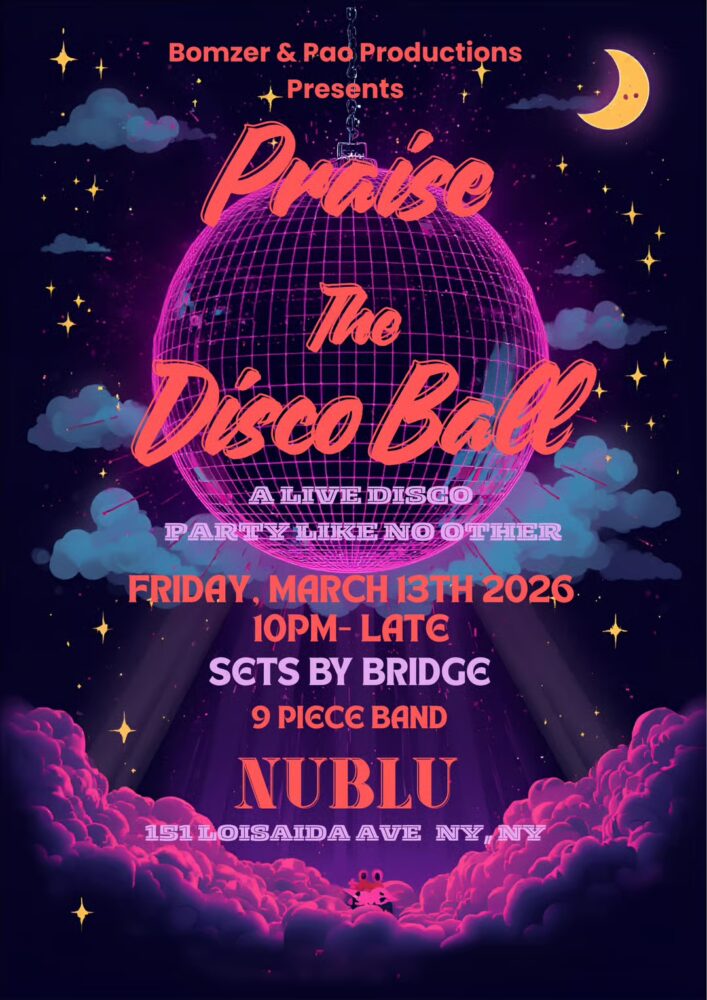
Bridge is set to perform on March 13th at Praise The Disco Ball in NuBlu, March 23rd at Lot Radio with Soul Summit, March 27th at Webster Hall in New York, and May 22nd at Lightning in a Bottle in Buena Vista Lake. Follow her updates here.
Follow Bridge: Website | Soundcloud | Instagram | TikTok