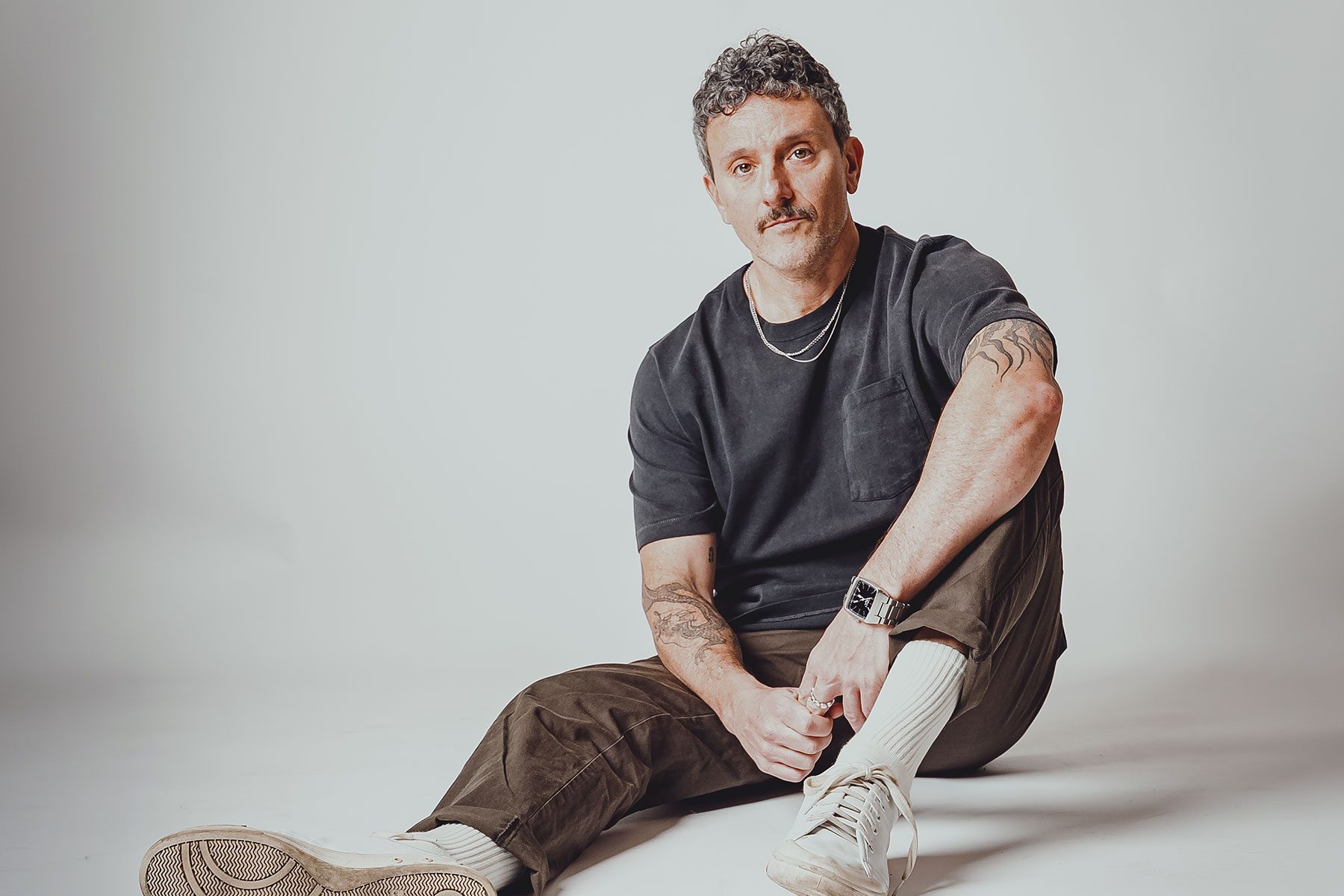
Corsican-born producer and live performer PETRU KSS has been carving out a distinct path through bold, driving techno and narrative-led sound design. Blending rhythmic precision with contrast and atmosphere, his work connects physical intensity with a cinematic sense of scale.
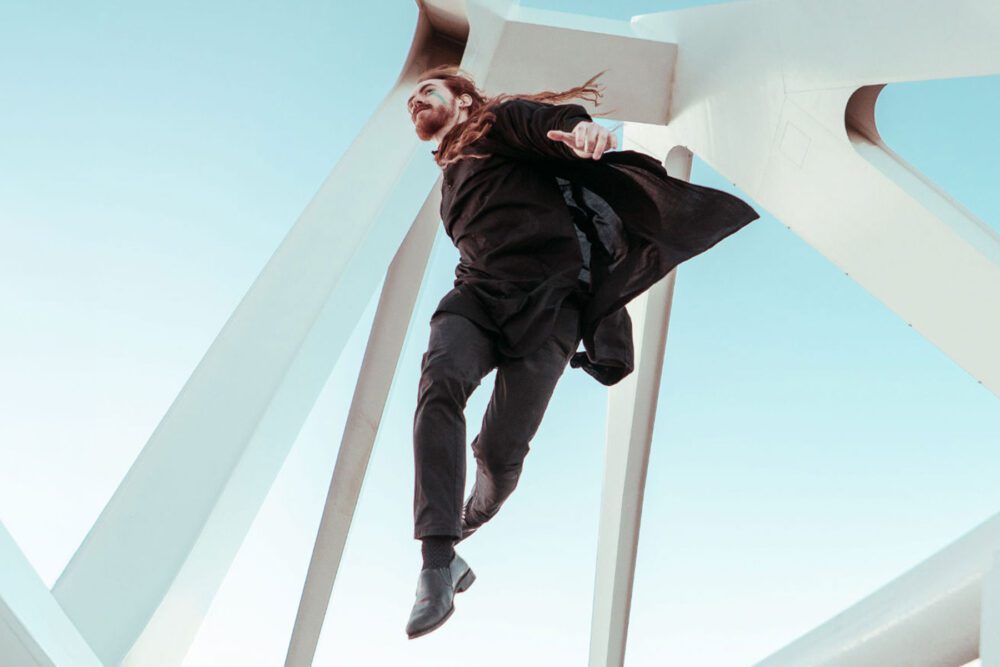
Photo credit: PETRU – Website
Rooted in expressive, hardware-centric production, PETRU KSS was awarded the Richie Hawtin PhD Scholarship in Electronic Music for his ongoing THRiPPS research project, which explores live, improvisational performance practices.
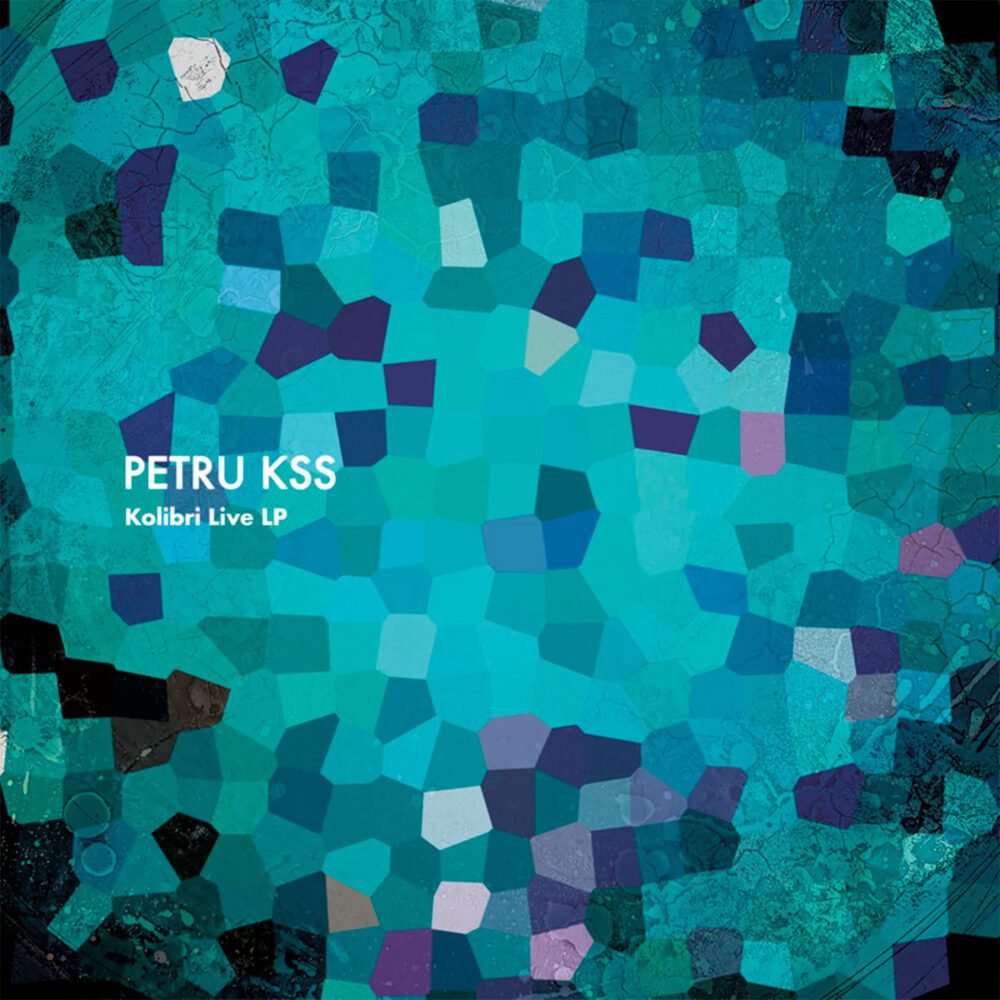
Following releases such as ‘KSS’, ‘Mediocracy’, ‘Mirage’, and ‘Drifting Embers’, he now looks ahead to his debut album, ‘Kolibri Live LP’, a live-recorded work captured in the wilderness of Corsica.
In this conversation, PETRU KSS opens up about distance from home, the emotional weight of recording in nature, and the role of imperfection in shaping both music and identity.
EG: Hi PETRU KSS, welcome to EG. Where are you today?
PETRU KSS: Hey EG Team, thanks for having me. I’m currently in the UK, on the train from London to Huddersfield – it’s quite a journey, and a world away from my roots in Corsica. Lately, my life has been orbiting between Berlin, London, and my academic research in Huddersfield. Paradoxically, while being distant from home can be challenging, this constant motion enables my productivity. We can say movement has been fuelling my creativity.
EG: Corsica plays a powerful role in your story. What did growing up there teach you about silence, space, and intensity?
PETRU KSS: Corsica is a unique place that spoiled me with its raw nature. I only fully realized its beauty once I moved away. There’s something mystical about it that I try to translate into my sound. I deeply miss the starry nights, observing the immensity of our galaxy without the filter of city lights. Also very fond of the subtle, white noise-like silence I am so used to hearing at the pine forest near Vezzani, subtly interrupted by the creaking trees, or by the sound of an owl at night – this kind of silence is home. Nothing to do with the intense unsettling silence of an anechoic chamber!
EG: When you began shaping ‘Kolibri,’ what were you trying to understand about yourself at that moment in your life?
PETRU KSS: ‘Kolibri’ was born out of the desire to find my own sound signature, finally letting go of chasing other people’s sound. Since the mid 2000s, I have been playing and listening to Stephan Bodzin and Dubfire music, which is still very inspiring to me. And in 2016, I became fascinated by the raw and dark textures from Oscar Mulero, DVS1, and Karenn. Despite my passion for sound design, producing this style didn’t feel natural to me at that time: my own tracks kept drifting toward something more melodic and atmospheric. I initially fought against that, but once I accepted that my sound had its own journey, I reached a state of transformational freedom. This was about the same moment I moved away from the DAW to embrace the physical immediacy of machines. I realized that making music with hardware triggers my hyperfocus, when I enter a flow state in which distractions disappear. It’s not a coincidence, as a few years later, I was diagnosed with ADHD.
EG: This album was recorded live in nature rather than built piece by piece in a studio. What did that decision demand from you emotionally?
PETRU KSS: It’s been a challenge to balance perfectionism and a complex project, but recording the singularity of the moment was definitely worth it. Recording the album was like going on an adventure, a wide range of emotion really! Excitement for most of it, and a lot of organisation – dedication first, and the obsession to nail a complex project. But also the acceptance of potential mistakes. For this project, I had a very specific list of things to accomplish to succeed. The location is hard to access, plus I wanted to record at sunrise, so that meant waking up in the middle of the night, driving, then hiking in pitch black darkness towards the hilltop, to finally setting up THRiPPS – my live act system. Also, even though being from Corsica, I am now based in London and had to fly my setup in from the UK. So many parameters could go wrong. More than the final product, the real success was to elaborate and deliver this project from A to Z, and you must trust the process for that. Ultimately, the music performance almost felt like a bonus here – this was the easiest mentally in comparison with the rest of the workload.
EG: There is always a risk in recording something live. When you listen back, do you hear perfection or do you hear truth?
PETRU KSS: Drifting oscillators, mistakes and unexpected textures… with repetition, those imperfections sometimes become the most vital parts of the music, it’s part of the thrill, and the interaction it generates brings life. We’re chasing clinical perfection too much. I’m looking for a consistent package that tells an honest story. It’s true to who I am as an artist, which is far more important than being flawless, I think. When I listen back, I hear the birds chirping from that special moment, standing on the ruins of the stone tower, on top of my wild hill, overlooking the turquoise beach, with the mountains behind, surrounded by the macchia – a dense and typical Corsican vegetation. I feel the sun on my face, the wind cooling me down gently, and hear the birds around me. Because it captures the truth of that raw atmosphere, Kolibri Live is perfectly imperfect.
“In this era of social media, AI, mass consumption and mass production, the scene needs to consider artists for their substance more than for their popularity score”
EG: Improvisation means accepting mistakes in real time. Has learning to embrace randomness changed the way you approach life outside of music as well?
PETRU KSS: It has, though it’s a bit of a paradox, and it took me a while to understand. I am a very organized person who also deeply enjoys the thrill of spontaneity, and I’d argue this transcribes too in how I make music: often starting in an organized way, letting the chaos take over, and then bringing things back together. In many aspects, and not just music, my brain functions this way. This process doesn’t fit everyone, and it does feel overwhelming at times – but observing and then accepting this imperfect approach surely helped me learn about myself and subsequently made things better. In the end, it’s not necessarily the music that has impacted the way I approach life, but more life that has influenced the way I am making music, a way to frame neurodiversity as a creative superpower. Trying to nail the perfect sound through Ableton automations wasn’t adapted to me; instead, I traded for a hardware setup, which felt more natural to me. In life and music, I take advantage of the imperfections and use them as fuel rather than seeing them as failures.
EG: You move between live hardware performances and DJ sets. Beyond the technical side, how does your internal state shift between those two worlds?
PETRU KSS: The opportunity to express myself in both ways is a blessing, as I like both the sound and the technique. As my adventure started in 2003, I’ve embraced all the technology that came, and loved every bit: the first CDJs, my first pair of Technics, Mixvibes (ancestor of Rekordbox/Traktor etc.). I forged this experience over the years, so DJing feels like second nature now: you never forget how to ride a bike, really! Very early, I made my first edits, then remixes, and later productions, acquired hardware effects and synths (first one was a Minitaur!), which paved the way to live performances.
In comparison, live acts feel like trying to tame the wild animal, an unstandardised setup that I designed. It somehow generates much more adrenaline and requires a longer time to reach this golden state of flow. Nothing tells you when a sequence should end; it’s a blank canvas where you are the sole navigator. Preparing a live act means jamming or rehearsing, packing and unpacking, doing a soundcheck, and physically connecting with the machine, while prepping a DJ set often comes down to digging, tagging, and sorting tracks. DJing also fulfills the crucial role of supporting other artists’ music. I embrace the “What You Hear Is What You Touch” philosophy, which creates a much deeper bond between my brain and the sound, and this exists more in the real-time production aspect of a live act.
EG: The album also opens itself to reinterpretation through remixes. What does it feel like to watch other artists step inside a universe you built?
PETRU KSS: That part of the process was incredibly exciting, as hearing how others deconstruct your work is such a fun and curious thing. There are many ways of doing a remix, and because of having an analytical mind, despite being a creative person, I enjoyed figuring out or discussing what they’ve done and how they’ve approached the remix. The fact that all reinterpretations are truly unique was also a massive bonus factor, and seeing how long-time inspiration and mentors like Dubfire, Arnaud Le Texier, or Kaiser reinterpreted my sound is a massive learning curve. But before even reaching the remix stage, working with Hannes Bieger on the mixdown has been incredibly insightful, as he pushed the record to the next level while respecting its DNA. These exchanges prove that even in a solitary production journey, a shared human contact is what truly makes the music resonate, opening doors to deep personal connections too.
EG: You received recognition through academic research around live electronic performance. Did that validation change your confidence, or did it raise the bar even higher for yourself?
PETRU KSS: I enjoyed that moment, of course, and it told me I was on the right path, but beyond the recognition of a scholarship, my confidence tends to oscillate between feeling the imposter syndrome and feeling confident in my work, so I keep myself grounded and remember that nothing is earned forever. This research is the opportunity to deep dive into other people’s work, which is a humbling process. Also, as I’m a bit relentless with projects, always thinking about the next thing, the bar has definitely pushed me forward, and the bar keeps rising higher and higher.
“We’re chasing clinical perfection too much. I’m looking for a consistent package that tells an honest story”
EG: In a culture that often rewards speed and constant output, what do you think artists need to protect the most right now?
PETRU KSS: “Everybody wants to be Hollywood, the fame, the vanity, the glitz, the stories” – has become a universal prophecy. In this era of social media, AI, mass consumption, and mass production, the scene needs to consider artists for their substance more than for their popularity score. The constant pressure to feed the algorithm transformed the scene. We need to learn how to take the time and appreciate the craft that artists took 10,000+ hours to master. Building on that, artists definitely need to develop their identity. On the same level, human connections are equally important: ‘Kolibri Live’ LP created bonds with other artists, which is a blessing.
EG: If you had to describe your creative journey so far in one word, what would it be and why?
PETRU KSS: I would choose resilience. As my creative journey started in 2003, I’ve seen many trends come and go over two decades, many doors shut, rejection, and personal wins, too. But what reflects my personality most is still being here after all these years: every milestone, from my early DJ residencies, to embracing a career in sound design, the launch of the label Kolibri Space Shuttle records, to applying for a PhD research, has contributed to forging my character and developing my sound. It’s an iterative process of discovery. Even, and especially, when being on my own, the resilience and belief in myself are what kept me moving forward.
EG: When people look back at ‘Kolibri’ years from now, what do you hope they feel about the person behind the machines?
PETRU KSS: As per my album’s motto Take Your Soul Beyond Gravity, ‘Kolibri Live’ is an invitation to the voyage, to let go, detach from planet earth, to feel elevated and trip for a moment. But everyone has their own interpretation. When I hear an album from my teenage years, it immediately teleports me back, emotionally, to how I was feeling at that time. I hope ‘Kolibri’ also acts as a memory trigger. Ultimately, I want people to feel that there was a real human behind those machines, someone who was inviting them on a journey to the stars.
PETRU KSS’s ‘Kolibri Live’ LP is out now on Kolibri Space Shuttle Records. Stream and download here.
Follow PETRU KSS: Spotify | Soundcloud | Instagram