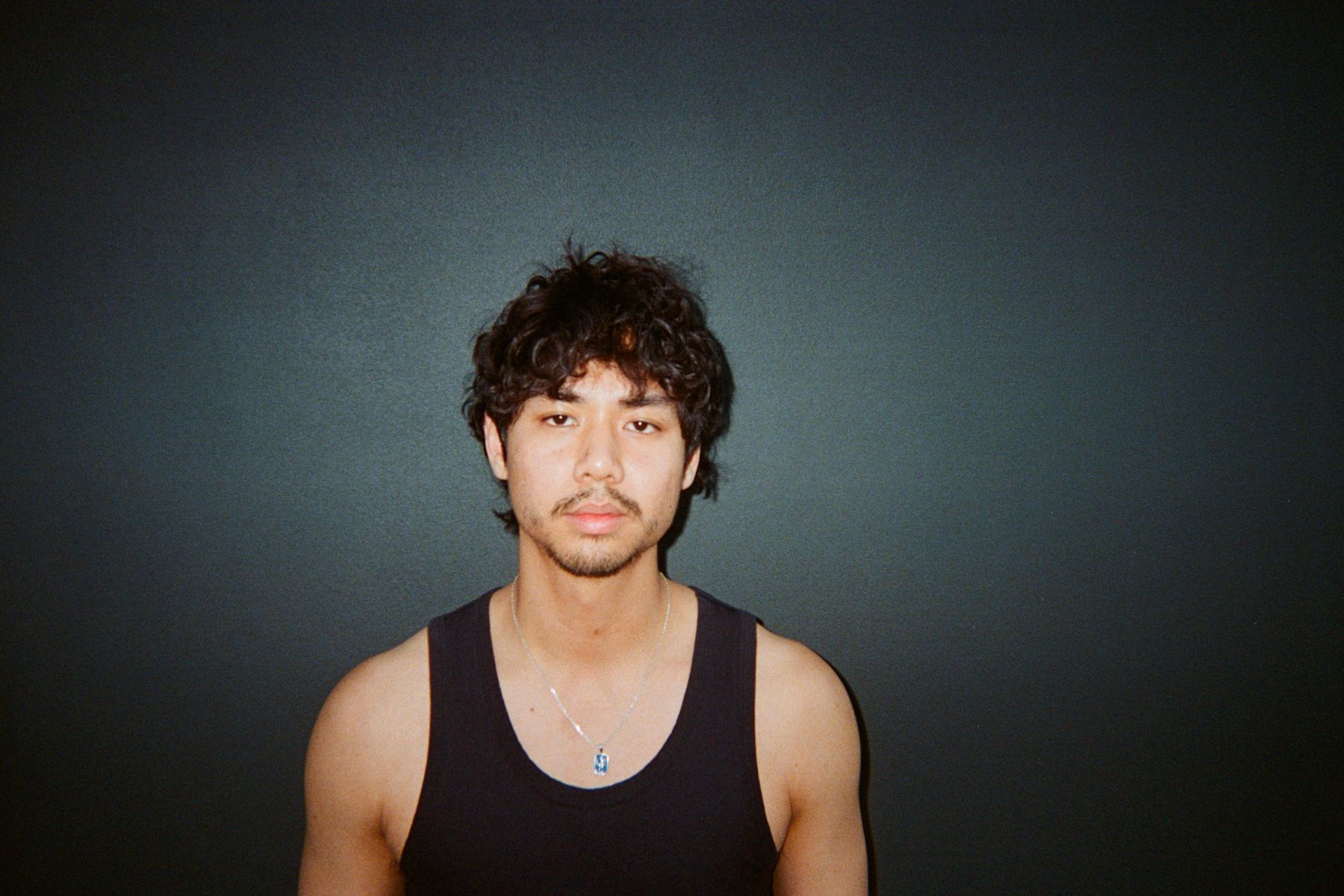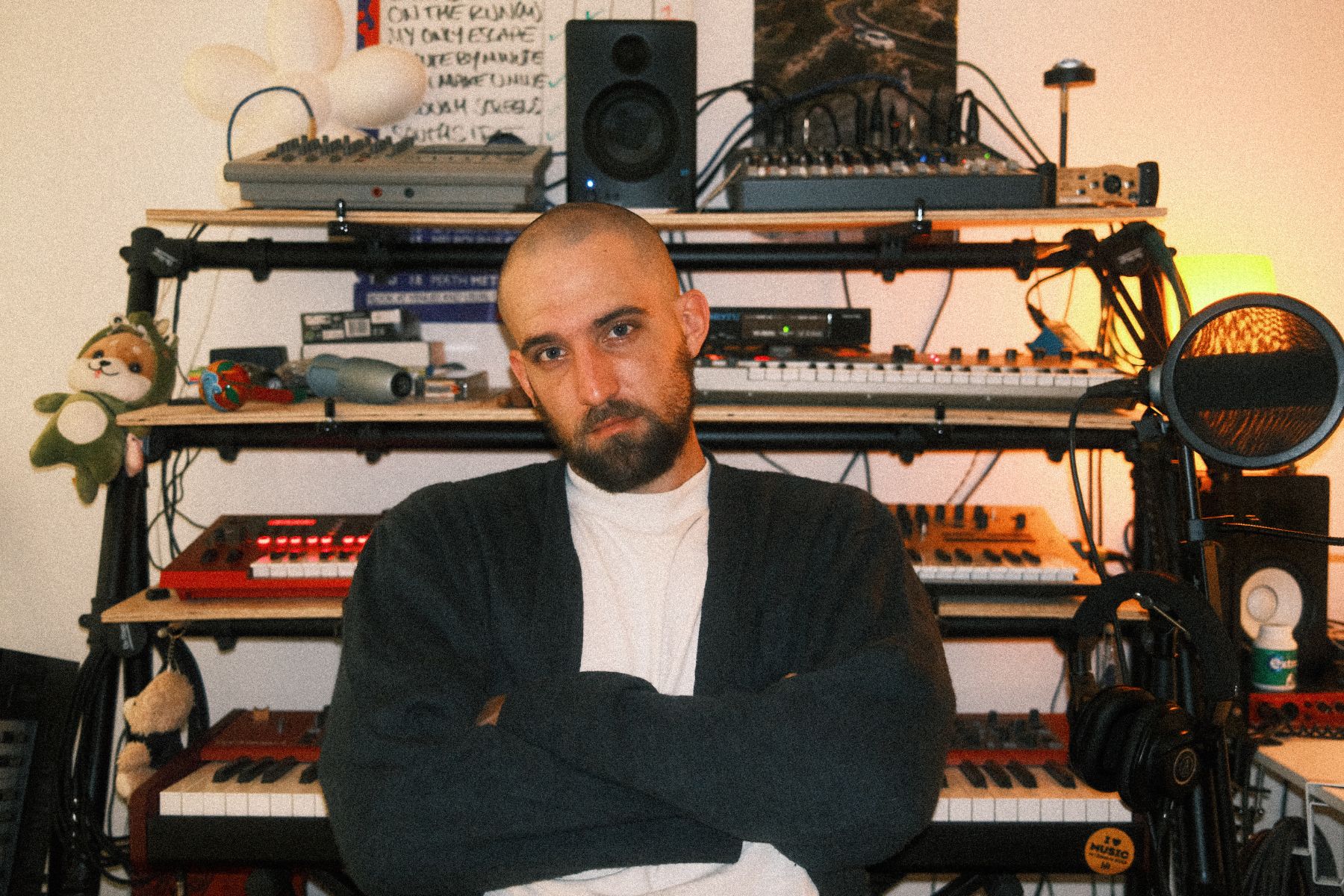
SITARA and Alex Drift come from different musical worlds, but share a common drive: to tell honest stories through sound.
Photo credit: SITARA & Alex Drift – Official
SITARA, a Cologne-based indietronic singer-songwriter and sound engineer, weaves emotion into genre-fluid songs shaped by personal intensity and global roots. Alex Drift, a Berlin producer with a background in house, electro, and nu-disco, uses groove as both a statement and a space for reflection—combining club-ready energy with narrative depth. Together, they explore the meeting point between vulnerability and rhythm, voice and structure, instinct and precision.
Their latest release, ‘Chase The Moment’, out on Electromantica, captures this dynamic in full. Originally written as an emotionally driven electronic track, it now returns in two distinct remixes: one from rising German producer Felix Kessler, who reimagines it with 80s electro-disco momentum, and one from Alex Drift himself, who reshapes the song into a stripped, vocal-led house groove. Both versions show how a single song can evolve into parallel identities—nostalgic yet modern, functional yet deeply personal.
In this conversation, SITARA & Alex Drift reflect on remixing as transformation, letting go of control, and how groove can carry as much feeling as melody or lyric.
EG: Welcome to EG. ‘Chase the moment’ feels like both a mindset and a pressure. When you hear that phrase now, after these remixes, does it mean something different to you than when you first wrote the song?
Alex Drift: Thanks for the invite. For me, the context of the song hasn’t really changed. It’s still about being more present in the here and now, and allowing yourself to break free from conventions every once in a while. Not just running endlessly in the hamster wheel. That idea works perfectly in a club context for me. Where else can you be so deeply in the moment and completely disconnect from everyday life?
SITARA: Yes, and music has this power to switch my mind off directly. Giving in to a rhythm by dancing lets me feel my body and vibrate in movement. Since my childhood, I have been training myself to let go again and again. So “chasing the moment” is maybe a mindset, but more like a lifebelt to not drown in overwhelming inputs and pressures from the outside. I think this is my key to happiness. Maybe the remixes emphasize the “chasing” more, because sometimes life rushes you in a way that you lose the track to remain focused.
EG: The track now exists in multiple versions that point in very different club directions. What excites you most about letting one song live several parallel lives rather than defining it with a single sound?
Alex Drift: For me, it was mainly a challenge. I co-wrote the song with SITARA, listened to it over and over again, and know it inside out. Taking that and turning it into something completely different—rethinking the song from scratch—wasn’t easy at all. The only thing that was clear to me early on was that I could imagine it working really well as a four-to-the-floor track. And in general, I just love the freedom of a song not having to be one-dimensional. Every remix tells a new story, opens new spaces, and it’s exciting to see how people react differently to the same core idea.
EG: Felix Kessler’s remix leans heavily into 80s electro-disco energy. What was your first emotional reaction when you heard how he reframed the track’s momentum and bassline?
Alex Drift: First of all, I really love his remix. Felix pushed the song into a completely new dimension. He has this very clean and direct mix, despite all those distorted and playful sounds—which I honestly envy a bit. I’m very much at home in deep house, where everything tends to sound warm and cozy. With Felix, a sound might suddenly scream, and the basslines really press you into your seat. I keep asking myself how he does that. And at the same time, he managed to keep enough of the original so the track remains recognizable, while still creating something entirely his own. That’s exactly what makes a great remix for me.
SITARA: Oh, it’s so much fun listening! Even though I must admit I am always afraid of the first moment hearing a remix. Is there anything left from the original, or is it something totally new? In this case, I was surprised by the playfulness that Felix put into the remix, and I could imagine myself driving through a computer game—a virtual landscape—just created with green lines and very arty. Do you see the picture?
EG: SITARA, your vocal stays emotionally intimate even when surrounded by harder, more driving grooves. How conscious are you of “leaving space” in your vocal delivery for producers and DJs to reinterpret later on?
SITARA: Well, mostly the vocals are recorded before the production happens. But also, it can be the other way around. Then I get a demo of a producer, and I create the vocals on top of that. In both cases, for me, it is most important that the vocal line works independently. In the best case, I could even just take a guitar and sing the song. The last years I worked with different producers, so I think I kind of got used to creating my vocals in a more “leaving space” way. But in the moment of creating and composing, I actually go more into a no-mind space and try not to think too much. Let the melodies and words come by themselves. And if I am lucky, it inspires the others to work with it.
Alex Drift: That’s actually a really interesting question, and one I’ve never really thought about from a remixer’s perspective. I usually focus on the emotion first. Does the song speak to me? Does it give me something to work with? That can be a small melody, the bass, sometimes the groove, sometimes the hook. I start splitting the song up in my head like samples. What could I do with this sound, what with that one? Sometimes that means I’ll only use vocal chops, even if the original song has two verses and three choruses.
EG: Alex, remixing a track you originally co-wrote is a unique position to be in. How do you decide what to protect and what to completely dismantle when reworking your own material?
Alex Drift: As I mentioned before, it was a big challenge and something I’d never done before. What helped me a lot was that I’ve defined the Alex Drift sound pretty clearly for myself over time. That made it easier to decide which direction to go in. In the end, it’s always a balancing act between respecting the original and allowing yourself to create something new.
“I usually focus on the emotion first. Does the song speak to me? Does it give me something to work with? That can be a small melody, the bass, sometimes the groove, sometimes the hook”
EG: Both remixes shift the song closer to the dancefloor, but in different ways. How do you personally define when a groove feels “honest” rather than just functional?
Alex Drift: I think a lot of producers get very focused on how a track sounds and sometimes forget how it actually feels. I like to listen to music outside the studio—while reading on the terrace, writing texts, cleaning my apartment, and of course while dancing. If a track doesn’t work in those situations, it’s not there yet for me on an emotional level. Maybe that’s what “honest” really means in this context.
EG: The original carries a sense of vulnerability, while the remixes introduce focus and propulsion. Do you see groove as something that can carry emotion just as strongly as lyrics or melody?
Alex Drift: Absolutely. Groove is emotional, subtle, almost physical. It can carry tension, joy, nostalgia—without a single word being spoken. That’s what fascinates me so much about electronic music. It’s very similar to film scores in that way, and we sometimes forget that. SITARA, for example, puts a lot of focus on lyrics and melody. I’m more interested in the overall mood, the vibe, and the emotion connected to it. That’s exactly what makes our collaboration work so well. We complement each other.
SITARA: Yes, I admit. A groove can really work with me emotionally. But maybe it is a different perception than lyrics and melody. As soon as lyrics come in, I always start to analyse. That is probably a problem of being a writer, that you can’t not listen to the words. So a good groove can catch me more instinctively, and lyrics and melody also have to pass through my mind and reach my heart.
EG: Electromantica has a distinct aesthetic that sits between nostalgia and futurism. How did the label context influence the way these remixes evolved—consciously or subconsciously?
SITARA: I think with the label, we are still in a process of finding ourselves. We are not really focused on one specific genre. It is more than the artists are given space to express freely, and the label provides the platform to release and promote. So I don’t think that the label actually influences the producers. Well, on the other hand, the name Electromantica very much shows what our hearts are beating for. Good electronic music with a true emotion. It doesn’t necessarily need to be “romantic,” but we don’t say no to sensuality.
Alex Drift: That’s what I like about the label. Electromantica really allows for that retro-futuristic mix and creates space for experimentation, which helps a lot. And since the label is basically a close-knit group of music lovers, that naturally influences the sound as well. We’re all around a similar age and grew up with a similar musical background.

EG: When testing new versions of a track, do you trust solitary listening moments more, or the reaction of a packed dancefloor—and why?
Alex Drift: Both are important, but I always start with listening on my own. That’s where I really notice details, emotions, and nuances. I also tend to torture my friends a bit—especially during the album phase. I’ve never sent out so many versions of tracks as I do right now. Luckily, I have very patient friends. I also DJed for over 15 years, so the dancefloor was often the final confirmation. That experience still helps me a lot today.
EG: Alex, you’ve described remixing as a dialogue with a song. What question did ‘Chase The Moment’ ask you when you sat down to reshape it?
Alex Drift: I tend to overload my tracks at first and then slowly strip them back again. That process often feels like a dialogue between the track and me: Does this element really need to be there? Is something missing here? I approach it step by step and keep cleaning things up until it feels right. In the case of ‘Chase The Moment,’ the question was: “If I were a house track, how would I sound?”
EG: SITARA, your music often balances fragility and strength. How do you feel about hearing your voice placed into more minimal, loop-driven club structures—does it amplify or challenge that balance?
SITARA: I think it takes two to rock. I just love the tension that is created when subtleness meets power. When a good bass rocks with a smooth voice. When the ground is solid, and the air is light. When a soft touch is accompanied by a deep push. Well. I could continue… That is balance for me. Personally, I really like minimalism. The only challenge for me is to let go of the vision of the story that I created with the original structure of the song. But if the song has a message that you can take out and which can stand alone without the “big” story around it, it’s okay. And I think ‘Chase The Moment’ says it all. So if a remix works well, then it amplifies the message. And for me, the message is still very important.
Alex Drift: What’s really beautiful about working with SITARA is that she gives you a lot of freedom. But I can definitely imagine that, as a singer, it’s not always easy to hand over your voice and your words—your own instrument—and trust that something good will come out of it in the end.
“Not only as a singer but also as a producer I always try to come back to playfulness and improvisation”
EG: There’s a strong sense of forward motion across all versions of the track. Was that energy intentional from the start, or did it emerge through collaboration and reinterpretation?
Alex Drift: I can only speak for myself, but I know Felix listens to a lot of driving music as well. Personally, I really love that pushing house sound. At some point, I even started calling a whole group of tracks “train house” because of that constant forward drive. Labels like Defected, Hot Creations, Kittball, and Suara released a lot of that kind of sound. I still love it today, and I’m sure it influences me more than I sometimes realize.
EG: In a time where electronic music can feel hyper-optimized, how do you protect instinct, sensuality, and imperfection in your creative decisions together?
Alex Drift: At some point, I learned that when I’m emotionally happy with a track and feel like I can’t add anything meaningful anymore, then it’s finished. Sometimes that happens quickly, sometimes it takes months. It’s often about listening to your intuition. Small imperfections are what make a groove feel alive and real. We love so many tracks that aren’t perfectly mixed, and we tend to forget that—especially with massive sound systems like Funktion-One in clubs, where tracks can easily end up being mixed to death. That doesn’t mean you shouldn’t keep evolving or improving, but feeling should always come first.
SITARA: That is a point where I am actually constantly learning. Not only as a singer but also as a producer, I always try to come back to playfulness and improvisation. And in production, press “record” even when you think you are still preparing—because magic can happen at any moment. And it tends to happen in the moments you didn’t press “record”. I used to say: The divine you cannot catch. This year, I put it on my list to become better at accepting making mistakes. Allow myself to be imperfect and pure.
EG: Looking ahead, do these remixes feel like a closing chapter for “Chase The Moment”—or more like an opening door to further collaborations and transformations?
Alex Drift: For me, it’s very clearly the beginning of a lot more to come. SITARA is bursting with ideas right now. We’re both working on our albums, and we’re currently also working on two more joint tracks that will be released in the future. So we definitely haven’t reached the end of our collaboration yet, and I’m really excited to see what’s coming next—and how people will react to it.
SITARA: Actually, there are already more versions of ‘Chase The Moment’ in the making. This song is one of my essential tracks that I really love from every point of view. Since I am in my job as a sound engineer, focusing a lot on 3D Audio productions, I am working myself on an immersive acoustic version, and we have one more remixer creating an electro-acoustic version interpreted with real recordings of violin, cello, and double bass that are then processed electronically and recreated in a sample-based interpretation. Also, I would love to give the stems to other producers to play with and create more remixes. I think the message of ‘Chase The Moment’ can live in many coats, and I would be happy to share it!
‘Chase The Moment’ by SITARA & Alex Drift is out now via Electromantica. Stream and download here.
Follow SITARA: Spotify | Soundcloud | Instagram
Follow Alex Drift: Spotify | Youtube | Instagram