A major newsroom just spent thousands of words chasing a name.
Who is Banksy?
It reads like a case file. Dates, clues, guesses, assembled with precision and intent. Clean, serious work. And still, it misses the point. Anonymity was never a problem to solve; it was the idea itself.
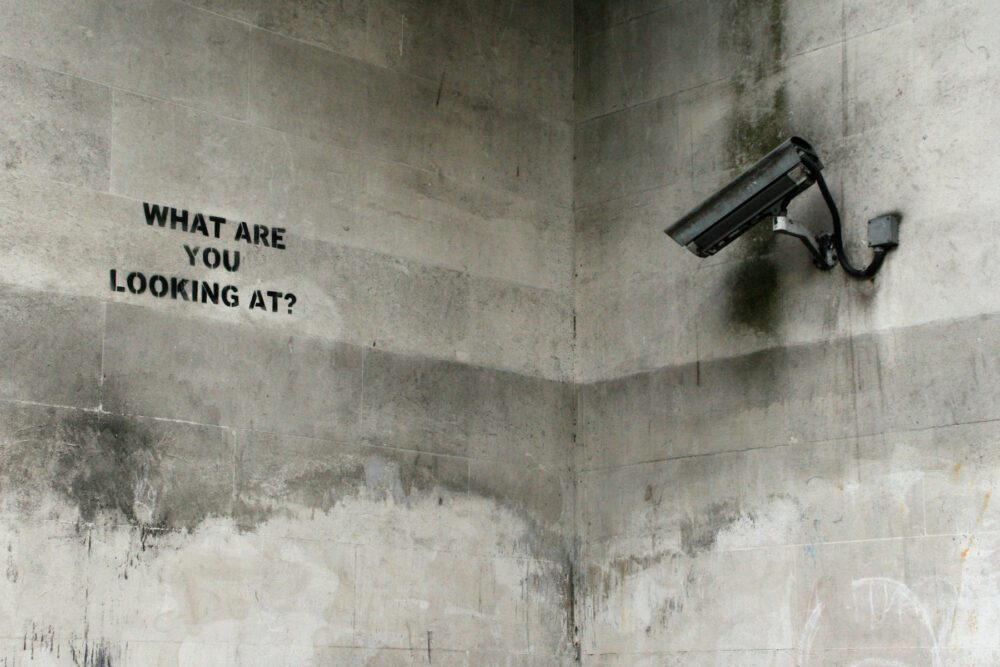
Photo by Niv Singer on Unsplash
The mural does not change if you attach a name to it. The message does not get sharper, the image does not gain weight. If anything, it loses something. Banksy works because he is not there. No biography, no explanation. Just the piece, placed in public, left for anyone to interpret. That absence is not accidental. It creates distance, and that distance is doing real work.
We have seen what happens when it disappears. When Burial released ‘Untrue’, it carried a feeling that resisted fixation; intimate, but not specific, personal without becoming literal. The push to reveal him followed quickly, culminating in a photograph that felt almost reluctant in its existence. Nothing improved after that. The music remained unchanged, but the space around it shifted. The mystery was not decoration; it was part of the work.
There is a difference between hiding and refusing, and some artists have understood that distinction with precision. SAULT, for instance, operates without the expected apparatus of presence. No interviews, no constant output of personal context, no attempt to convert process into narrative. Albums arrive without warning, and still they resonate, still they travel. The absence does not weaken the connection; it recalibrates it.
Daft Punk made themselves visible by becoming invisible, using the helmet not as concealment but as another tool that would enhance the alluring narrative of robots with souls. It was never about Guy-Manuel de Homem-Christo and Thomas Bangalter. Aphex Twin approached it through misdirection—fragmenting identity, seeding contradictions, allowing uncertainty to shape the way the music was perceived. The KLF went further still, removing themselves entirely, deleting their catalog, and stepping outside the system in an act that prioritized control over presence. Even Gorillaz displaced authorship through fiction, placing characters between the work and its creators.
Different strategies, but a shared instinct: take the attention off the individual and return it to the work.
Which is why the impulse to “unmask” persists. The Sun’s campaign to identify Burial framed revelation as a necessity, but functioned more as a reduction that turned ambiguity into a consumable endpoint. The unknown becomes a problem to solve, rather than a condition to engage with.
Banksy sits at the center of that same tension. To reveal him would not expand the work; it would close it. A fixed identity might serve the system, but it does not serve the art.
Not everything needs a face. Some ideas are stronger without one. Harder to reduce, more difficult to finalize, more open to interpretation. In a culture that increasingly demands access, where every step of a process is documented, and every identity continuously reinforced, the refusal to provide that access becomes a form of control.
In the underground, the mask is not a trick. It is protection. And sometimes, it is the only way to keep the work intact.