In recent years, AI has moved from the margins of music production to its very center. What began as experimental tools for sound design or composition has evolved into systems capable of generating complete songs, melody, harmony, lyrics, and even convincing vocal performances at an industrial scale. This rapid expansion has sparked growing concern across the music industry, not only about technological disruption but also about authorship, economic sustainability, and cultural value.
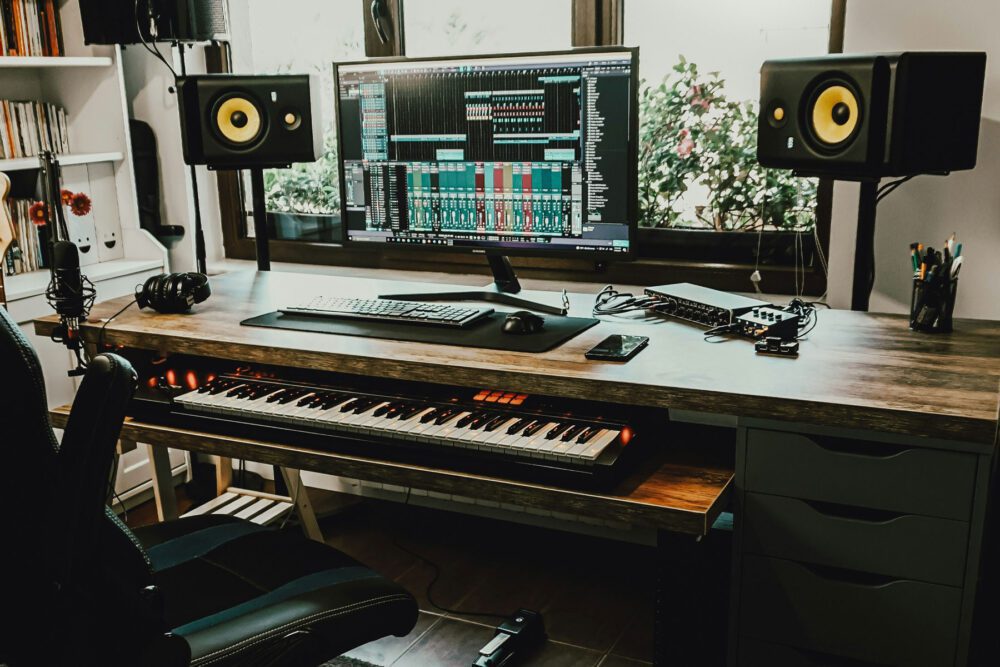
Photo by Luis Gherasim on Unsplash
At the heart of the debate lies a fundamental question: what happens to music as a human practice when algorithms can replicate its surface features faster, cheaper, and in near infinite quantities? One of the most visible consequences of AI-driven music is the strain it places on existing economic models. Streaming platforms are already oversaturated, with millions of tracks competing for attention and fractional royalty payments. The rise of automatically generated music, often uploaded in bulk and optimized for algorithmic recommendation, intensifies this pressure. For many professional musicians, the concern is not that AI will replace creativity, but that it will dilute visibility and income in a system where resources are already scarce.
This phenomenon, frequently described within the industry as “AI slop,” refers to the mass production of low-cost, generative tracks designed to exploit platform mechanics rather than express artistic intent. While such content may technically comply with platform rules, it challenges the sustainability of a music economy built on human labor, long-term careers, and cultural differentiation. Legal conflicts have further exposed the fault lines between the music industry and AI developers. Major record labels have pursued legal action against generative music companies, arguing that their models were trained on copyrighted recordings without authorization. The core of these disputes is not merely the output of AI systems, but the data that enables them. Training models on existing music raises unresolved questions about consent, licensing, and compensation, questions that copyright law in many jurisdictions is still ill-equipped to answer.
Beyond the courts, cultural institutions are also grappling with the legitimacy of AI-assisted music. In several cases, songs that relied heavily on generative systems have been excluded from official charts or competitions due to insufficient human authorship. These decisions signal an emerging boundary; while technology may assist creation, there remains resistance to equating automated output with artistic work in contexts that carry cultural or historical weight. Artists themselves have been among the most vocal critics. Across Europe and the UK, musicians have publicly opposed policy proposals that would allow AI companies to use copyrighted works for training by default. Their argument is straightforward: without explicit consent and fair remuneration, such practices amount to large-scale extraction of creative labor. For many, the issue is not innovation; it is about who benefits financially from automation and who bears the cost.
Some responses have taken symbolic forms, including protest releases and collective actions intended to highlight what is lost when music is reduced to data. These gestures underscore a broader anxiety within the sector that creativity risks being reframed as a raw material rather than a profession. Not all industry responses have been confrontational. Certain platforms and rights holders are exploring licensing frameworks that would allow AI tools to operate transparently and legally, with compensation flowing back to creators. Others have chosen to impose stricter limits on AI-generated content, seeking to preserve trust within their ecosystems and maintain a clear distinction between human and automated production, as in the Bandcamp case.
What is becoming increasingly clear is that informal norms and isolated policies will not be sufficient. As generative technology accelerates, the music industry faces a structural challenge: how to integrate AI without undermining the economic viability of musicians or eroding the cultural meaning of music itself? The current moment is less about rejecting technology than about defining boundaries. Artificial intelligence can be a powerful tool, but without regulation, transparency, and ethical constraints, it risks amplifying existing inequalities within the music economy. The choices made now, by platforms, lawmakers, and industry leaders, will shape whether AI becomes a creative partner or a force that hollowed out the profession it sought to enhance. In that sense, the debate over AI in music is not simply about technology. It is about authorship and the future value of human expression in an increasingly automated world.