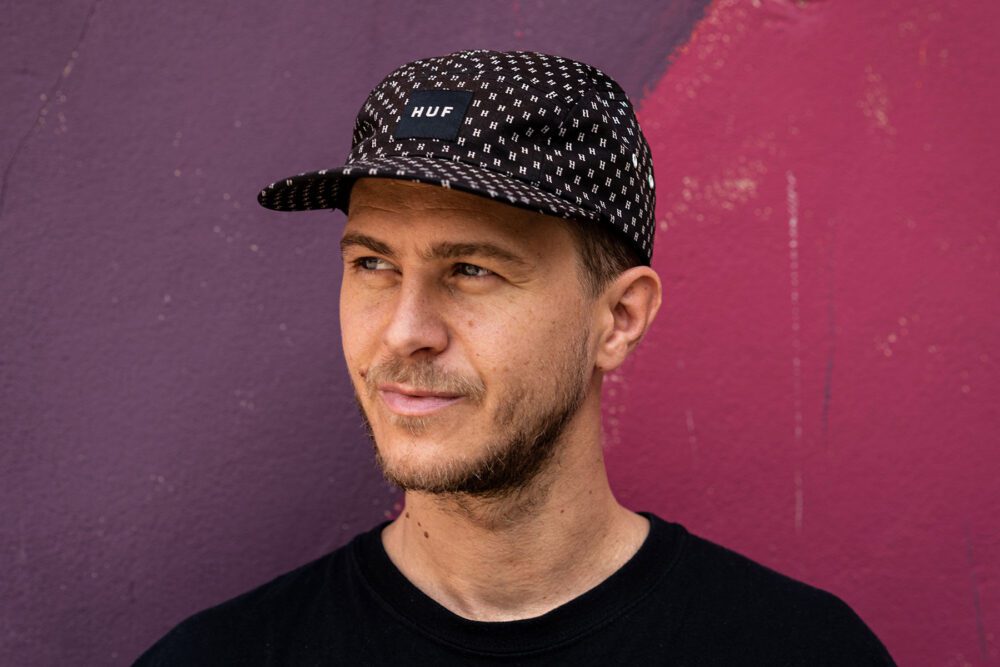
David Mayer’s trajectory as a producer and DJ has been shaped by a multicultural upbringing across Germany, Spain, Norway, and Berlin, where he settled in 2004. That range of influences continues to inform a sound rooted in groove-driven structures, blending techno and house with a focus on rhythm and movement.
Photo credit: David Mayer – Official
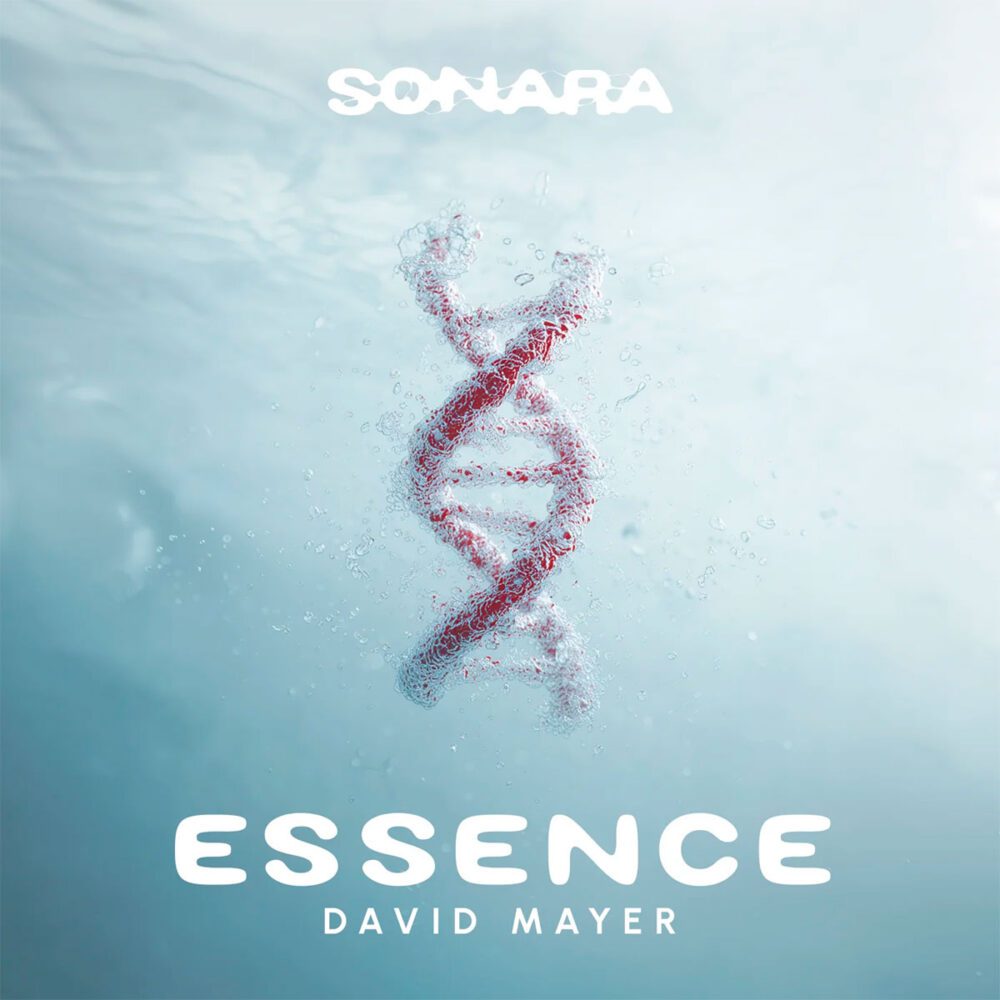
With his latest release ‘Essence’, out now via SONARA, Mayer turns inward. The track reflects a period of personal transition, distilling his approach into a more focused and stripped-back form.
In this conversation, David Mayer opens up about creative instinct, collaboration, and the role of clarity in artistic growth.
EG: Hi David, welcome to EG. It’s a pleasure to have you here with us. Where are you today, and what’s your headspace like these days?
David Mayer: Hello team EG, thank you so much for having me! It’s been over a decade since I’ve been appreciating your work for news and inspiration, so the pleasure is really on my side. I’m on this tiny side island of Sardinia right now. This place is where SONARA is from, and my friend Tooker is hosting Nico Stojan and me for another one of our designated “base camps” at his beautiful SONARA Studio. The headspace we’re in here is all about letting go and letting ideas flow. To me, it’s a true creative sanctuary.
EG: Congratulations on your release ‘Essence’ via SONARA. This one feels particularly introspective. What was happening in your life that made you need to create this track?
David Mayer: Thank you! It’s introspective indeed. I really appreciate you pointing that out. I have always ended up with an intimate relationship to my original tracks, precisely because they were all influenced directly by my life circumstances in some way, often tied to lessons that I learned. Sometimes quite consciously, like ‘Pi’, which challenged my conviction over weeks in the form of a mathematical riddle until I finally cracked its arrangement. Other tracks were almost sneaking their way to completion, perhaps even bypassing my consciousness, like ‘Secrets’, which I almost dismissed as “just a little groove” from the night before until Floyd Lavine pointed out its hidden potential to me during a casual studio visit. After that, the track suddenly grew and finally revealed its secret message: Friendly ears matter! Like these examples, ‘Essence’ has its own unique situation, too.
I’m finding myself in a deep transition; my whole life is changing at a pace I could have never imagined. In the decades leading up to this moment, I spent a lot of energy looking after my inner peace, but somehow always ended up feeling even more worked up and restless. Then I learned that I can’t find peace without clarity. ‘Essence’ arrived during my ongoing quest for clarity.
EG: There’s a sense of restraint in ‘Essence’, almost like a return to something more fundamental. What drew you back toward that stripped-back approach?
David Mayer: In hindsight, my dearest singles felt like making some sort of mini album, sometimes taking months to make, filled with little messages and fueled by purpose. ‘Essence’ is exactly that in an even broader sense. I was listening to a handful of sketches one day this winter and noticed that they all shared a specific set of common denominators, but none of them seemed ready to blossom. So I extracted that shared DNA and out came ‘Essence’, which is not just a snapshot from this time, but also happens to reflect a specific palette of sounds that shape my output since day one. These include high-pitched, articulated leads, a drumset leaning towards disco grooves and heavy, thumpy basslines, oscillating between accentuated and long notes.
EG: Your productions often balance groove with evolving melodic detail. When you’re in the studio, what tells you that an idea is worth pursuing?
David Mayer: What tells me that an idea is worth pursuing? If I knew exactly what that thing is, I would treasure it, seal it in a flacon to sprinkle it on everything I do, like expensive perfume!
It’s not that easy. But there are some indicators I have learned to rely on. For instance, it helps me to focus on only a groove, then develop some sort of “noise-bed” with a vibe to fully embrace the drums. It also helps if the drums follow a variation of pitches so they are playing tiny, intrinsic melodies. Happy accidents are at play here. The successful outcome of that combination is what I call “the primordial ooze”. When the vibe of the primordial ooze is already sounding meaningful, it can feel effortless to develop bass lines and leads on top. The moment when the primordial ooze is paired with a matching set of bass lines or leads, that’s when the signal is set for a layout worth pursuing.
On the other hand, there is a significant amount of intuition involved in that process of determination. The thing about intuition is that it’s sometimes loud and clear, sometimes the essence of a tune is hidden under thick layers of trials and errors. If intuition does not lead, I might need to spend more time on the music until the message emerges. Or trust my closest partners in an intimate listening session. The feedback I get from trusted friends can move sketches like mountains, both ways.
Technically speaking, to develop an idea, it can really help to lay out the basic loop as soon as possible. Then the arrangement will reveal its potential for little changes, buildups, and drops. And stretching it out on a timeline would tell you if something is still missing. Generally, the most blissful experience is when the music comes to life, almost like it takes the wheel and proceeds to guide me through every decision like I’m remote-controlled. That’s “when the music finishes itself”. No amount of professionalism can achieve the same results.
“I have to find myself reflected in my music, so I focus on creating for myself. I consider myself to be my own most important audience, perhaps my own critic a little too often”
EG: You’ve spent time growing up across Germany, Spain, Norway, and eventually Berlin. Do you remember an early moment where music first felt like something personal for you?
David Mayer: That’s another awesome question! Hard to tell if there were even earlier moments like that, but I know that I was 4 years old that time I was alone in our first living room in Norway, secretly putting on my parents’ vinyl records (Folk, Blues and Classical), smelling them, touching them, and being all captivated by the sonic effects of moving the needle around and pressing the rpm button. The floor must have been scattered with sleeves and records when I was finally interrupted.
The contrast between my wholesome bliss and the awakening to my parents’ reaction to the mess I made likely felt like becoming aware of a very personal connection! I never stopped doing that, actually. In the nineties, I came home from school on my own to an empty house most afternoons. I always had a few hours to myself to put on records, preferably listening to Tracy Chapman, Joan Baez, Fleetwood Mac, and Janis Joplin. My mom was wise enough to put some beautiful children’s music by Gerhard Schöne to the front, too, while my stepdad had soon learned to lock up his most precious classical records.
In the same period, I started to discover that I could use my stepdad’s tape deck to record that Rap station off the radio. I must have been around 9 when I recorded myself rustling bubble wrap for several minutes at a time to a cassette, only to then play that back in the background on one boombox while I was recording myself on another boombox playing the harmonica. The bubblewrap was supposed to mimic the heavy crackling noise of rotating wax cylinders, like you can hear them on old blues recordings. I did not realize it at the time, but that was my first attempt to make a multitrack recording. I bought a basic Fostex Four Track recorder when I was 14. I had heard someone rapping about a Fostex on a HipHop track and a KORG Workstation. Of course, the Fostex rap was referring to advanced studio equipment, while my noisy grab was designed as a portable notepad for hobby musicians. And the floppy disc Worksation was my naive attempt to get something like an MPC, which I had no clue existed. But when I started recording whole songs with electronic beats on that Fostex and then putting them on MiniDisc to share only with my closest friends, that was probably when it started feeling next-level personal.
EG: Thinking about your journey so far, was there a moment where things shifted, and you felt truly confident in your path as an artist?
David Mayer: So at 14, I had my Fostex 4-track recorder, my Worksation to loop electronic beats, a microphone, and a guitar. I never shared any of it until one day I figured out how to “master” my stereo mix to a portable MiniDisc recorder, very fashionable at the time.
Anyhow, that’s how my music first left my bedroom. We had an older friend with a MiniDisc system in his car who loved to play my music out loud in our school’s parking lot, expressing his excitement and spreading it wide. In fact, he was a guitarist in a very creative funk band. This was my first experience with having a professional audience and some sort of mentorship. His input motivated me to make more music and try different things every day. It didn’t take long before I had my first computer with Cubase VST on it. When I arrived in Berlin in 2004, that’s when it hit me that the “minimal dub techno” I had been stitching together in my bedroom was kind of reflected in the music they played there in the clubs. All it took was a bunch of exceptionally talented friends to occasionally play some of my demos at their electro house gigs to finally nudge me towards DJing. I always included my own productions in my DJ sets, which kind of became the whole point of why I was producing in the first place: To play my stuff in my DJ sets.
EG: SONARA has developed a very distinct identity over time. As a co-founder, what did you want this platform to represent from the beginning?
David Mayer: Nico and I have been in creative collaboration since we met 2014, it all started with my remix for his ‘The Blue Hour’ featuring JAW. He and Tooker have been friends just as long. When Tooker decided to found a label and asked Nico, that’s how we naturally merged.
To me personally, this group effort is about summoning creativity itself, purposely combining our knowledge and exploring our common potential while giving everything professional rails. We are consciously inviting our individual backgrounds to blend, and we practice to establish a safe space for the sake of the joy of making authentic music, but also for progress. That means meeting regularly on SONARA’s mother island, Isola di San Pietro, Sardinia, and in weekly Zoom calls.
The joy of creating is something we all know and treasure, and we all have experienced how it feels when it fades or starts to feel lonely. A mix of fellowship, mentorship, and creative adventure, that’s what SONARA means to me.
EG: Looking at the current landscape, what do you think is one of the biggest challenges for artists trying to stay honest in their work today?
David Mayer: Trends can be like honeypots, especially if you look at them as a means to success. I have a habit of naturally and playfully trying things, but I always conclude with the question of what my core motivation in my creations are. I have to find myself reflected in my music, so I focus on creating for myself. I consider myself to be my own most important audience, perhaps my own critic, a little too often.
Authenticity is such a beaten term, but I think there are no shortcuts around it long-term. True authenticity comes with clarity. Clarity in motivation brings honesty to the creation. To me, it is all about connecting with that inner source of which all the most unique ideas I’ve had over time came from. That’s a whole journey, and it is also the reason why I am creating in the first place.
It’s like I don’t have a choice; things just have to be made, preferably from scratch. But I love fixing things around the house, too. My dad is an incredibly creative carpenter. Handicrafts are basically my roots. Perhaps music just happened to be an accessible outlet to me. It naturally made sense to me to spend time making music; it was captivating and always dynamic, something I could do on my own but also with other people. If my friend with the MiniDisc sound system in his car had instead reacted to my drawings and artwork that day, rather than my music, I might have fully gone into that then. If music weren’t there anymore, I’d still make something, be it sculpting, 3D printing, or pottery. Just experiencing how something emerges from basically nothing in front of my own ears and/or eyes, that’s such a trip to me, I’m addicted to that.
“When everything becomes too technical, too trend oriented or generally too self conscious, that’s when I try to summon my younger self, who was a real jackass with the limiter while being jumpy, scared to death and uncompromisingly curious at the same time“
EG: On a more personal note, what’s something you’ve had to unlearn or let go of to grow creatively? And, looking ahead, what feels like the next space you want to explore, either musically or personally?
David Mayer: To grow creatively, I had to learn, and I am still learning how to reconnect and access the source of that joyful, youthfully naive creative spark that is the foundation of any authentic creation. I have to unlearn perfectionism and comparison. To help myself with that, I am exploring a technique I call “creative time capsules”, which are little sets of memories of feelings and thoughts I might have had whenever I made one of my first creations.
With professionalism, management pressure, and monetisation in mind, the curiosity in the creative process can suffer. When everything becomes too technical, too trend-oriented, or generally too self-conscious, that’s when I try to summon my younger self, who was a real jackass with the limiter while being jumpy, scared to death, and uncompromisingly curious at the same time. How did it feel to make music on those days, when inspiration was indirect, and the loop of repetition was not yet established? Every session brought something entirely new? Accessing the fundamental source of inspiration and then applying professional knowledge to the result, that’s where I want to be.
The next space I’d enjoy exploring musically would be to really open up musically, much broader than before, actually making an album. A process that might be interconnected with exploring some personal groundwork, too.
EG: Thank you so much for your time, David. We wish you all the best with ‘Essence’ and what’s to come. Take care!
David Mayer: Thank you so much, Electronic Groove, you rock!
David Mayer’s ‘Essence’ is out now on SONARA. Stream and download here.
Follow David Mayer: Spotify | Soundcloud | Instagram