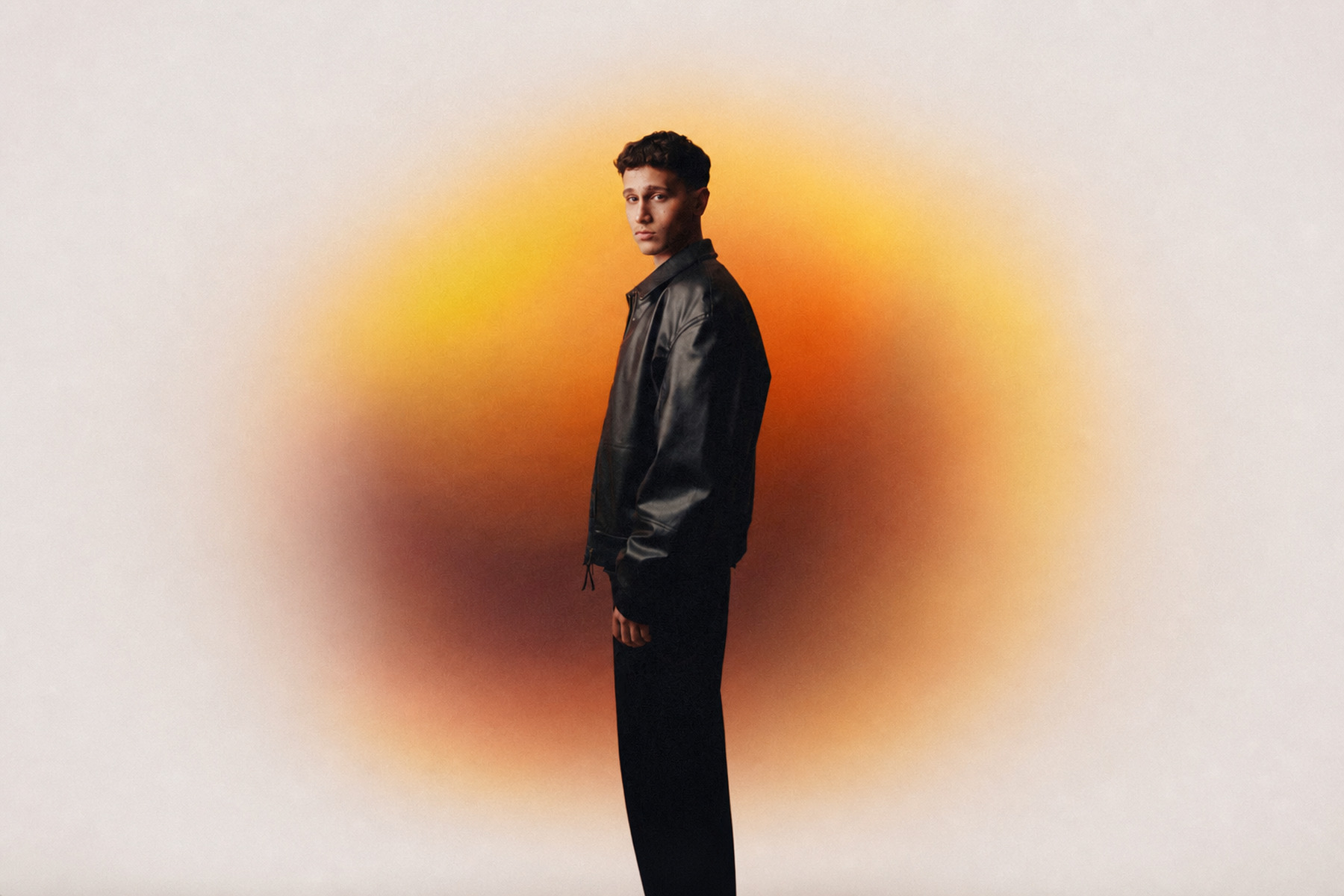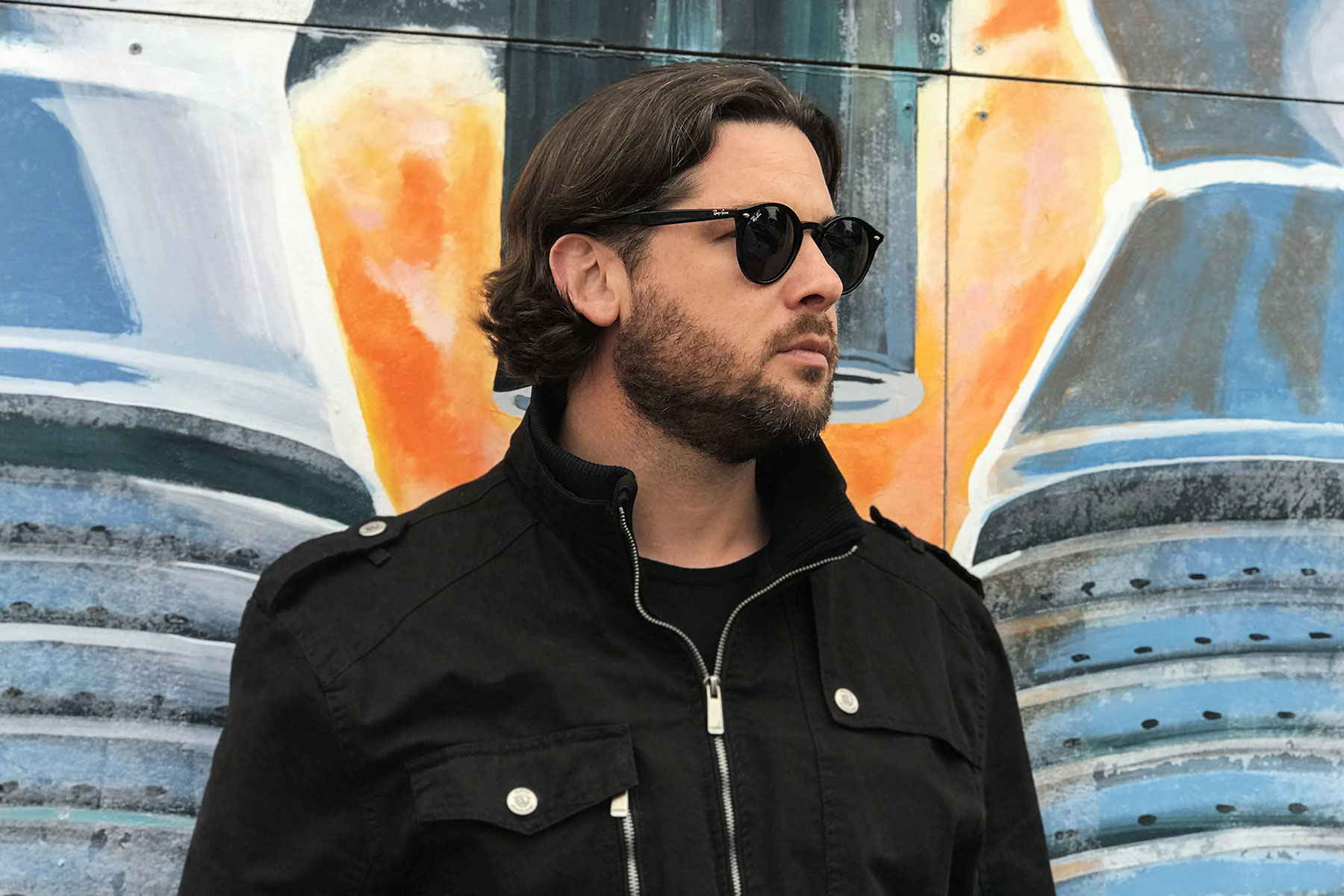

Hailing from Italy, Eliogold is a DJ and producer who has carved out a place within the American underground through his DAZED events and his ongoing connection to the Pacific Northwest electronic scene.
Photo credit: Eliogold – Facebook
Influenced by early 2000s European techno, minimal, and trance, his sound balances emotional melody with dancefloor functionality.
Now based in Seattle, Eliogold has released his debut vinyl-only EP, ‘Still Love’, via Rhizome Records. The project arrives during a particularly active moment for the artist, following work for the Seattle International Film Festival and a performance celebrating Alaska Airlines’ new direct route between Seattle and Rome.
In this conversation, Eliogold opens up about vinyl culture, the tension between melody and minimalism, and how building communities has reshaped his relationship with music.
EG: Hi Elio, welcome to EG. It’s a pleasure to have you here with us. Where are you today, and what kind of energy are you stepping into right now?
Eliogold: Thank you, good to be here. I’m in Seattle right now, and honestly, it’s one of those periods where a lot is landing at the same time. The record is dropping, I just did the Röyksopp show, which was a great night, and I just finished the music for the Seattle International Film Festival. And then on top of that, I’m preparing for this very particular gig at Seattle-Tacoma airport. Alaska Airlines is launching the first direct flight from Seattle to Rome, and I’ll be playing a set there. Which is… not your usual DJ set. But I like a challenge.
EG: You grew up in a household shaped by sound through your father’s work. Do you remember an early moment where you became aware of sound not just as something you hear, but something you feel?
Eliogold: It goes back pretty far. My father was a sound engineer; he ran his own store, and he sold and repaired high-fidelity audio systems. And I’d spend afternoons there sometimes, just hanging around. There was this demo room where they tested different speakers and amplifiers, and I loved that room. You’d sit in there and listen to music or watch something with this really pristine sound, as nothing else around you existed. That was its own kind of education. Then, as a teenager, going to clubs in Florence. I think I was fourteen the first time I was on a proper dancefloor. Sunday afternoon spots where they’d play eurodance and techno. And something just clicked. You feel it before you understand it. You feel it in your legs, in your chest. I think I’ve been chasing that ever since.
EG: Your debut vinyl EP ‘Still Love’ is about to land via Rhizome Records. After years of releasing music, why did this project feel like the right moment to make such a definitive statement?
Eliogold: The timing wasn’t calculated. It grew out of a relationship. Rhizome is connected to the Makes Me Human collective here in Seattle, and Kristijan, who runs the label, he’s also from Europe; his knowledge of music goes way back, same as mine. We find each other constantly exchanging records, talking about the scene. We even put together a full all-nighter when we brought Mathew Jonson to Seattle, so there was already a level of trust there. When the conversation about releasing together came up, it just felt like the natural next step. It wasn’t a pitch. It was more like, obviously.
EG: There’s something very intentional about choosing a vinyl-only format for this release. What does that decision say about your relationship with music and how it should be experienced?
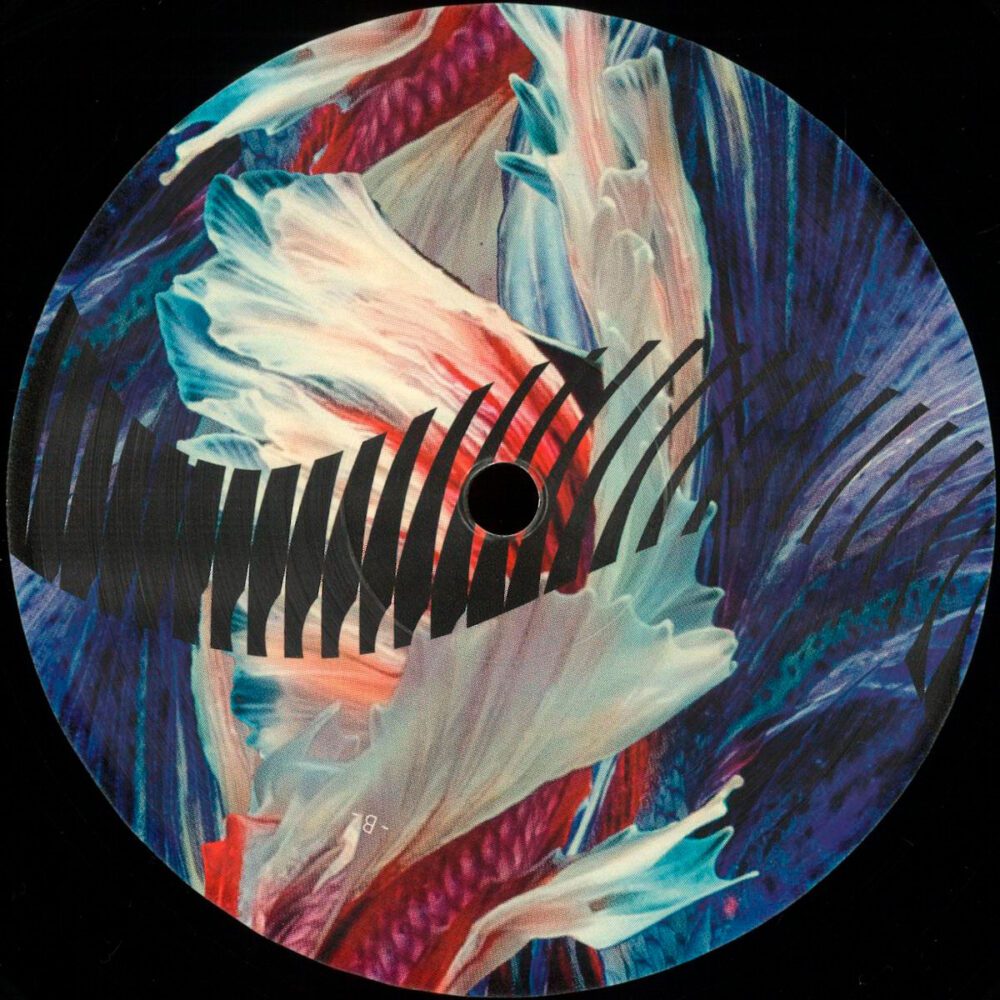
Eliogold: Vinyl forces you to be present with it. You can’t really half-listen to a record. You flip it, you pay attention to where the needle lands, you hear the room around the music. I collect records, I have artists sign them. Some of these records are genuinely important to me as objects; they instantly summon memories. So putting my own music in that format felt right. It also says something about who I’m making music for. Not for an algorithm. For DJs who still care about crates. And this community, the people around Rhizome and Makes Me Human, they treat records as artifacts, as rituals. It made sense to meet them there. There’s also something else that felt worth preserving in physical form. Some of the arrangement and sound design came from a great artist from Italy who collaborated on the tracks. And some of the piano sequences were sampled from a close friend of mine, a renowned pianist. You add the two incredible remixes by Kurilo and B.AI on top of it all, and that kind of contribution deserves more than a streaming link.
“My instinct is always toward melody, toward something that carries feeling. And minimalism pushes against that. So the tension is there in the tracks”
EG: The EP leans into a kind of early 2000s melodic minimalism, but it doesn’t feel nostalgic. When you were building these tracks, what were you trying to hold onto, and what were you trying to leave behind?
Eliogold: The emotional directness of that era, that’s what I wanted to hold onto. Records that trusted the listener, that took their time. There was a patience in that music. What I was moving away from was the self-consciousness around it. I didn’t want to make something that winks at a reference. But honestly, the harder thing was staying true to myself while working in a more minimalist style than I usually do. My instinct is always toward melody, toward something that carries feeling. And minimalism pushes against that. So the tension is there in the tracks. ‘Still Love’ and ‘Vegas Jam’ didn’t come from trying to recreate anything. They came from my hardware, my way of working, where I am right now. The melodic thing is just how I hear music. It’s not a genre decision; it’s more like a character flaw at this point.
EG: This release is deeply tied to your connection with the Makes Me Human community and the wider Seattle underground. How has that environment shaped you, not just as an artist, but as a person?
Eliogold: Seattle, and the US underground scene in general, gave me a sense of responsibility I didn’t have before. In Italy, I was a participant in a scene that already existed. Cocorico, Tenax, these were institutions. You showed up, and the culture held you. When I moved to the States, I found something that felt earlier in its formation, more fragile, more dependent on the people who actually showed up. And that changes how you carry yourself. You start thinking about what a room needs, not just what you want to play. Makes Me Human and the other crews I’ve worked with embodied that. It was never about booking the biggest name. It was about the right experience. And that bleeds into the studio too.
EG: You’ve taken on a dual role in the scene through your DAZED project, both as an artist and as someone building spaces for others. What have you learned about music by being on both sides of that equation?
Eliogold: Being an event organizer teaches you very quickly how much context shapes everything. The same track can completely die at midnight and destroy a room at 3 am. I’ve watched it happen enough times that it has changed how I build music. I think about arc more than I used to. I think about where something sits in a night. And honestly, sometimes I’ll picture a specific moment on a dancefloor while I’m producing, trying to figure out if what I’m building actually lands there. The other thing is watching great DJs work from the other side. When you’re the one who booked them, you pay attention differently. You learn a lot fast.
EG: You’ve also stepped into the world of film, composing for the Seattle International Film Festival. How did working in that context change the way you think about music and storytelling?
Eliogold: I want to be clear about what it actually was, because I don’t want to oversell it. It was music for a sixty-second trailer, not a full score. But in some ways, the constraint made it harder. I had to build a complete arc in sixty seconds. The brief was to start from a clinical, almost sterile place and open up from there, with a ravey energy by the end, working with the images. Packing that kind of journey into one minute and making it feel earned rather than rushed, that was genuinely difficult. What it did clarify for me is that the tools are the same. Tension, release, atmosphere. But the timeline is compressed in a way that doesn’t forgive anything.
“Putting my own music in that format felt right. It also says something about who I’m making music for. Not for an algorithm. For DJs who still care about crates”
EG: Looking ahead, what feels like the next step for you creatively? Is there a direction or space you’re still chasing?
Eliogold: There’s an EP that’s been building through all of this, something deeper and more fully realized than what I’ve put out so far. That’s the next real thing. Beyond that, I’m interested in the edge between electronic music and other formats, not as a crossover exercise, just because I think that’s where the music I actually want to make tends to live. The SIFF project pushed that further for me. Where it leads exactly, I don’t know yet. But that’s fine.
EG: Thank you so much for your time, Elio. We wish you all the best with ‘Still Love’ and everything that’s to come. Take care!
Eliogold: Thank you. It was a pleasure. ‘Still Love’ is out now on Rhizome Records, vinyl only. Hope it finds the right ears and the right rooms.
Eliogold’s ‘Still Love’ is available now via Rhizome Records as a vinyl-only release. Grab your copy here.
Follow Eliogold: Spotify | Soundcloud | Instagram