When Manjumasi launched in 2016, it emerged from a dilemma that many electronic music enthusiasts know well: discovering a piece of music that feels too singular to comfortably fit anywhere else. The catalyst was Mark Slee’s ‘Nocturne Belle’, a track whose blend of eccentricity, sophistication, and dancefloor functionality seemed to occupy a space entirely of its own. Rather than searching endlessly for an existing home, Slee and longtime friend Atish decided to create one. What began as a solution to a specific problem would evolve into one of underground electronic music’s most distinctive boutique imprints, a label defined less by genre than by personality, curiosity, and an unwavering commitment to music that refuses to blend into the background.
“Mark sent me his demo of ‘Nocturne Belle’,” Atish recalls. “This tune was simultaneously quirky, sophisticated, a little out of the box, but still playable on the dance floor…but we couldn’t really figure out a home for it because it was really its own thing. So that’s when it was immediately clear that it was time to start a new label.”
Nearly ten years later, that founding impulse remains at the heart of Manjumasi. The label has never been concerned with occupying a particular lane within the electronic music spectrum, nor has it attempted to cultivate a rigidly defined aesthetic. Its catalog traverses progressive house, minimal, deep house, and countless shades in between, united by an instinctive search for music with character and individuality. “We cross genres from minimal to progressive to various other shades of house,” Atish explains. “But the one thing that we keep coming back to is ensuring that every track we release doesn’t just feel like another ‘middle of the pack’ tune, often with a hint of quirk, hopefully with a lot of personality.”
That philosophy has become increasingly uncommon in an ecosystem where labels are often encouraged to establish easily identifiable sonic brands. Manjumasi has consciously chosen the opposite route. Slee acknowledges that the decision comes with tradeoffs, particularly in a marketplace that often rewards specialization. “For better or worse, we have avoided ever defining a ‘label sound,’” he says. “We recognize that straddling so many genres can limit the success of the label, but ultimately that is a tradeoff we have decided to embrace in order to prioritize finding and supporting unique music.”
The result is a catalog that feels remarkably unconcerned with trends or expectations. While many labels can be understood through stylistic shorthand, Manjumasi is perhaps better understood through its sensibility. There is a shared thread running throughout its releases; an attraction to music that feels slightly unconventional, subtly playful, and deeply personal. Whether expressed through unusual grooves, unexpected melodic choices, or production techniques that sidestep contemporary formulas, the label’s output consistently rewards attentive listening.
This commitment to individuality extends beyond the music itself and into the label’s broader philosophy. Asked what Manjumasi stands for, Atish’s answer begins with what it actively chooses to ignore. “We don’t pay attention to playcounts, chart rankings, or sales numbers,” he says. “We don’t strategize releases based on an artist’s profile. We pretty much do the minimum on social media.”
For many contemporary labels, such an approach would seem counterintuitive. Yet for Manjumasi, it has become a defining principle. Success is measured less through visibility than through artistic fulfillment, less through metrics than through the quality of the music itself and the relationships formed around it. “Of course, it’s nice when a release sells well because that means the artists are getting a higher royalty payout,” Atish continues. “But the two things we are completely focused on are releasing music we love, and working with artists we respect.”
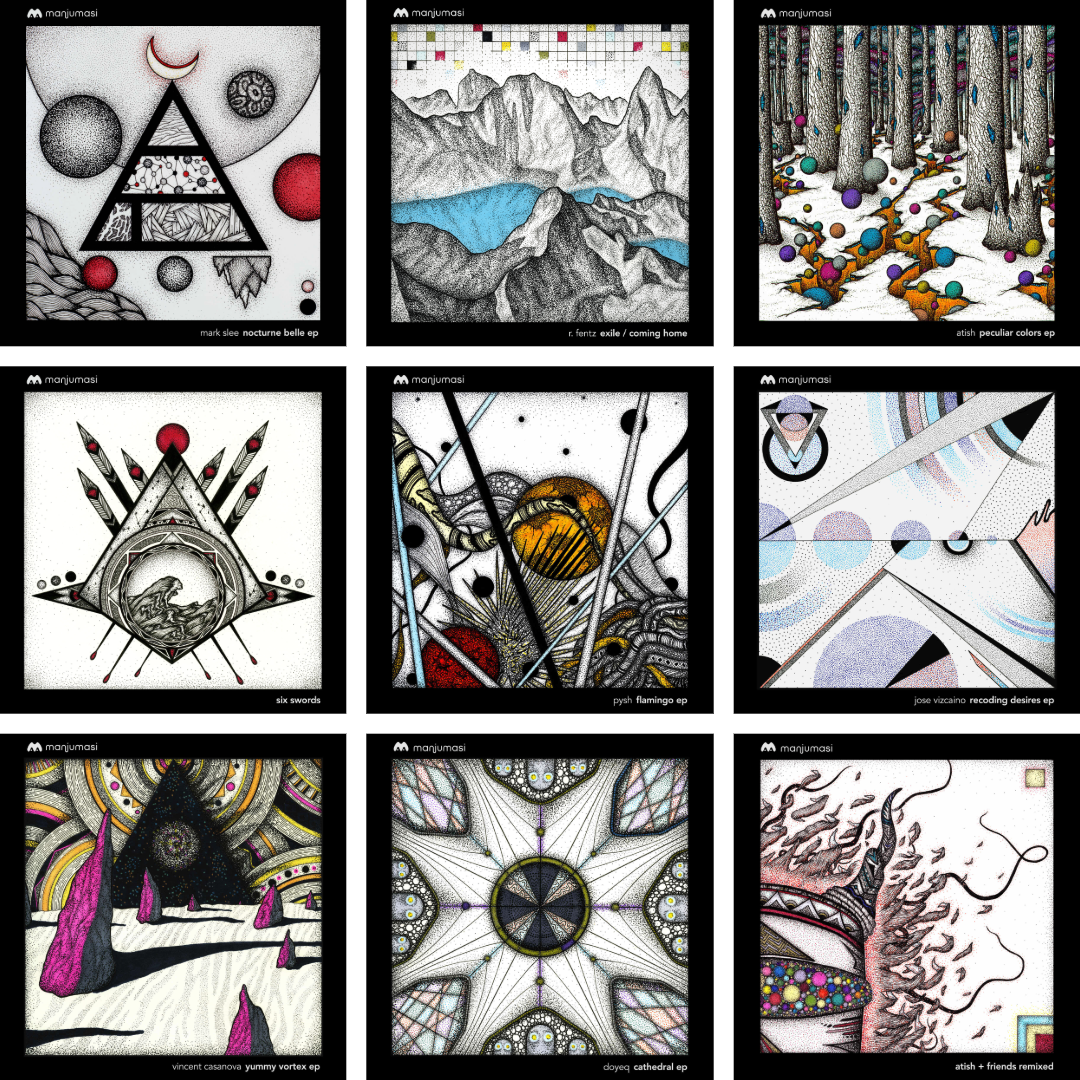
That emphasis on artistic integrity has shaped a roster that feels more like a community than a traditional label stable. Over the years, artists such as Vincent Casanova and Vridian have become integral contributors to the imprint’s identity, while collaborations with figures including Rodriguez Jr., Acid Pauli, Lusine, Arutani, and Dorisburg have further reinforced its reputation as a home for adventurous and emotionally resonant electronic music.
For Slee, selecting music remains remarkably straightforward. “Ultimately, we look for stuff that stands out,” he explains. “If it doesn’t fit neatly into a DJ genre box, that is not a problem.”
Atish echoes the sentiment. “Anything that has its own identity, that doesn’t feel disposable.”
That word, “disposable”, captures much of what Manjumasi appears to resist. Throughout its decade-long existence, the label has quietly championed music designed to outlast the rapid consumption cycles that increasingly define contemporary electronic culture. Its releases often reveal themselves gradually, prioritizing atmosphere, personality, and narrative over immediate impact.
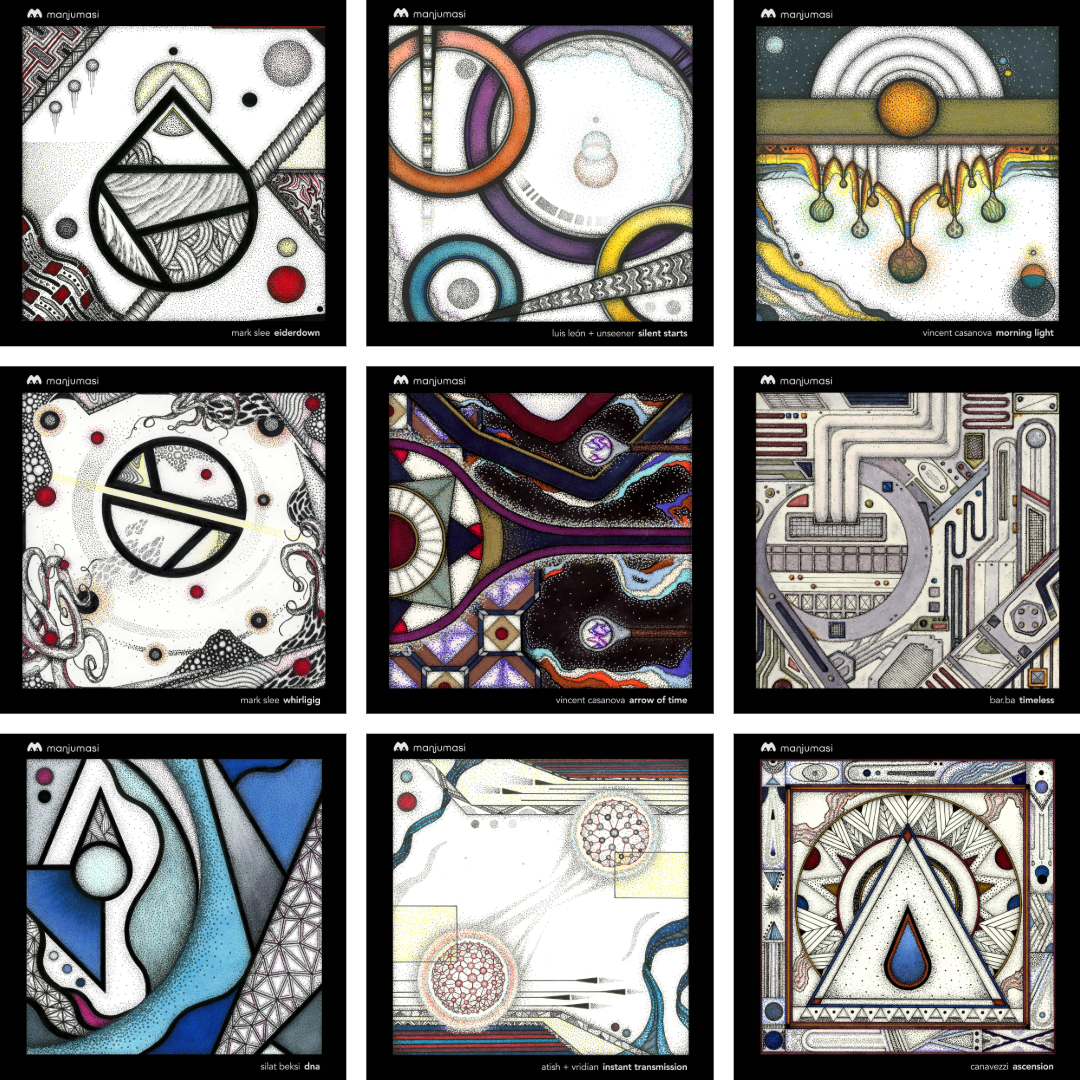
The label’s visual identity reflects a similar philosophy. Every Manjumasi release is accompanied by hand-drawn artwork created by visual artist Nathan Kanner, whose illustrations have become inseparable from the imprint’s aesthetic language. In an era where visual assets are frequently optimized for algorithms and digital engagement, Kanner’s approach introduces a distinctly human element.
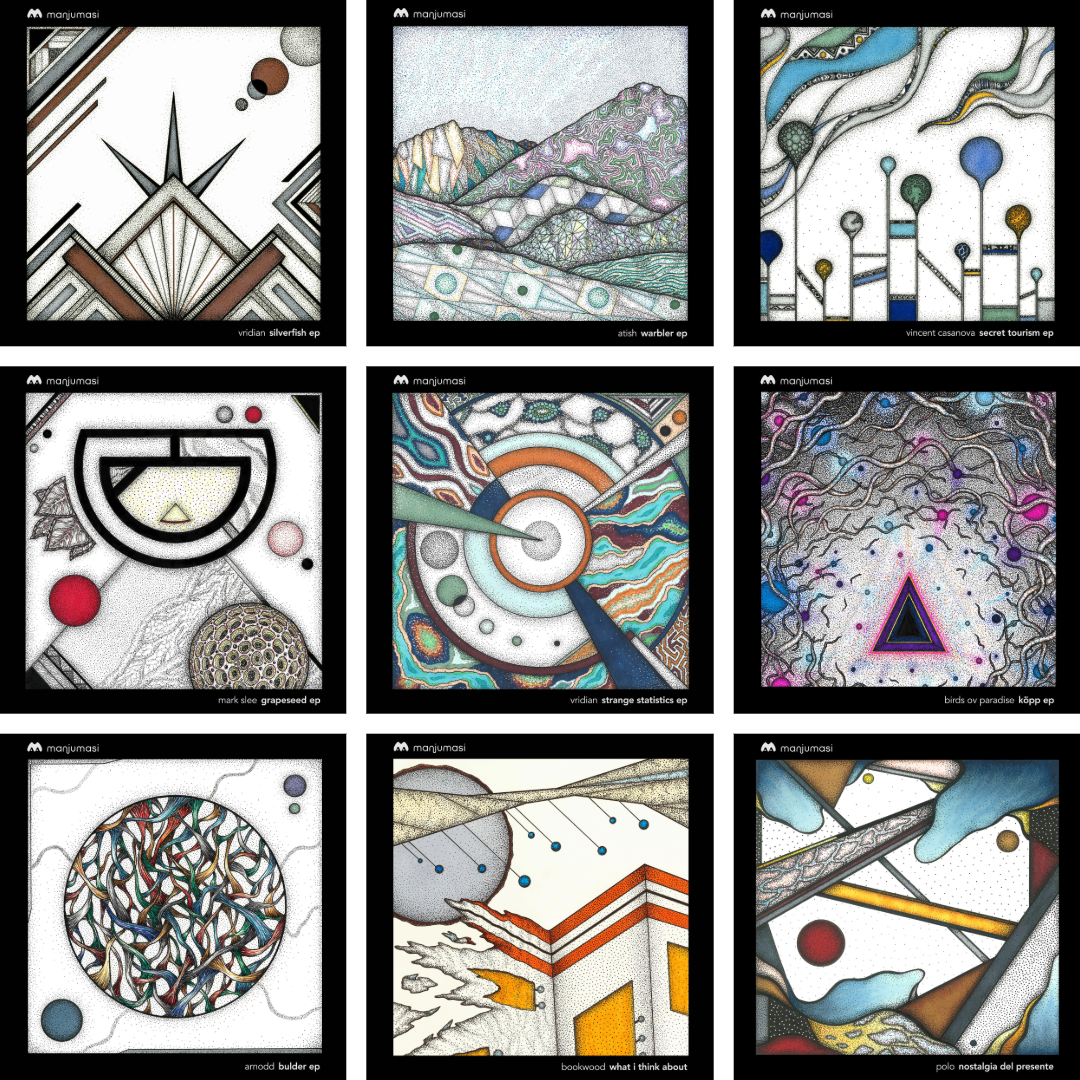
“A huge shoutout to our visual artist Nathan Kanner,” Atish says. “He painstakingly hand-draws artwork for every release, which has established a distinctive visual identity beyond the music.” The artwork serves as a natural extension of the label’s broader ethos: thoughtful, handcrafted, and deeply individual.
As Manjumasi reaches its tenth anniversary, however, both founders speak about the milestone with a mixture of pride and introspection. Ten years represents a remarkable achievement for any independent electronic music label, particularly one operating outside conventional industry frameworks. Yet their reflections also reveal a sober assessment of the contemporary landscape. “It feels like we are playing violin on the sinking Titanic,” Atish says.
The statement is provocative, but it speaks to genuine concerns about the future of independent music culture. Atish points to the increasing influence of algorithmic discovery, influencer-driven ecosystems, AI-generated music, and the growing disposability of recorded music as forces fundamentally reshaping the environment in which labels operate. “Every year that passes, the traditional role of a record label matters less and less,” he reflects. “We’re losing the humanity in the artform.”
Yet despite these concerns, neither founder appears interested in retreating from the work. If anything, the challenges seem to reinforce the reasons they continue. “I still love running Manjumasi, and I still love supporting artists who pour their souls into beautiful music,” Atish says. Slee arrives at a similar conclusion through a more personal lens. “As long as we keep enjoying it, we will keep doing it,” he explains. “Ten years in, I still very much enjoy it for its own sake.”
That sense of enjoyment has extended beyond the label’s recorded output into a growing series of events and showcases. Over the years, Manjumasi has cultivated memorable moments across Amsterdam, New York, Ibiza, and beyond. ADE showcases at Duke of Tokyo have become recurring highlights, while a 2018 label event at Brooklyn Mirage and a 2024 appearance alongside Danny Howells at Akasha Ibiza stand among the imprint’s most cherished milestones.
The latter carried particular significance for both founders. Howells has long been a formative influence on their musical journeys, making the opportunity to share a lineup with him especially meaningful. His remix of Polo’s ‘Nostalgia del Presente’ further strengthened that connection, weaving another thread into the wider Manjumasi story.
Perhaps what makes Manjumasi so compelling today is that it exists largely outside the narratives that dominate discussions around electronic music. It is neither attempting to become a global brand nor positioning itself as the next major tastemaker. Atish describes it as “a boutique project, with no goals, no strategy, losing money every year,” a statement delivered with a level of honesty that feels increasingly rare.
View this post on Instagram
Yet therein lies much of the label’s appeal. Freed from the pressures of constant expansion, Manjumasi has been able to remain remarkably faithful to its original mission: finding music that excites its founders and sharing it with a community of listeners who value the same qualities. “We’re just presenting art that we find interesting at this moment in time,” Atish explains.
Looking ahead, neither founder offers grand predictions. There are no ambitious five-year plans or declarations of future dominance. Instead, the vision remains refreshingly simple. Slee believes there is a good chance they will continue doing exactly what they have always done: discovering records they love, supporting artists they admire, and nurturing a small but passionate corner of the electronic music world.
“We’ve been getting a kick out of sending each other tunes and talking shop since we were in high school,” he says. “We’re not bored of it yet.” This enduring friendship may ultimately explain Manjumasi’s longevity better than any business strategy ever could. Long before there was a label, there was a shared fascination with music. The label simply became a natural extension of that conversation.
A decade after ‘Nocturne Belle’ inspired its creation, Manjumasi remains one of the underground electronic music’s most distinctive independent imprints. Not because it has chased relevance, but because it has consistently prioritized individuality over conformity, curiosity over convention, and artistic connection over commercial ambition. In this convoluted landscape, increasingly defined by speed, visibility, and constant optimization, Manjumasi’s continued existence serves as a reminder that some of the most meaningful contributions to dance music culture still come from those willing to follow their instincts, trust their taste, and create simply for the love of the craft.