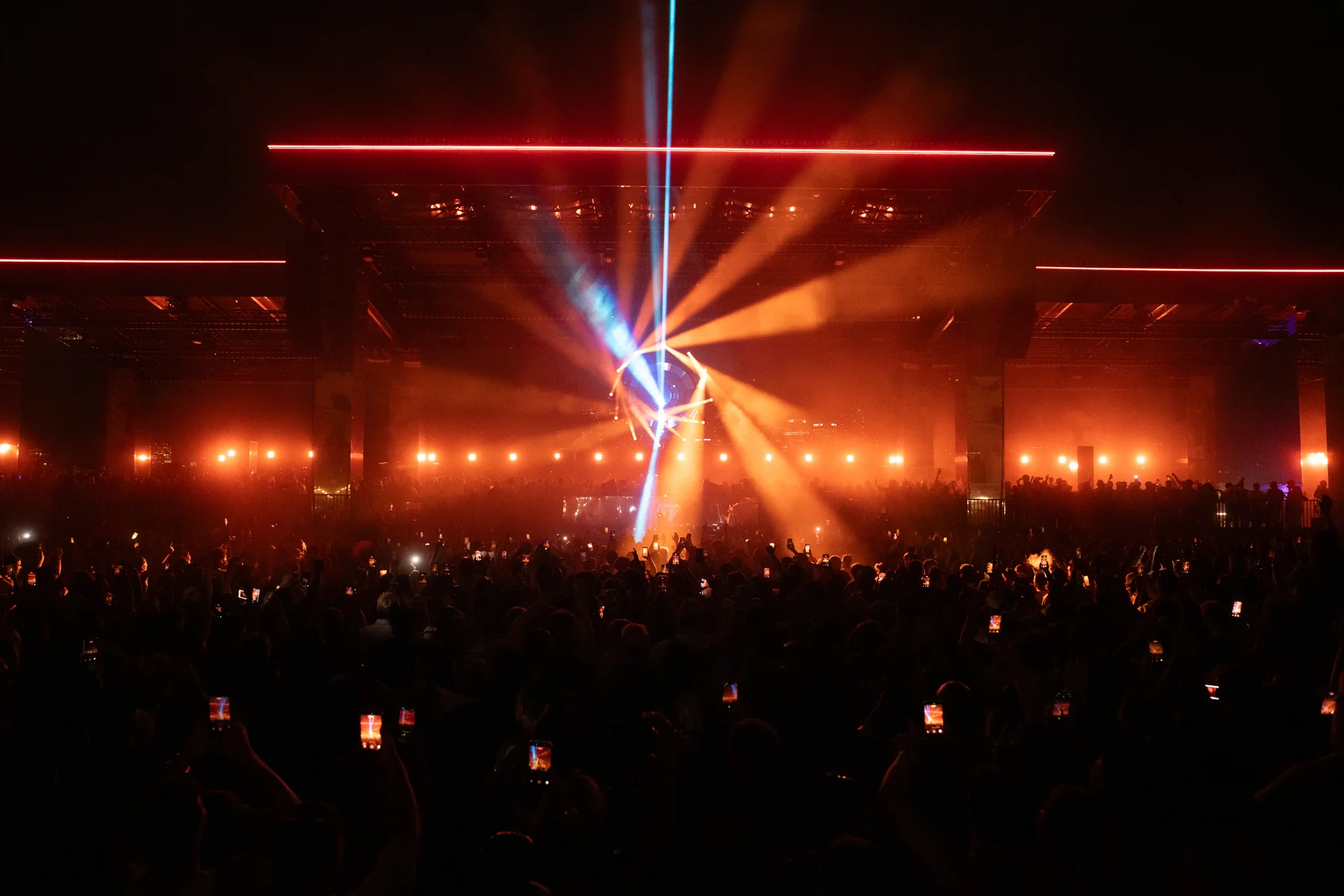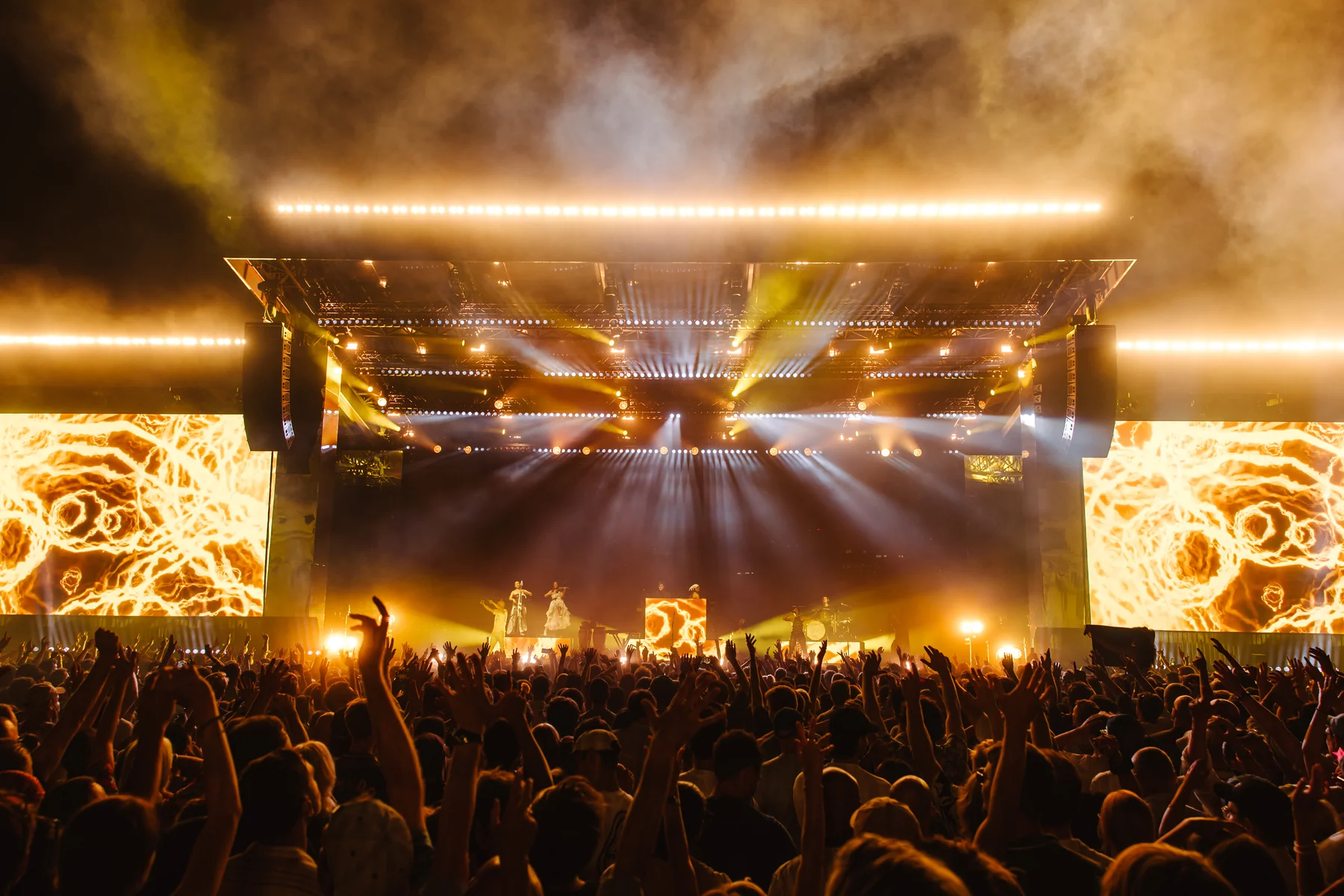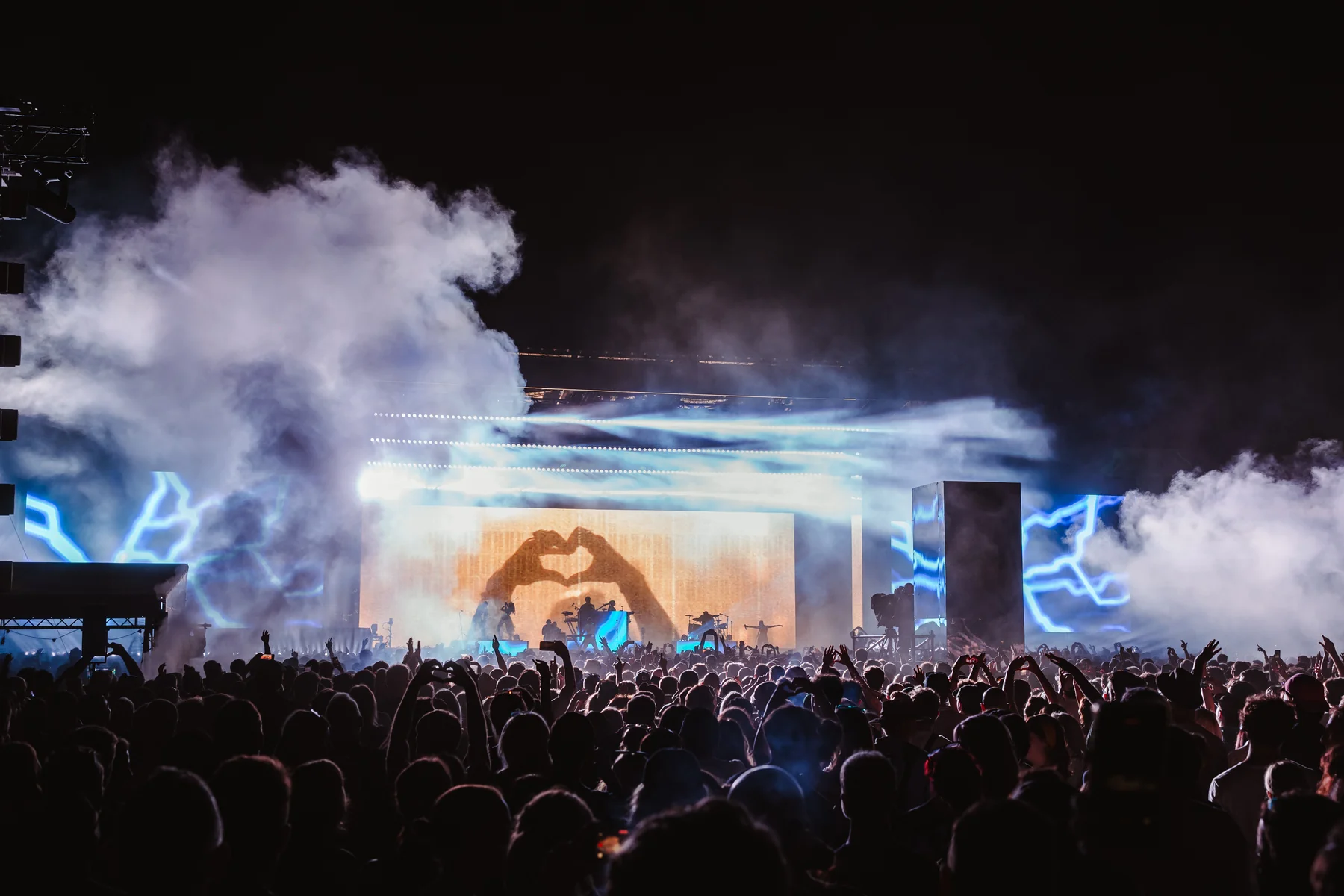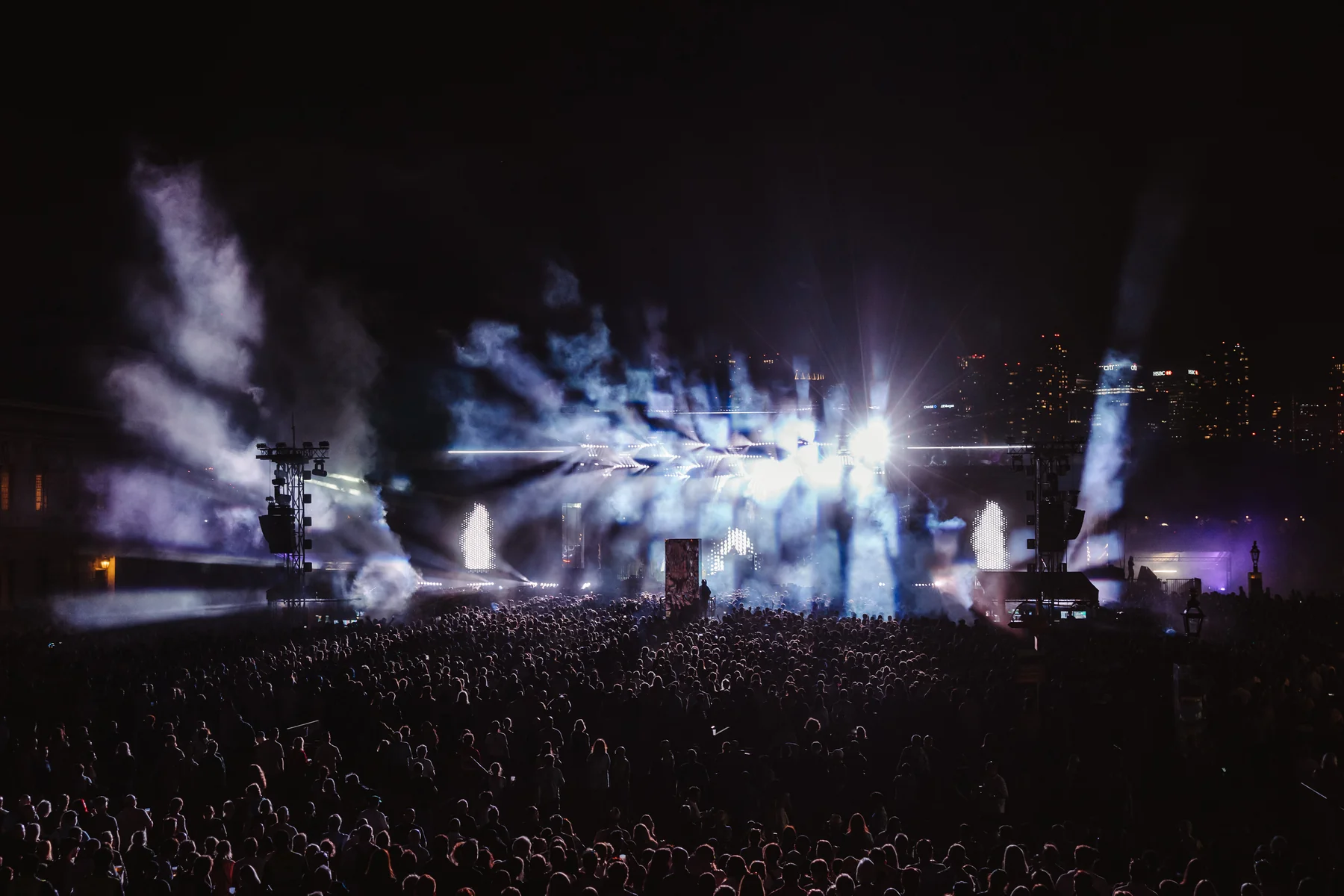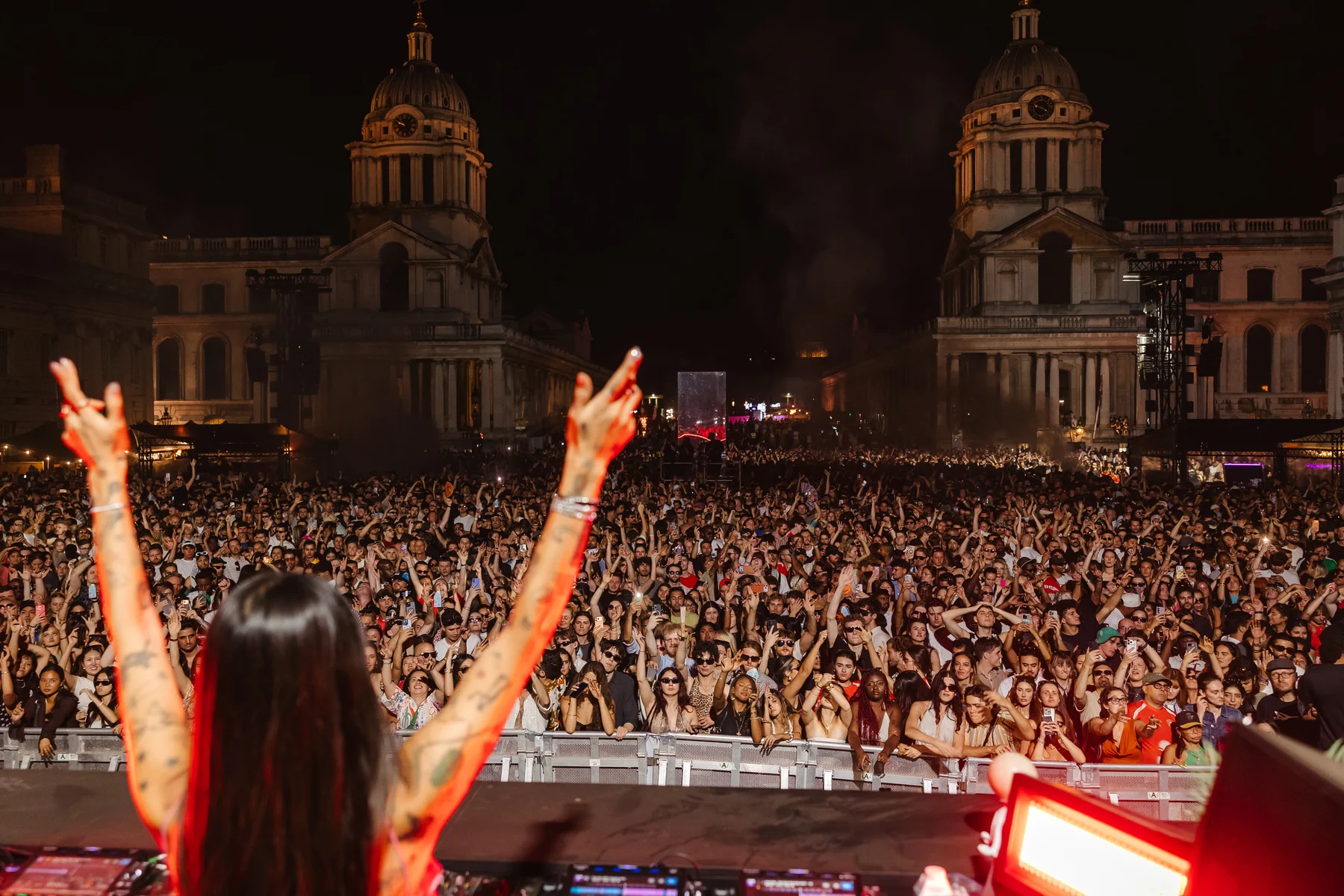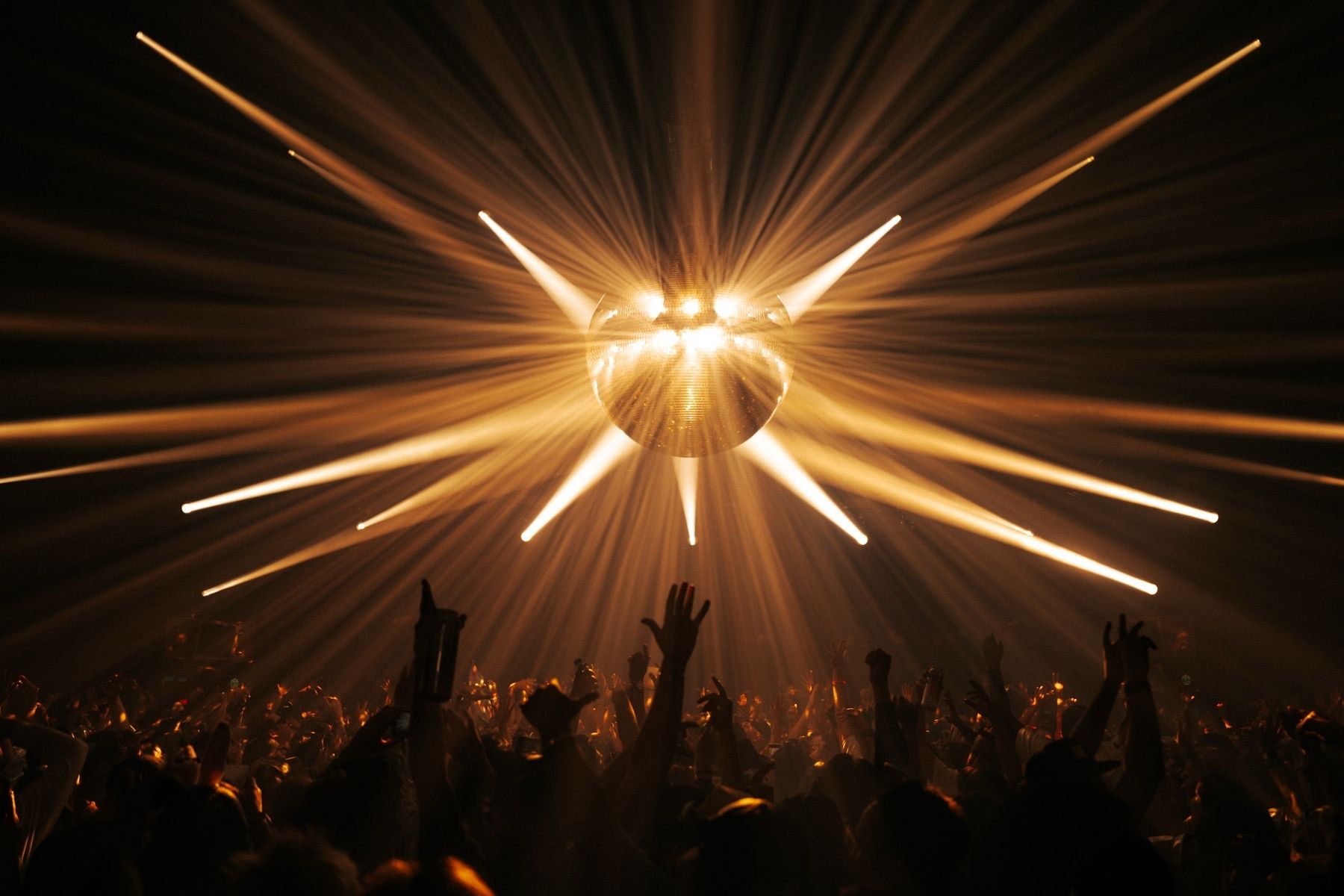
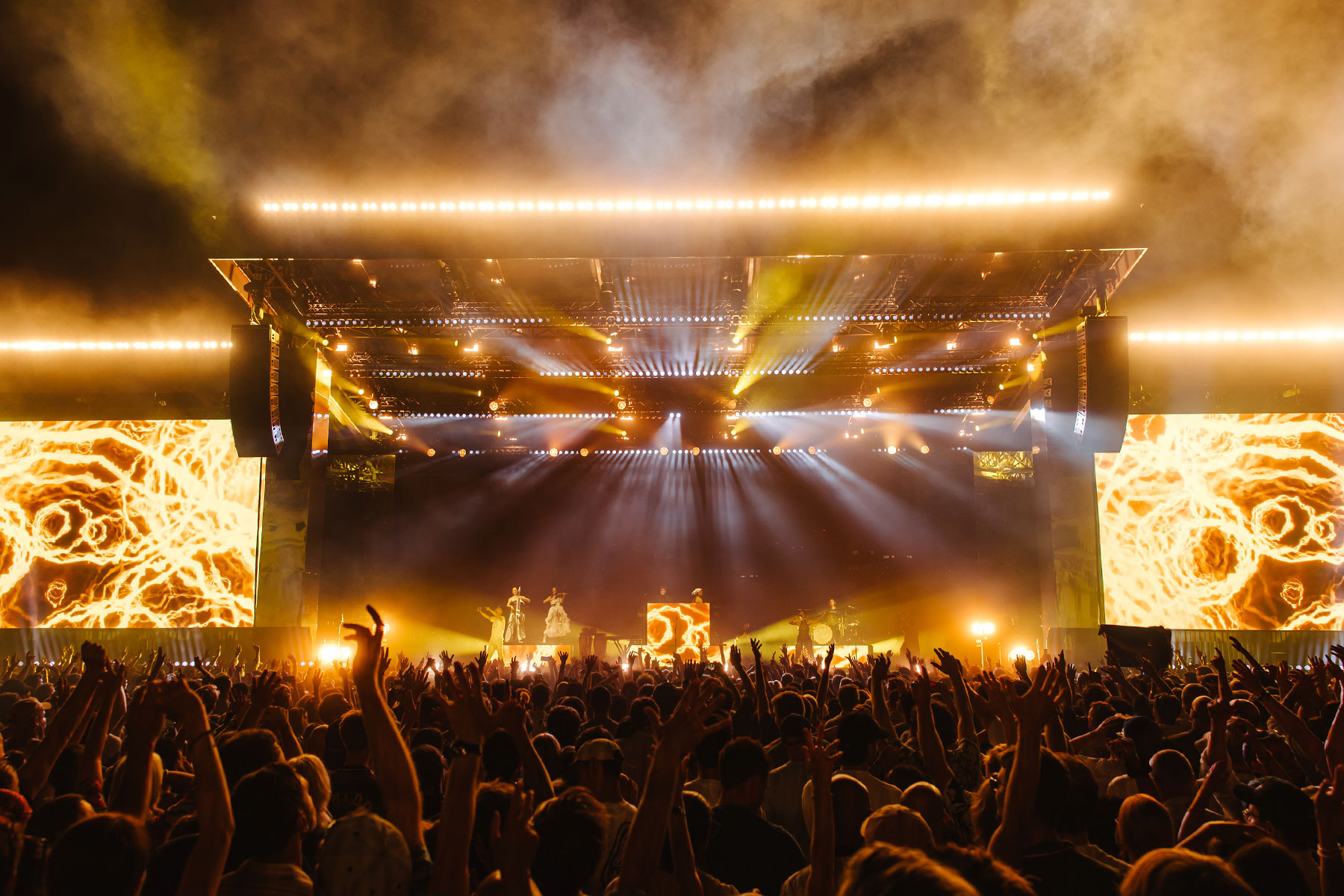
There are festivals built around a single weekend, and then there are concepts that deliberately stretch the idea of what a festival can be. For its second edition, Labyrinth on the Thames once again chose the latter. Across eight sold-out dates, the Old Royal Naval College in Greenwich became the setting for a sequence of electronic music chapters, bringing 76,000 people to the banks of the Thames.
Photo credit: Jake Davis
Rather than functioning as one continuous festival, Labyrinth feels more like a series told in episodes. Each date has its own musical identity, tempo and audience, while the extraordinary architecture of the Old Royal Naval College provides the constant visual thread. The result is a distinctive format in London’s crowded summer calendar: a festival without the traditional festival fatigue, where every date offers a new narrative. Electronic music remained at the heart of that narrative. Across the series, 47 artists delivered more than 70 hours of performances, moving between house, techno, progressive sounds and contemporary club music while maintaining a clear sense of scale and occasion.
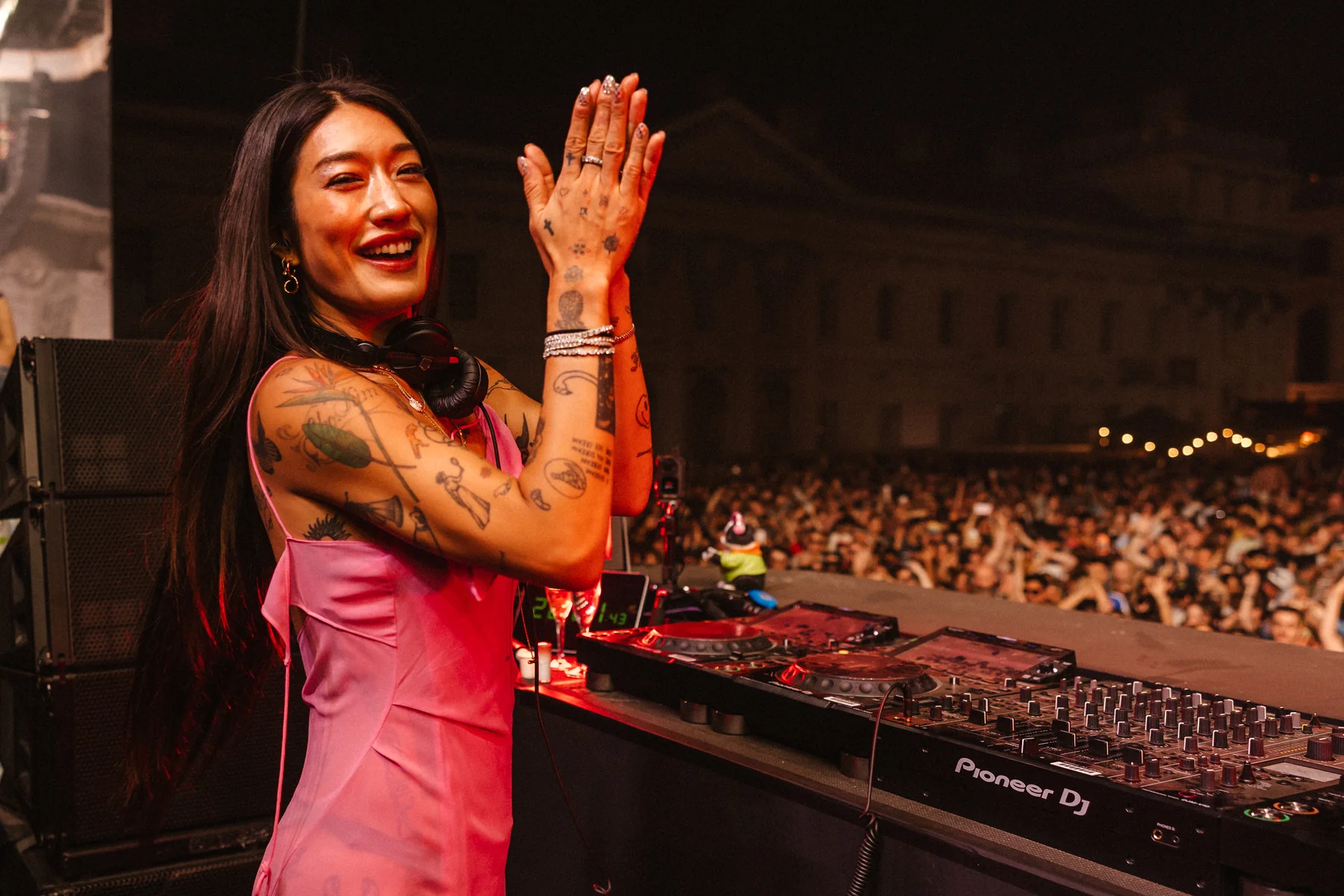
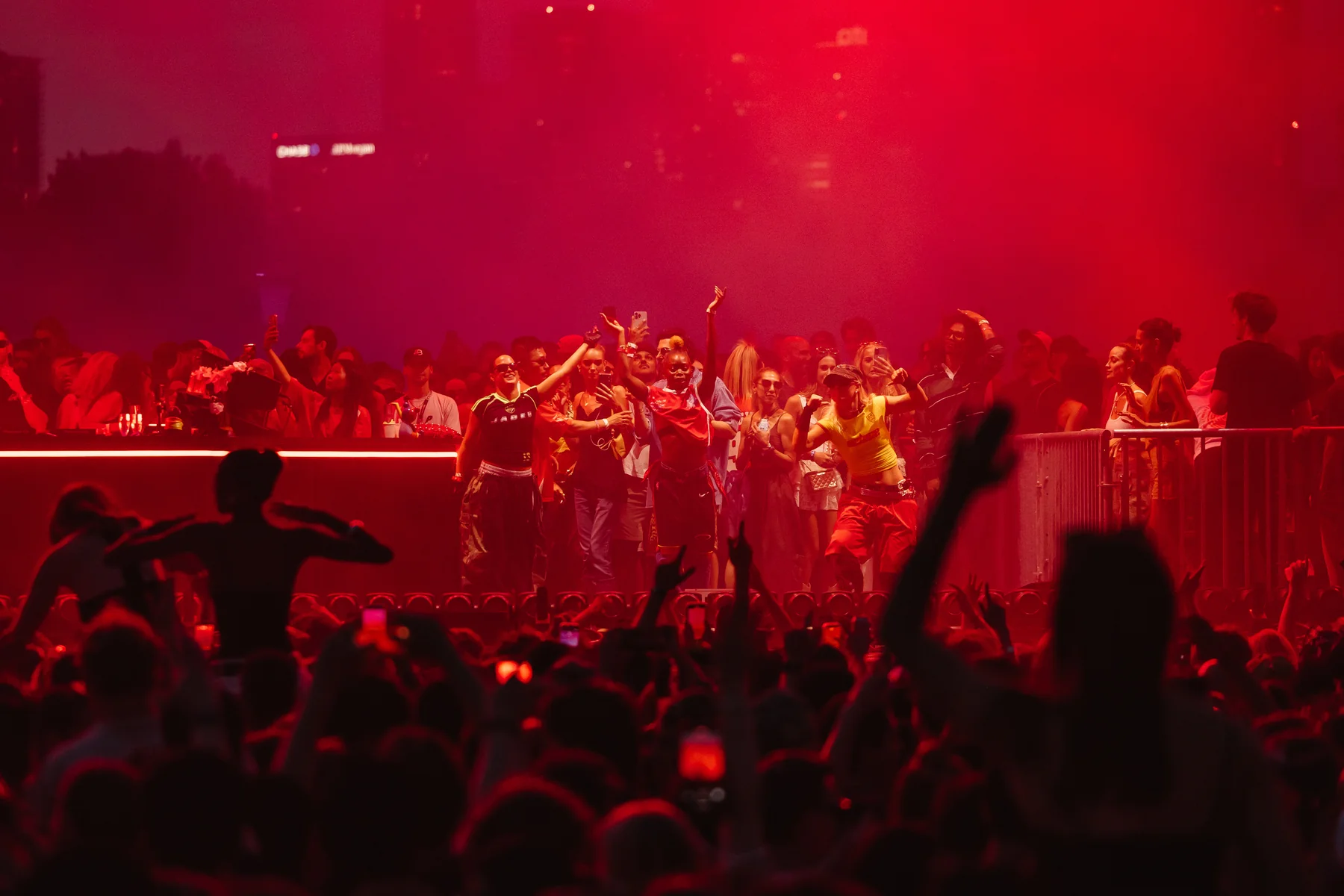
Peggy Gou offered one of the clearest examples of Labyrinth’s ability to turn a DJ set into a genuine cultural moment. Her selection moved between vocal-led house, disco-inflected grooves and peak-time dancefloor material, building momentum through controlled transitions rather than simply relying on drops. The appearance of Maya Jama on stage was followed by surprise guest Gala with ‘Freed from Desire’ for the closing, an enormous communal release that turned the final minutes into a hands-in-the-air celebration.
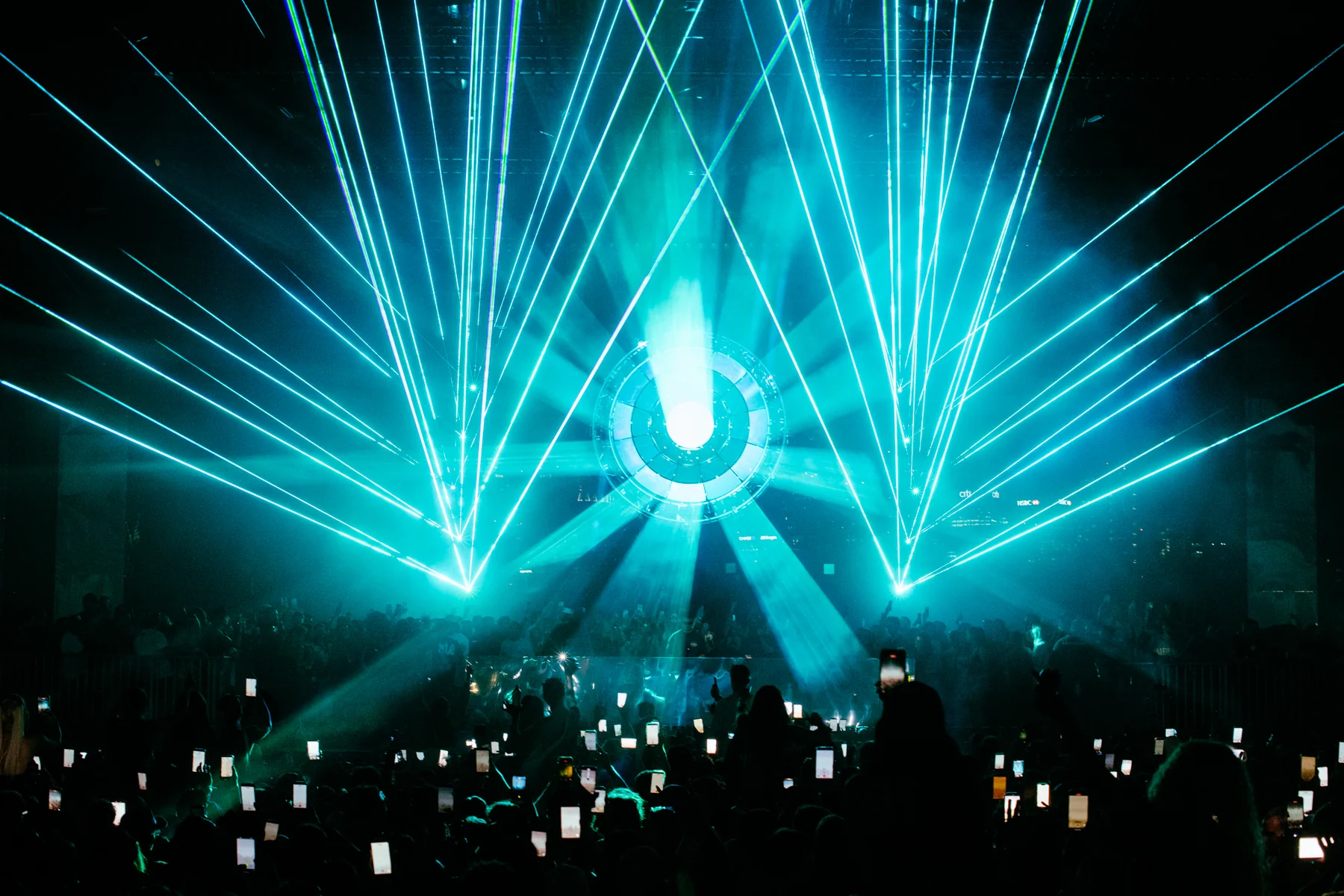
Dom Dolla delivered a more direct, high-impact approach, combining chunky low-end pressure, tightly engineered builds and festival-sized drops. His performance demonstrated why his productions have become so effective at bridging contemporary house and techno with a much larger festival audience. At the other end of the spectrum, Adriatique brought their X series to Greenwich with a hypnotic, progressive sensibility. Their long-form approach allowed tension to develop gradually through layering and subtle changes in intensity. As daylight disappeared over the Thames, the music and lighting became increasingly immersive, with the Baroque surroundings effectively becoming part of the performance. Overmono occupied the increasingly blurred territory between club music, UK rave heritage and leftfield electronica. Their appearance, connected to the momentum of Pure Devotion, combined broken rhythms, vocal fragments and sub-heavy passages into a set that felt both contemporary and deeply rooted in Britain’s underground lineage.
The wider electronic programme also featured Seth Troxler, Franky Rizardo and Prospa, reinforcing the sense that Labyrinth was interested in presenting different interpretations of contemporary dance music rather than imposing a single sound. The series also proved capable of stepping outside electronic music without losing its identity. The Kooks, celebrating 20 years of ‘Inside In / Inside Out’, provided a full live-band performance that stood apart from the DJ-led programme. That contrast ultimately strengthened the concept: Labyrinth is about live music in an extraordinary environment rather than being restricted by genre.
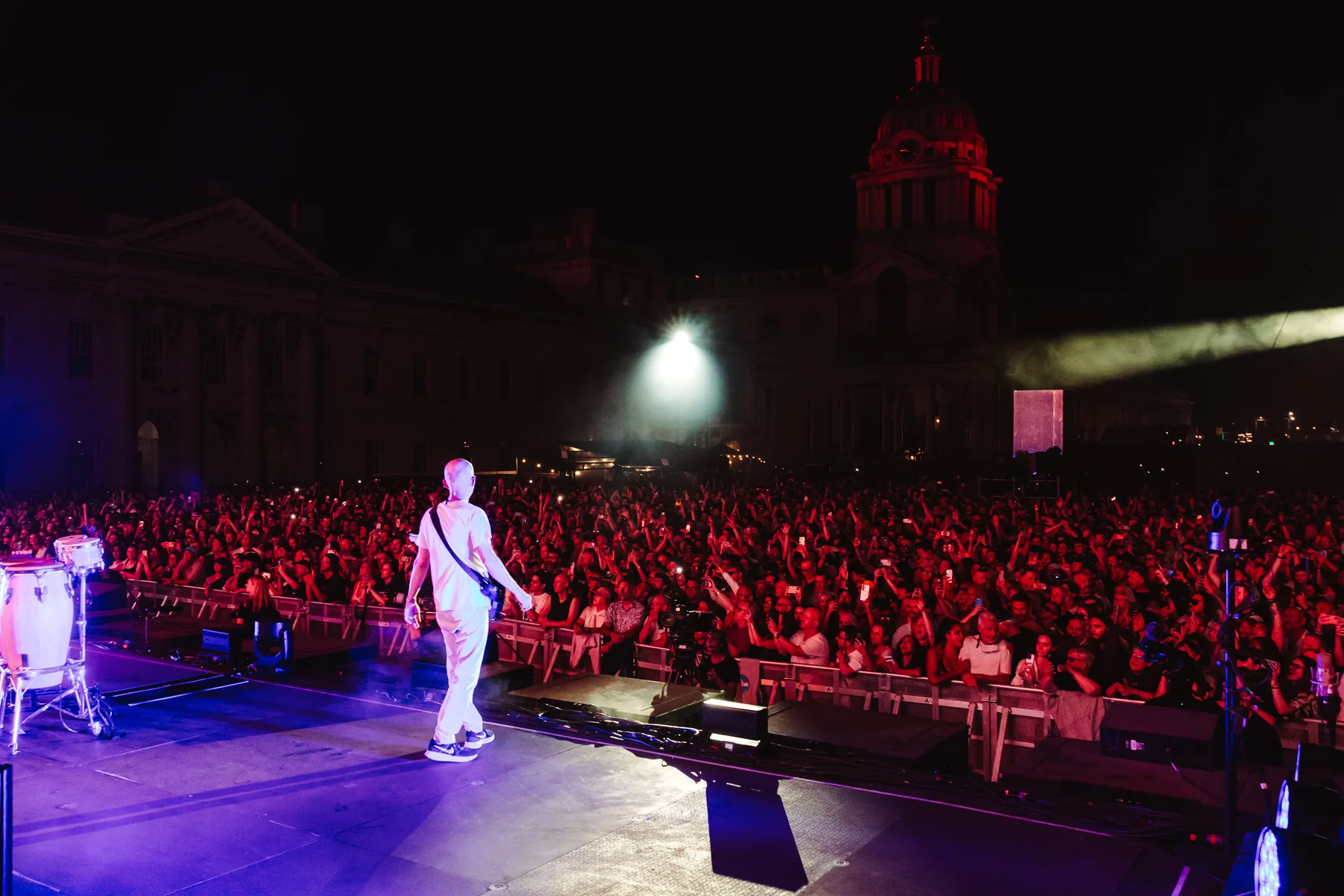
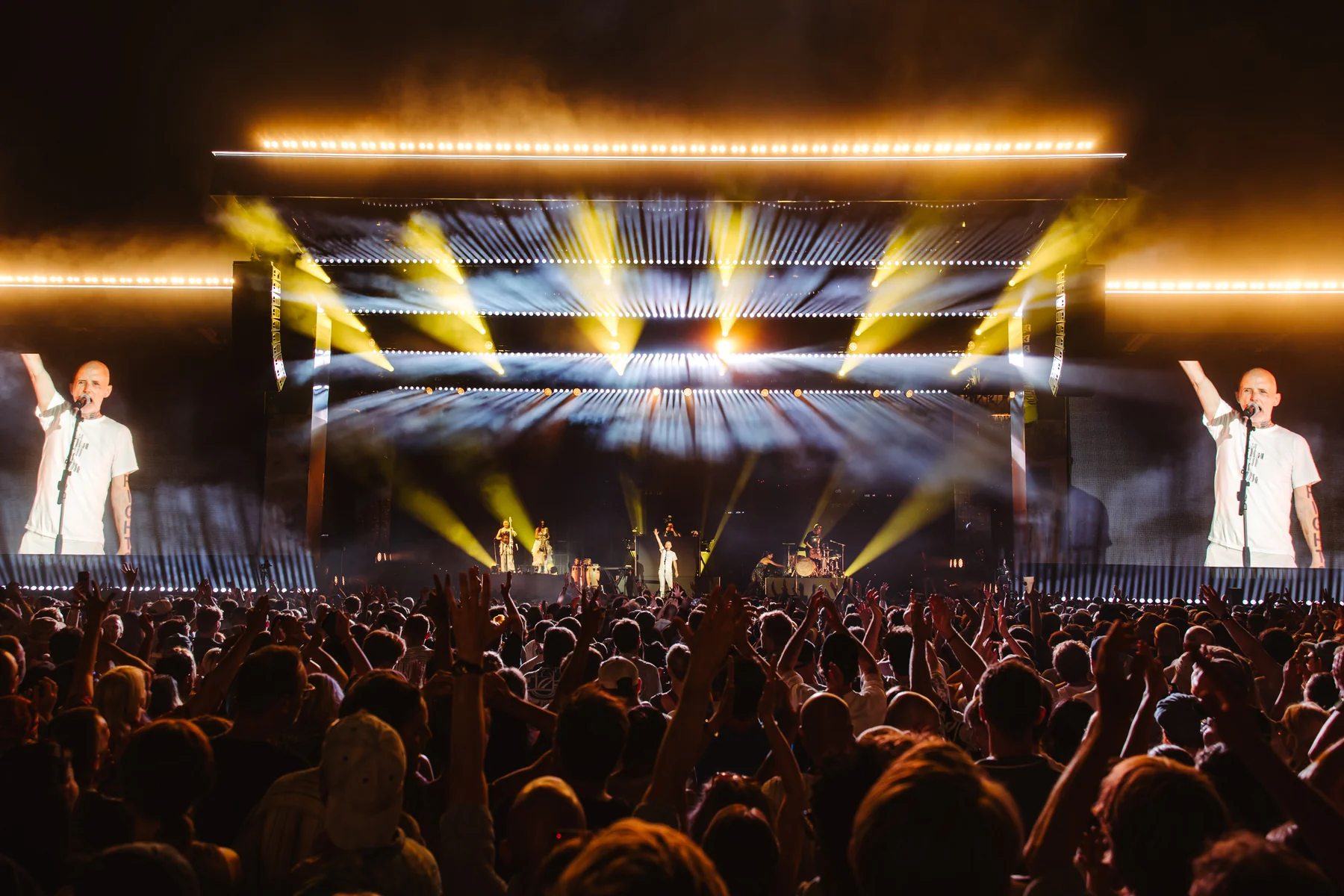
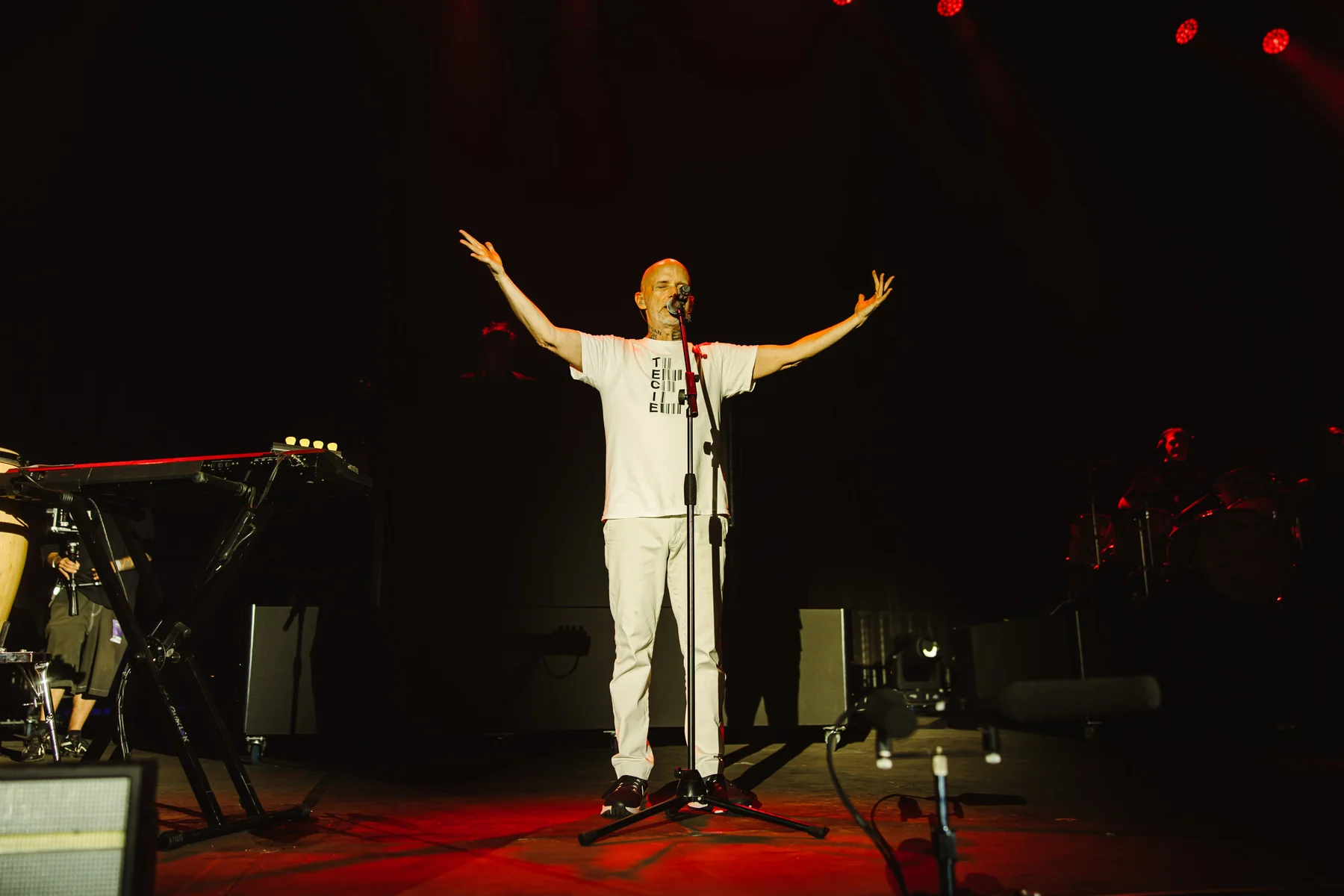
That principle reached its most ambitious point with Moby. The six-time GRAMMY-nominated electronic pioneer delivered a full live performance alongside special guest Jacob Lusk, moving between the emotional grandeur of his best-known material and the physical energy of a live electronic band. Synths, guitars, vocals and rhythm sections transformed his catalogue into something expansive and cinematic. Against the Thames and the illuminated domes of the Old Royal Naval College, Moby’s performance felt closer to a major concert staged inside a historical monument than a conventional festival set. It also provided an important counterpoint to the DJ performances elsewhere in the series, highlighting the songwriting, arrangement and live-performance side of electronic music.
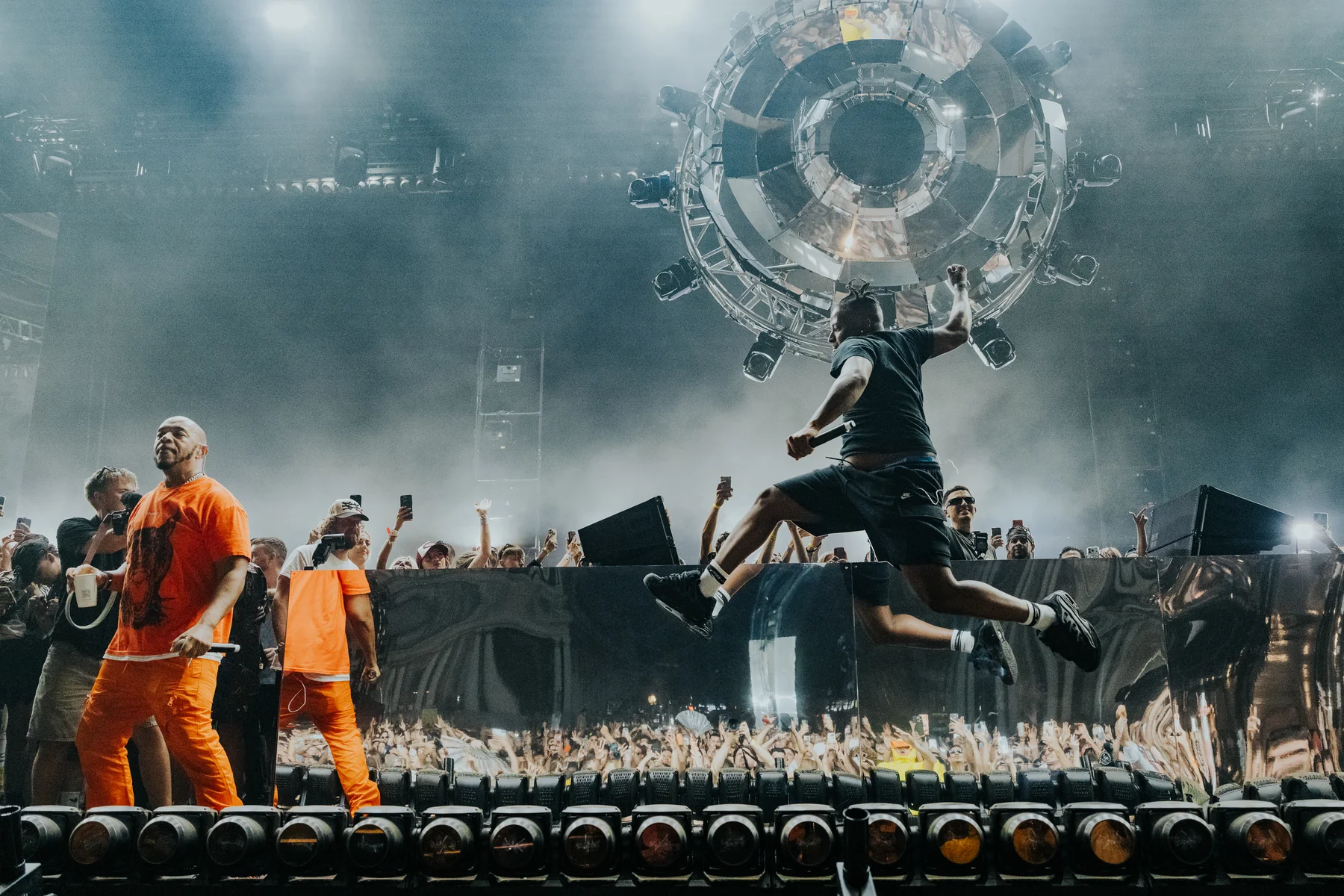
The closing chapter then switched gears with Michael Bibi. His extended homecoming set returned Labyrinth to its club-driven core, built around rolling basslines, punchy percussion and long-form grooves. Bibi’s approach was physical without being rushed, using the extended format to create a sustained journey through his sound. The surprise appearance of U-God and Young Dirty Bastard of Wu-Tang Clan added another unexpected dimension, turning the closing moments into a collision between underground house culture and hip-hop history. It was precisely the kind of left turn that has become part of Labyrinth’s identity.