This feature was produced in partnership with Volumo.
When Electronic Groove started in 2007, finding music still required a different kind of effort. You followed labels closely, traded recommendations, checked stores, waited for promos, and spent serious time listening. Sometimes you came away with five records worth keeping. Sometimes none.
Nearly twenty years later, the problem has flipped.
Running EG means watching private SoundCloud links, WAVs, AIFFs, promo pool updates, Bandcamp alerts, label mailouts, edits, and unreleased music arrive every week. Add download stores, streaming platforms, artist charts, and social feeds, and there is simply no realistic way for us, or for a DJ, to properly hear everything being released. Before you finish one batch, another is waiting.
A lot of modern digging is triage. Move through the intro, jump further into the track, check the label, save something for later, reject ten more. It can become mechanical. Then a record appears from somebody you do not know, perhaps on a label you were not looking for, and you stop touching the mouse for a minute. That is still the feeling I am looking for.
The good music has not disappeared. Getting through everything surrounding it has become the problem.
Charts obviously have their place. Recommendations have always moved through this culture, whether they came from somebody behind a record shop counter, another DJ, a trusted label, or a friend handing you something they thought you needed to hear. The problem starts when the shortcut becomes the search.
When thousands of DJs begin with the same rankings and the same handful of records receiving the most attention, a loop develops. A track sells, becomes more visible, lands in more charts, receives more attention, and sells again. It may be a brilliant record. That is not the criticism.
What interests me is what happens to DJ identity when so much of the search begins in exactly the same place.
The DJs who have stayed with me over the years are rarely the ones who simply played everything I already knew. Technique matters, programming matters, and knowing what a room needs matters. But selection is what gives somebody a fingerprint. An old B-side at the right moment, an unknown producer, a record buried inside an EP you nearly skipped. You hear it and immediately want to know what it is.
That curiosity is still one of the best parts of DJ culture.
The record shop filtered music too.
We tend to remember record shops as places where you could search endlessly, but somebody had already filtered the music before you walked through the door. Someone decided what to order. Someone chose what went on the wall. If the person behind the counter knew your taste, they might have put a few records aside for you.
Then came your part. You listened. You decided. You could take every recommendation or ignore all of them and spend the next hour somewhere else in the shop. There was guidance without removing the possibility of getting lost.
Digital stores have a harder version of that problem. A massive catalog sounds impressive until you are sitting at home trying to find six or ten records you genuinely want to play that weekend. At some point, another thousand releases simply means another thousand things you have to reject.
When I recently spoke with Samuel Thalmann and Anton Severynenko from Volumo, we kept returning to that problem.

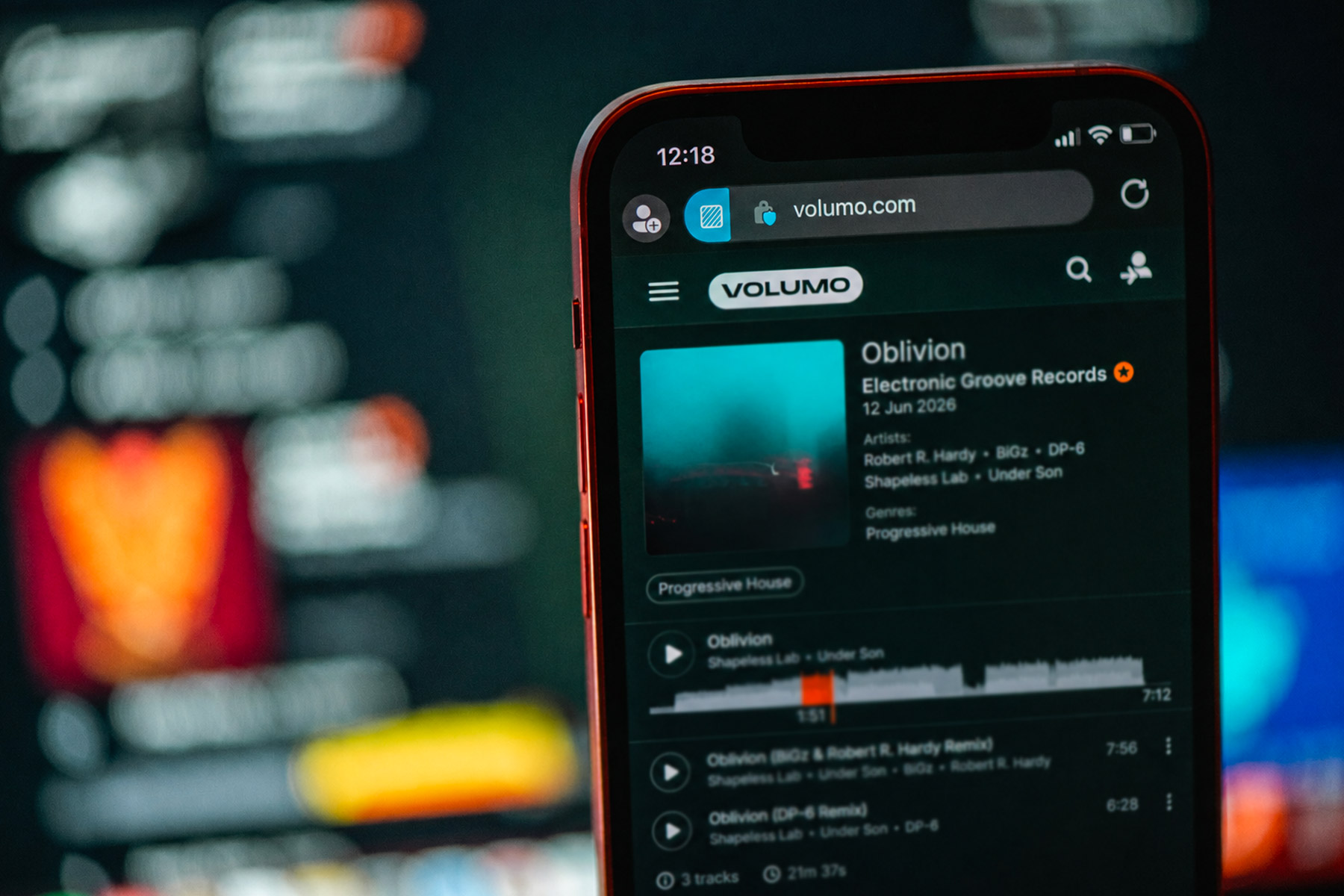
Volumo is a download store, but its approach begins by filtering some of the volume before a DJ starts searching. Releases are reviewed before entering the store, while users can move between tighter selections and the broader catalog depending on how far they want to dig.
One decision caught my attention immediately. There is no global Top 100 sales chart.
For Samuel, that absence is deliberate and tied directly to what makes one DJ different from another.
“Yeah, I think DJs lose a bit of their identity and end up cloning each other. When everyone relies on the same charts, sales rankings, and popularity signals, everyone is basically exposed to the same music.
Back in the day, when you went into a record store, there wasn’t a Top 100 telling you what everyone else was buying. You had to dig, trust your own taste, and find records that maybe nobody else knew.
For me, that’s a big part of what DJing is about: developing your own taste and bringing something personal to people. You should be able to hear a DJ play and recognize their style.”
That record shop comparison gets very close to the issue for me. The goal is not to eliminate recommendations. We need good recommendations. The question is whether they help open doors or simply keep sending everybody through the same one.
This is where some of Volumo’s tools begin to make more sense in practice. Its Focus Charts are selected by the curation team rather than ranked by sales, giving DJs a tighter view of what the team considers worth hearing at a particular moment. On Rotation takes another route, highlighting music that DJs are actually supporting in sets and radio shows rather than simply displaying what has sold the most copies.
From there, people can keep going. Volumo separates the catalog into different levels of selection, allowing somebody with twenty minutes to start with a tighter group of records while leaving the broader catalog open for the DJ who wants to spend the afternoon searching.
The principle itself is old. Put good records in front of people, give them somewhere sensible to begin, then let their ears take over.
You still have to decide.
No store can build your record collection for you. Someone can point you toward a label you missed, a DJ chart can lead you somewhere unexpected, an editor can recommend a release, but eventually you put the headphones on and decide if the record belongs in your world. That decision is yours.
Volumo describes its approach as quality over quantity. What makes that interesting is not the phrase itself, but what happens when you apply it to the actual process of searching for music. The store narrows parts of the catalog through human selection while still leaving the wider pool available for DJs who want to keep going.
Anton connects that directly with the pleasure of finding something that feels like your own.
“We want Volumo to help DJs develop their own unique sound and discover music that genuinely speaks to them. A global Top 100 naturally pulls everyone towards the same tracks, while we want digging on Volumo to encourage curiosity and individuality.
For us, the exciting part is that moment when you find a track you haven’t heard everywhere else and know it belongs in your set. So rather than telling DJs what’s already popular, we’d rather help them discover their next secret weapon.”
I like the phrase “secret weapon” because every DJ knows exactly what that means. It is not necessarily a rare record or an expensive one. It is the track you cannot wait to play because you have already imagined what it might do in the right room.
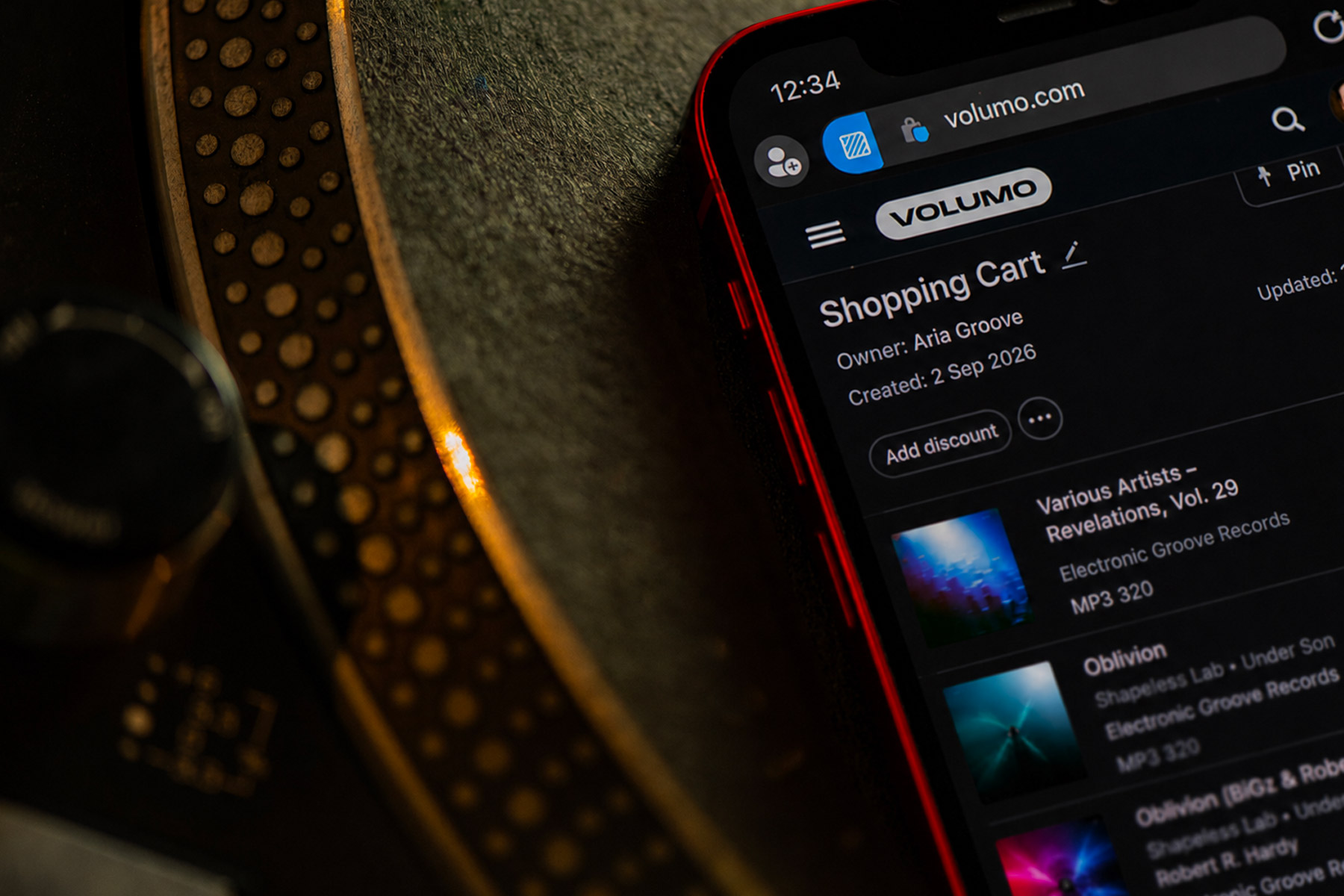
Volumo also puts a financial value on the act of helping somebody find music. The company says 75 percent of each sale goes to rights holders, while DJs and curators can receive 5 percent when a purchase comes through one of their charts. In that model, a chart is not simply another promotional list. If your selection leads someone to a record they buy, the label gets paid, and the person who helped surface that music can participate too.
That fits the larger idea behind the store better than treating discovery as something that happens only before the checkout page.
Still, what interests me most here is not the percentage or any particular store function. It comes back to the amount of music we now carry around and how little that says about us by itself.
A laptop and a few USB drives can hold an absurd number of tracks. You can hear something, buy the WAV, put it into Rekordbox, and have it ready for a gig within minutes. What used to be difficult about getting music has largely disappeared.
What has not changed is the need to choose well.
You still have to listen. You still have to reject most of what you hear. You still have to know your own taste well enough to leave a popular record behind when something else speaks to you more.
And sometimes, after going through far too much music, you find one track that makes the whole session worthwhile.
If Volumo can make that happen a little more often, then they are onto something.
Explore Electronic Groove Records and more at Volumo.com