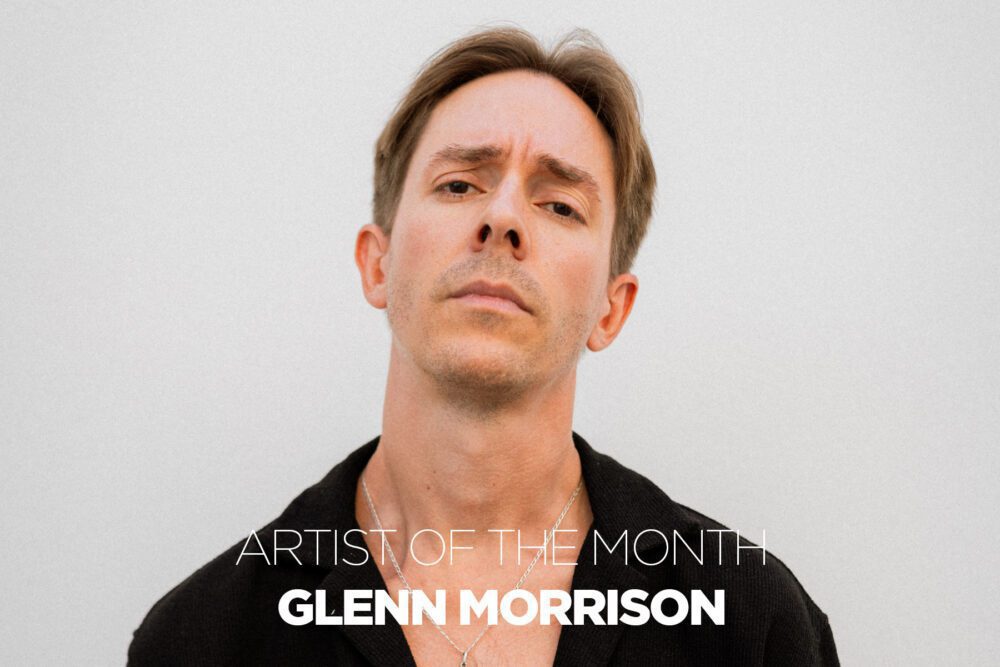
A career like Glenn Morrison’s resists easy framing. It doesn’t hinge on a singular breakthrough or a neatly defined era, but unfolds as a continuum shaped by early musical discipline, subconscious influences, and a persistent drive to translate emotion into sound across shifting contexts.
Photo Credit: Glenn Morrison – Official
Long before clubs or chart placements, Morrison’s connection to electronic music began in a space he only later learned to recognize. “I used to answer it with the typical ‘was a teenager, saved up for a while, bought my turntables and mixer, and the rest is history’ type answer,” he admits. “But lately I have thought that indeed it was far before.” He traces that origin not to adolescence, but to childhood, absorbing the electronic textures embedded in video game soundtracks. “Playing videogames like ‘Donkey Kong Country’… this kind of child imprinting unconsciously listening whilst playing games, there is something to that which predates me even listening to electronic music as I did in my teens.”
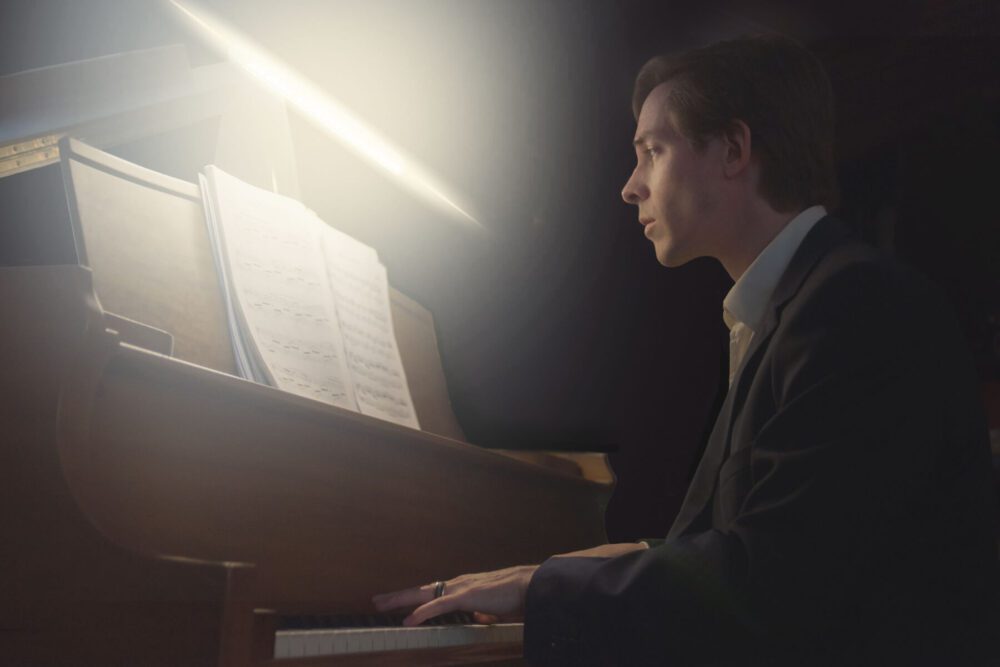
Parallel to this was a formal grounding in classical piano, where performance, competition, and discipline were central from an early age. “As a pre-teen kid, I was playing classical piano and competing & performing with judges and festivals,” he recalls. In retrospect, the transition into electronic music feels less like a shift than a continuation. “Making and performing electronic music came as a natural extension for me as I rode that late 90’s electronic wave.”
By the time he began actively engaging with dance music culture, Morrison was absorbing a wide spectrum of influences: Paul Oakenfold, Pete Tong’s ‘Essential Mixes’, Global Underground compilations, Gatecrasher releases, and the expansive narratives of Sasha and John Digweed. These weren’t just references, but frameworks for understanding pacing, atmosphere, and emotional arc.
What followed was not a linear ascent, but a series of distinct phases, each carrying its own sense of arrival. “There are many moments in my music career since I was a child where I can say ‘oh, that was a special period or accomplishment,’” he reflects. The list is extensive: classical achievements, millions of streams in that domain, Billboard-charting pop records with Sony, and a run of underground club tracks such as ‘Contact’ and ‘Into The Deep’ that would define his presence on dancefloors. Add to that a touring history alongside Armin van Buuren, Tiësto, David Guetta, and Avicii, and the picture becomes one of sustained versatility rather than a single defining lane.
Morrison is equally candid about the less visible side of that journey. “Sometimes I feel like a polar bear on an iceberg, floating around at sea on my own, trying to find land,” he says, a stark image that captures the isolation embedded in longevity. “That is a sad but accurate example of how I feel sometimes, navigating this music industry to the very best of my abilities and knowledge.” It’s a rare admission, one that underscores the emotional weight behind a career often viewed through its highlights.
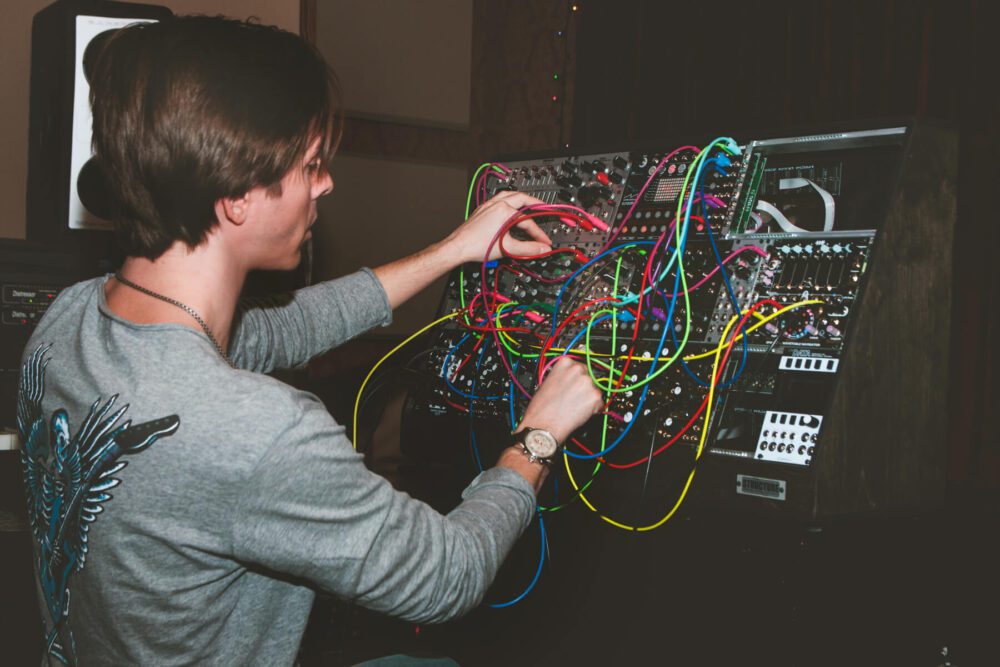
Musically, his output has been anchored by a consistent intent: to communicate feeling with clarity and depth. Reflecting on key releases, he notes that tracks like ‘Contact’, ‘No Sudden Moves’, ‘Circles’, ‘Blue Skies With Linda’, and ‘Cosmic Flight’ “really formed that early seminal ‘Glenny sound’ which has made an emotional impact with people over the years.” Collaboration played a crucial role in refining that language. Working alongside figures such as Deadmau5, Charlie May, and Armin van Buuren, he developed both technical fluency and compositional range. “All were instrumental in teaching me how to produce electronic music and compose during my early years.”
Still, the core motivation remains direct and personal. “I am simply trying to communicate my musical feelings in the best way possible, using the tools and synths and gear that I have, to share that with others,” he explains. “I hope it is received well in the global electronic music world.” It’s a statement that avoids abstraction, framing music as transmission rather than concept.
That same ethos extends into Fall From Grace Records, the label he founded around 2016. Conceived as a platform for “thoughtful and forward-thinking electronic music,” it has since grown into a substantial operation. “Today we have almost 200 releases, spanning around 100+ artists, with a catalogue of over 1500 songs,” he notes. Growth, however, has been measured. “I have been working hard to expand the label group as best I can navigate… in a controlled effort to build catalogue and artist repertoire.”
As a DJ, Morrison’s philosophy remains rooted in restraint and structure. “I believe a journey aspect, coupled with seamless mixing and transitions, is my perfect style of set,” he says, emphasizing cohesion over spectacle. “I don’t need microphone talking or big hype ups, just great music thoughtfully orchestrated and put together is enough for me.” It’s an approach shaped through residencies at spaces like Amnesia Ibiza, Pacha Buenos Aires, and Space Miami, where narrative progression carries more weight than performance theatrics.
Looking ahead, Morrison’s focus is less about reinvention and more about continuity, expanding his output while maintaining control over its direction. “I am working hard this year on lots of new music, as well as my Rave Cave ‘Vinyl Only’ YouTube series,” he shares, alongside plans for touring, live-streamed ambient performances, and ongoing label activity. The emphasis is on presence and consistency. “I am trying hard to have people hear what I do on a daily basis, even if I am not touring as heavily as I used to when I was younger.”
If there is a defining thread across Morrison’s career, it lies in that persistence, the willingness to keep moving, creating, and refining regardless of external validation. “I am very grateful for what I have accomplished in my life,” he reflects, before adding, almost as a quiet counterpoint, “though it can be challenging at times to deal with different types of personalities in the business.”
It’s that duality, scale and solitude, momentum and reflection, that gives his work its particular weight. Not a fixed identity, but an ongoing process.
Follow Glenn Morrison: Spotify | Instagram | YouTube | Website