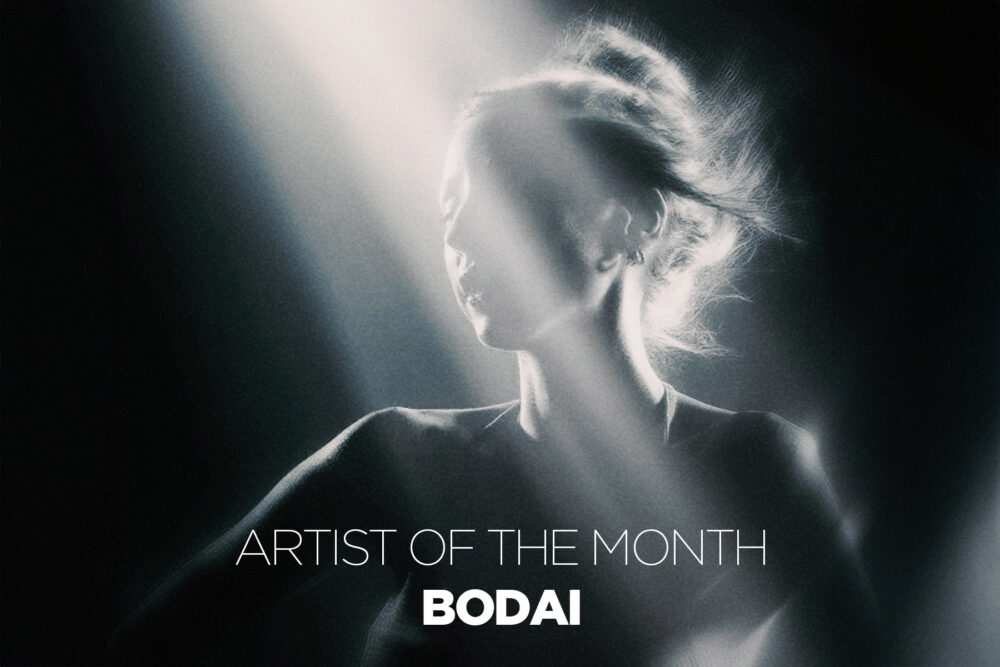
With a career shaped by introspection, discipline, and an unwavering commitment to authenticity, Argentine DJ, producer, and label owner Bodai has emerged as one of the most singular voices in contemporary progressive and organic house. Her work, rooted equally in musical sophistication and personal philosophy, moves beyond club functionality into something more emotional and reflective: a body of work built on meaning, patience, and a deep understanding of artistic identity.
Photo Credit: La Isla Lab // Pablo Alonso
For Bodai, music begins not with clubs or dancefloors, but with memory. “My earliest memory is the image of the piano in my first house in José León Suárez,” she recalls, describing the instrument that sat in her childhood home in Buenos Aires. Though rarely played by others, the piano became central to her life from an early age. By eight years old, she was already studying music theory, solfège, composition, and singing. Another formative memory arrived even earlier: hearing Technotronic’s ‘Pump Up The Jam’ while accompanying her mother to a gym in Carapachay. “I loved all those sounds: the hip-hop beat, the synthesizers, the bassline, the rhythm,” she says. The sensation stayed with her long before she understood electronic music as a culture.
Those early fragments would later connect with the records her parents kept at home. Giorgio Moroder, Donna Summer, Queen, The Beatles, orchestral symphonies; all creating an unusually broad emotional vocabulary that still echoes throughout her productions today. As adolescence arrived, electronic music became inseparable from her brother Gastón, who introduced her to artists like Depeche Mode, Underworld, Hernán Cattáneo, Martín García, and Carlos Alfonsín. Soon came Laurent Garnier, Miss Kittin, Trentemøller, Sasha, John Digweed, and Paul Oakenfold, figures whose atmospheric and narrative-driven approaches would deeply shape her sensibilities.
But it was the emergence of live electronic performance that truly altered her trajectory. “When I started DJing and creating my own music, I was inspired by live electronic sets from musicians who also made electronic music — a rare combination at the time,” she explains, citing artists like Nicolas Jaar, Ólafur Arnalds, Moby, Nils Frahm, and Juana Molina. Watching performers combine analog and digital instruments in real time inspired her to begin experimenting herself. “I bought a MIDI cable and an audio interface, connected them to Ableton, and started experimenting. I haven’t stopped since.”
That sense of experimentation has remained central to Bodai’s evolution, though it has rarely come without sacrifice. Unlike many artists operating inside the touring economy of electronic music, she openly acknowledges the tension between constant visibility and the solitude required for meaningful creation. “My songwriting process is incredibly difficult in terms of survival,” she says. “Taking a break from touring is truly tough for an artist in today’s world.” Yet those quieter periods have consistently produced her strongest work. “My most powerful compositions, lyrics, and vocals emerge from a period with less adrenaline and more introspection.”
Now in her forties, Bodai views her career not through isolated breakthroughs, but through accumulation — years of refinement, resistance, and self-preservation. “I see my life and career as a constant progression,” she explains. “Each year I’ve surpassed myself by creating better music, learning new things, offering mentorship with greater wisdom, strengthening my record labels, and above all, evolving, surviving, and respecting myself as a person throughout the entire process.”
That philosophy has positioned her as one of Argentina’s most respected progressive and organic house exports, particularly within an international scene still largely dominated by European infrastructures. “I believe my greatest achievement was quietly taking on the responsibility — as the first Argentine producer in the progressive and organic house scene with a global presence — of opening doors with serious work and staying true to my own vision,” she reflects. It is a statement that speaks less to self-mythology than to endurance: a career built independently, often without management or large-scale promotional machinery, sustained almost entirely through reputation and consistency.
Few releases encapsulate that journey more clearly than ‘Every Day’, her recent release on John Digweed’s Bedrock Records. For Bodai, the track represents far more than a career milestone. “I feel like it’s the most important song so far because it describes the essence and intention of all my songs: to have meaning,” she says. The track began during the pandemic, during a period of emotional disorientation following recognition she received as a pioneering Argentine woman within the scene. “I felt lost: too many voices around me, and not all of them were clear or honest.” Those emotions eventually became lyrics, voice notes, and ultimately, a song she kept hidden for five years because she did not yet feel ready to carry what it represented.
The eventual release of ‘Every Day’ unfolded almost cinematically. Following the success of her ‘Calling My Name’ tour, which saw audiences across multiple continents singing her music back to her, Bodai began revisiting older material she had kept private. Around that time, she was introduced to German electronic veteran Marc Romboy.
What followed became one of the most important creative partnerships of her recent career. “In the studio, we reached a point where we didn’t need to say certain things to each other,” she explains. “Sometimes we’re completely aligned, and that’s something very hard to find.” Their collaborative process remained focused entirely on artistic connection rather than strategy or industry expectations. “We don’t talk about record plans or anything like that. We focus on creating a piece of music that we both feel and love.”
Eventually, the track reached John Digweed, who tested it extensively in clubs around the world before confirming it for release on Bedrock — later selecting it as part of an upcoming Bedrock vinyl compilation. For Bodai, the moment carried emotional weight beyond personal success. “All the hard, meaningful, dedicated, and serious work of everyone involved in this release perfectly reflects my world,” she says. “I feel grateful and at peace with myself for having stayed true to my values even in moments of deepest doubt.”
Parallel to her artistic output, Bodai has also cultivated a significant role as a label owner and community builder through AMITABHA and AUDITEN. Both projects emerged organically from her broader philosophy toward music and education. “I’m an altruistic musician, a business professional, and a yoga teacher,” she explains. “I need to satisfy that need to give back to feel in harmony.” Drawing from experiences working alongside respected European labels, she applied that professionalism to her own independent platforms, helping create sustainable structures for artists within Argentina’s underground electronic ecosystem.
AMITABHA, now celebrating eight years, continues expanding through carefully curated events and community-focused experiences in Buenos Aires, while AUDITEN has evolved into what she describes as “a cult label for progressive and techno,” currently preparing a major relaunch.
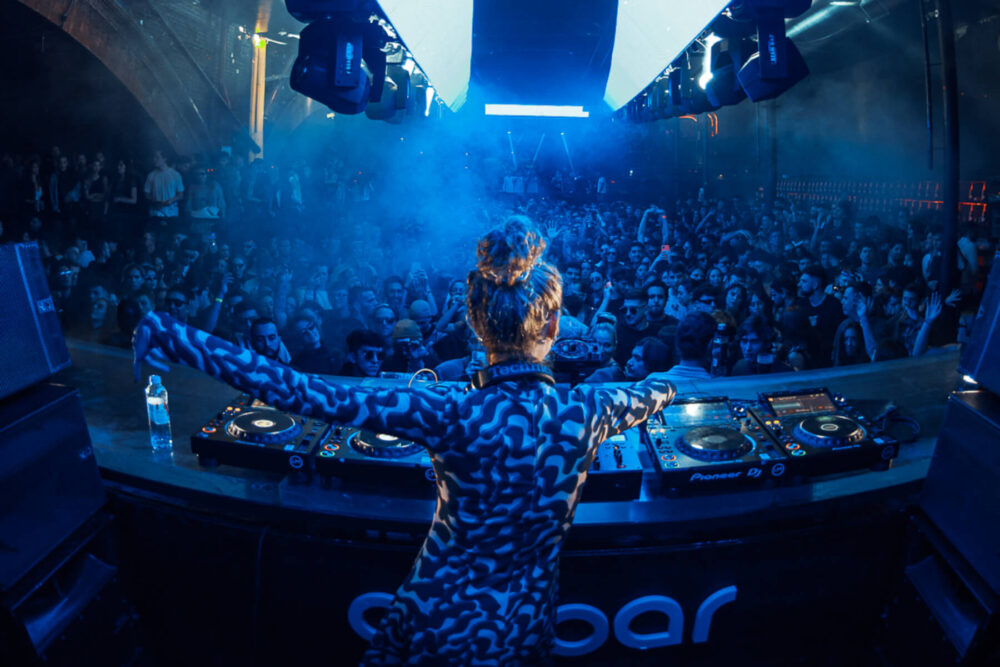
Her approach to DJing reflects the same emotional intelligence present throughout her productions. “For me, DJ sets are like a yoga class,” she explains. Rather than thinking strictly in BPMs or genres, Bodai approaches performance through energy, balance, and emotional flow. “I think about the intensity and textures I want to bring to the venue.” Often, she says, the narrative of a set begins forming during soundcheck itself.
That instinctive approach has helped her remain relevant without relying heavily on conventional industry structures. “My strength lies in the fact that, even as Bodai, I’m authentically myself,” she says. “I continue to surprise in my own way.” It is perhaps the defining thread running throughout her career: the refusal to dilute identity for accessibility.
Looking ahead, Bodai’s momentum shows no signs of slowing. Upcoming projects include new releases, European touring, collaborations with artists like Paul (AR), and continued expansion of her labels and live concepts. Yet even as her global profile continues growing, her perspective remains grounded in process rather than arrival.
For Bodai, music has never simply been about career progression or visibility. It is a language of intention, self-discovery, and emotional honesty. One built patiently over decades through intuition, discipline, and trust in her own vision. In an electronic music landscape increasingly driven by speed and immediacy, that sense of purpose may ultimately be what makes her stand apart most clearly.
Follow Bodai: Spotify | Instagram | YouTube | SoundCloud