The idea behind Rhythm Cult had been forming in Paul Loraine’s mind for nearly two decades before the label officially appeared. By the time Rhythm Cult Records launched in 2014, Loraine had already spent years immersed in electronic music, from his early residency at the Monkey Club in Guernsey to a DJ career shaped by the practical education of sharing a room with artists whose approaches could differ dramatically from his own. The label grew from a desire to turn that experience into something more substantial than a vehicle for releasing records: a place where music, art, artists and like-minded listeners could gather around a shared appreciation for underground electronic music.
“I wanted to create something more than just releasing records,” Loraine explains. “A place where music, art and like-minded people could come together.” The word “Cult” was chosen in that spirit, referring not to exclusivity but to a group of people connected by a common passion. More than ten years later, that idea remains remarkably intact. Rhythm Cult has expanded through its label releases, the Cultcast series, events and vinyl projects, but its underlying proposition has stayed deliberately human: find music worth believing in, work closely with the people who make it, and give those records the attention they deserve.
That philosophy is inseparable from Loraine’s own development as a DJ. His residency at the Monkey Club began when he was just 18, placing him in the position of regularly warming up for visiting DJs with very different sounds and sensibilities. Rather than simply learning how to play his own records, he learned how to listen: to understand a room, establish a narrative, respect the artist coming after him, and recognize that a set is ultimately a conversation between music and audience. That same sensibility informs Rhythm Cult’s A&R. Genre can provide a useful reference point, but it is rarely the deciding factor.
“I’ve never wanted Rhythm Cult to be defined by one particular sound because it’s really a reflection of my own journey as a DJ,” Loraine says. “If it connects emotionally, then I’m interested.” If a broad description is required, he calls it house music, but the catalog stretches naturally through deep house, Detroit influences, techno, melodic material and other strains of electronic music. The commonality is less about BPM or production technique than about feeling: records that create a response, carry personality and continue to reveal something after the first listen.
That instinct becomes particularly important in an era when the technical barriers to making electronic music have never been lower. More music can be produced, circulated, and released than ever before, but the abundance of material also makes individuality increasingly valuable. For Loraine, the strongest demos are those that make an immediate emotional impression, whether through an unexpected moment, an unusual idea, or simply the kind of musical detail that produces the involuntary reaction he describes as goosebumps. “I’m not looking for perfection,” he says. “I’m looking for honesty.”
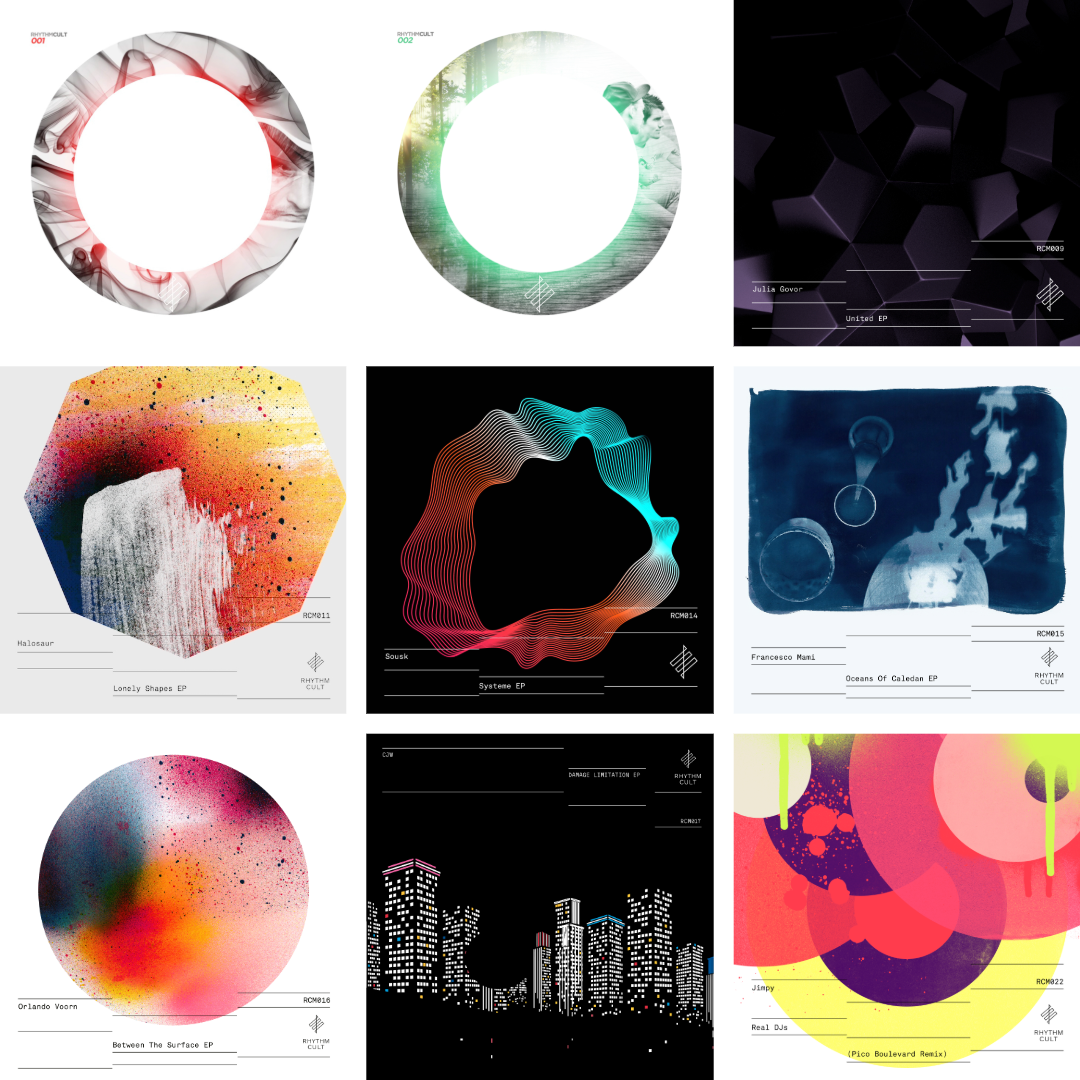
It is a deceptively simple principle, but one that explains much about the label’s longevity. Rhythm Cult has never needed to manufacture a house style in order to establish an identity. Instead, its identity has accumulated through repeated acts of discernment: one record after another, one artist after another, each selected because Paul believes there is something worth sharing. The result is a catalog broad enough to reflect the changing vocabulary of house music while retaining a recognizable emotional character.
That sense of personal investment extends through the entire release process. Once a record connects, Loraine works directly with the artist on its development, from the final details of the music through artwork, promotion and the wider campaign. The distinction matters because, for Rhythm Cult, the release is not simply a file moving through a distribution system. “Every detail matters because every release represents months of somebody’s creativity, passion and hard work,” he says. The label’s role is to help that work find its audience without losing the character that made the music worth signing in the first place.
This approach also explains why Paul resists the idea of identifying a single defining record from the catalog. There are releases that have reached larger audiences, records that have climbed charts and moments that have generated significant attention, but he refuses to reduce the label’s history to those metrics. Every release represents a relationship with an artist, a period of work and a particular moment of discovery. “When I look back through the catalogue, I don’t just remember the records,” he says. “I remember the people, the conversations, the excitement of signing the music and watching each release find its audience.” For an independent label, that is a meaningful measure of success: not simply what a record did, but what it meant to the people involved.
The history of Rhythm Cult nevertheless contains its share of conventional milestones. The arrival of its first vinyl release marked an important step, transforming the label’s music into a physical object and placing it within the tactile culture that has always been central to electronic music. Chart success followed, as did a growing roster of artists appearing through the Cultcast series and events that brought the label’s wider community together. Yet Loraine places these achievements alongside something far less quantifiable: the fact that, after more than a decade, a new demo can still arrive in his inbox and generate genuine excitement. “That feeling has never gone away, and I hope it never does,” he says.

It is perhaps the most revealing statement in the entire conversation. Independent labels survive through infrastructure, distribution, promotion, and increasingly complex digital ecosystems, but their origins are usually much simpler. Someone hears a record and wants other people to hear it. Someone discovers an artist and wants to give them a platform. Someone experiences the peculiar thrill of finding something that did not exist in their world yesterday and suddenly becomes indispensable. Rhythm Cult has retained that impulse even as the machinery surrounding electronic music has changed dramatically.
The label’s evolution has also included the Collective Series vinyl releases, which have become an important part of its current identity. Alongside the main Rhythm Cult output and the Cultcast, the series provides another physical expression of the label’s commitment to music that deserves to be lived with rather than simply consumed and replaced. Vinyl is only one part of the operation, but its presence reinforces the label’s broader emphasis on care, curation and collectability. A record becomes something with a history: music, artwork, pressing and the story of the artist all occupying the same object.
Community, meanwhile, has never been an afterthought. Loraine’s original motivation for creating Rhythm Cult was tied directly to the relationships he had formed through music, and the label’s activities have continued to expand that network. The Cultcast has brought a wide range of artists into its orbit, while events have created physical spaces in which the label’s audience and contributors can meet. More recently, Rhythm Cult has also developed a WhatsApp channel, which has steadily attracted followers from around the world and become another direct point of connection between the label and its audience. Used to share new music, TRIBE events, Cultcasts, vinyl news and other updates from the label, it extends the community beyond the dancefloor and into the everyday lives of the people following Rhythm Cult’s journey. Those experiences give the word Cult its intended meaning: not a closed circle, but a community formed organically around shared enthusiasm.

There is a certain humility in the way Loraine talks about the label’s place within the broader electronic music landscape. After more than 30 years around the culture, he has seen enough cycles to know that relevance built around trends tends to be temporary. His answer is therefore straightforward. He is less interested in defining Rhythm Cult’s position within the industry than in continuing to discover music, work with talented people, and remain connected to those who share his enthusiasm.
“I’ve never chased success,” he says. “I’ve always chased great music and good people. Everything else has been a by-product of that.”
That philosophy gives Rhythm Cult’s ten-plus-year history its particular coherence. The label has grown, expanded its physical output, developed its broadcast arm, hosted events and accumulated a substantial network of artists and listeners, but none of those developments required it to abandon the premise that brought it into existence. Growth has been organic rather than prescribed. The operation has become more refined, but the reason for doing it remains almost stubbornly simple.
There is also something fitting about a label born from a DJ’s understanding of the room becoming increasingly defined by its ability to create connections between records, artists and listeners. Loraine’s earliest lessons were about sequencing and context: understanding that a piece of music gains meaning through what surrounds it. Rhythm Cult applies much the same principle at label level. Individual releases matter, but so do the relationships between them, the artists who return, the visual identity that accumulates, the voices appearing through the Cultcast and the audiences who follow the journey.
More than a decade after its official launch, Rhythm Cult therefore feels less like a project that has reached a fixed destination than one that has settled comfortably into its own rhythm. The label’s future plans are intentionally uncomplicated: more music, more vinyl, more artists, more encounters. There is no elaborate five-year blueprint attached to the vision, only the desire to keep the process alive and meaningful.
“If Rhythm Cult is still releasing music we’re proud of in another ten years, surrounded by good people and still enjoying the journey, I’ll be a very happy man,” Paul says.
For an independent label, that may be the most convincing definition of longevity there is. Rhythm Cult has endured because the original excitement behind it has survived the realities of running a label: the administration, the economics, the changing technologies, the shifting tastes and the constant noise surrounding electronic music. The records remain at the center, but so do the people behind them. And after more than ten years, Paul Loraine is still listening for that moment when a demo cuts through everything else and makes him feel something. That is where Rhythm Cult began, and it remains the reason the journey continues.
Follow Rhythm Cult: Website | Instagram | Bandcamp | Mixcloud